Interventions on Road signs
Road Signage: Complete Guide, Standards, Stakeholders and Maintenance
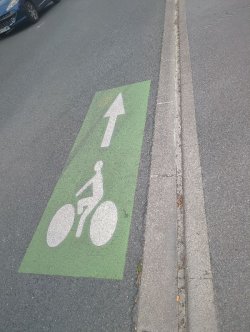 The road signage encompasses all the signs and pavement markings that inform, warn, and prescribe to road users. Hazard signs, prohibition signs, indication signs, white lines, arrows, pedestrian crossings: these devices, governed by the decree of November 24, 1967, and the interministerial instruction on road signage, are at the heart of safety on our roads. Much more than just a piece of metal or paint, road signage is a regulated, certified heritage, subject to strong responsibility from the road manager. In this guide, everything is covered: families and vocabulary, standards and certification, main actors and manufacturers, criteria for choosing a maintenance service provider, and how an application like KARTES streamlines the tracking of interventions on a signage infrastructure. Let us first clarify the scope: we are referring here to vertical (signs) and horizontal (pavement markings) signage, not traffic lights, which fall under a distinct technical framework.
A reference point to understand the stakes. The French road network extends over more than one million kilometers, marked by several million signs and a considerable amount of road markings. Behind each sign and each line on the ground lies a strict regulation, mandatory certification, and a vital objective: to guide road users and prevent accidents. A missing, unreadable, or non-compliant sign can cause safety to waver, accompanied by the legal liability of the manager. Hence, the crucial importance of road signage maintenance.
Introduction to road signage: everything you need to know
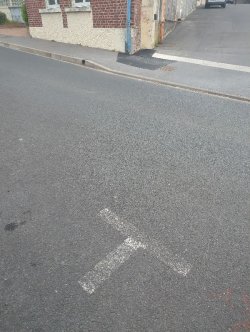 Let's start with the basics. In industry terminology, we refer to vertical signage for panels and horizontal signage for ground markings. Together, they form a codified visual language understood by all drivers. This language, harmonized at the international level, is based on strict rules regarding shapes, colors, and placement.
What is road signage?
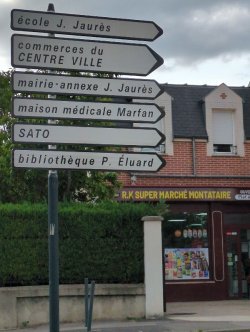 Road signage consists of all the signals intended to regulate traffic, warn of a danger, prescribe a rule, or inform road users. It is addressed to everyone who uses the road, from pedestrians to heavy vehicles. Its primary purpose is to ensure the safety and smooth flow of traffic by providing each user with the right information at the right time.
Ask yourself: what would happen without signage? Chaos. No clear priorities, no warnings about dangers, no landmarks to help you orient yourself. Road signage is the nervous system of the road, discreet but vital. Its effectiveness relies on uniformity: a stop sign has the same shape everywhere, a one-way street sign has the same color. This standardization, as we will see, is strictly regulated.
What is the difference between vertical and horizontal signage?
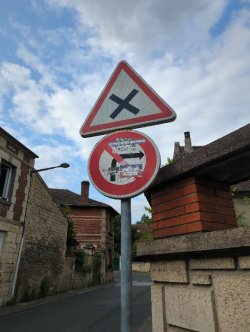 The distinction is fundamental, and often misunderstood. The vertical signage refers to signs mounted on supports: danger, prohibition, indication, and direction signs. The horizontal signage refers to pavement markings: lines, arrows, pedestrian crossings, and symbols painted on the road. The two complement each other, but do not serve the same purpose.
A golden rule governs their relationship: vertical signage takes precedence over horizontal signage. In case of a contradiction between a sign and a marking, the sign is authoritative. A no-entry sign overrides a painted arrow on the ground that would indicate the opposite. In practice, such a contradiction should never exist: it reveals a maintenance issue or a design error, which must be corrected urgently. Consistency between the two is essential.
| Criterion | Vertical Signage | Horizontal Signage |
|---|---|---|
| Support | Boards on masts | Road marking |
| Examples | Stop, danger, speed | Lines, arrows, pedestrian crossings |
| Product Standard | NF EN 12899-1 | NF EN 1436 |
| Priority | Premium in case of conflict | Complete the vertical |
| Service Life | Several years | Shorter, traffic wear |
What are the categories of warning signs?
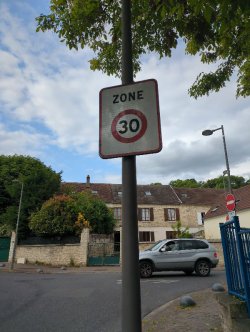 The decree of November 24, 1967 classifies all signs into families, identified by letters. Each family has a specific shape, a dominant color, and a strictly defined use. Knowing these families is understanding the logic of all vertical signage.
- Danger Signs (Type A) : triangular, white background, red border, to warn of a risk.
- Prescription panels (type B) : round, used to prohibit or enforce, such as stop or speed limit.
- Signage Panels (Type C) : squares or rectangles, often blue, for information.
- Direction Panels (Type D) : to direct and guide towards destinations.
- Signs (type M) : small plates completing a main sign.
- Beacons (type J) : guidance and signaling devices, such as turn beacons.
This classification is not anecdotal. The shape and color of a sign immediately convey its nature, even from a distance. A red triangle warns, a circle prohibits or mandates, a rectangle informs. This visual, intuitive, and universal code allows for instant understanding, a condition for safety. Any fanciful deviation is prohibited: only official models are authorized on public roads.
What is the retroreflection of a sign?
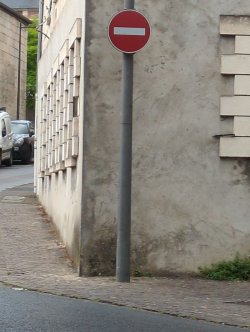 Here is a central technical concept, often overlooked by the general public. Retroreflection is the ability of a sign to reflect the light of its headlights back to the driver. It is what makes signs visible at night or in bad weather, without their own lighting. Without retroreflection, a sign would be invisible in the dark, which would render it useless.
The panels are covered with a retroreflective film, classified according to its intensity. Two main classes can be distinguished: class 1 and class 2, the latter offering stronger retroreflection. The choice of class depends on the context: type of road, speed, and lighting environment. On a highway or a dangerous location, class 2 is preferred. Over time, this film wears out and loses performance, making its control essential. A panel that no longer reflects sufficiently becomes dangerous at night.
What does floor marking consist of?
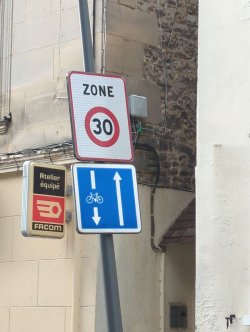 Road marking, or horizontal signage, refers to everything that is painted or applied on the road surface: center lines, edge lines, arrows, pedestrian crossings, symbols, zebra crossings. It guides the driver, defines lanes, organizes priorities, and ensures safe crossings. Discreet though it may be, it is no less crucial for the readability of the road.
Its performance is measured by several criteria, defined by the NF EN 1436 standard. Retroreflection ensures its visibility at night under headlights. Luminance guarantees its visibility during the day. Adhesion, measured by the SRT coefficient, is crucial on pedestrian crossings and braking zones to prevent slips. A worn, faded, or slippery marking loses these qualities and must be renewed. Ground marking ages faster than signs due to traffic effects.
What are the types of road signage?
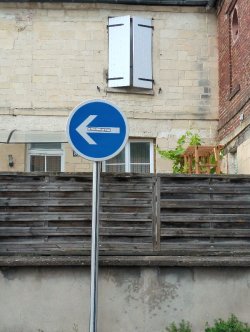 Signage comes in several modes, depending on its permanence. Each mode meets a specific need, from the everyday to the exceptional.
- Permanent signage : panels and fixed markings, the base of the system.
- Temporary signage : for construction sites and events, often yellow, on mobile supports.
- Dynamic signage : variable message signs displaying changing information.
Temporary signage deserves mention, as it is demanding. During a construction site, signage must adapt in real time to the evolution of the hazard, with strong reactivity. Yellow-backed signs alert to temporary changes in traffic conditions. As for dynamic signage, through variable message signs, it provides real-time information on traffic or weather. Our focus here is on vertical signage and marking, the core of the heritage to maintain.
The technical vocabulary of road signage
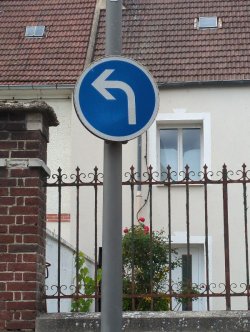 A small survival glossary, to decode a specification document or an exchange with a manufacturer. This jargon keeps coming up constantly in the field of signage.
- IISR : Interministerial instruction on road signage, the reference text.
- Retroreflection : ability to reflect light from headlights back to the driver.
- Mast or support : structure holding the panel.
- Sign : small plaque completing a sign.
- Beacon : guidance device, such as turning beacons.
- Ground Marking : horizontal signage painted on the road.
- CE plus NF Certification : double marking mandatory in France.
- Retroreflection Class : film performance level, class 1 or 2.
- Road Manager : authority responsible for signage on its network.
- Passive Safety : ability of a support to limit the severity of an impact.
Road Sign Regulations and Standards
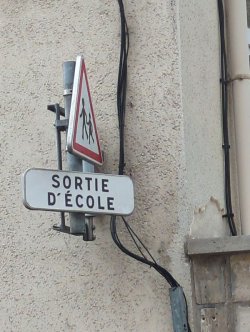 Set aside the regulatory framework, and it is dense, because it concerns the safety of all. Road signage crosses several texts: founding decree, interministerial instruction, product standards, mandatory certification. Understanding this stack is avoiding non-compliance, which exposes to sanctions and involves criminal liability. Let's unravel the thread, from legal texts to technical standards.
What is the reference text for road signage?
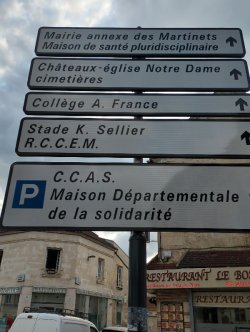 Everything starts with the order of November 24, 1967 concerning road and motorway signage. This legal text defines all the authorized signs, their shapes, colors, and dimensions. Although modified on many occasions, it remains the foundation of all French signage. Any sign placed on public roads must comply with the models it defines.
This decree is supplemented by the Interministerial Instruction on Road Signaling, the IISR. Organized into nine parts, it specifies the nature of the signals and their installation rules. Parts 1 to 6 deal with vertical signage, part 7 with road marking, part 8 with temporary signage, and part 9 with dynamic signage. The IISR applies to everyone who installs signage on roads open to traffic. The use of signals not provided for by these texts is simply prohibited.
Is CE plus NF certification mandatory?
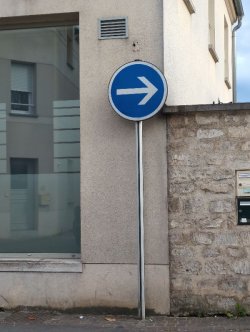 Yes, and this is a crucial point, often misunderstood. To be placed on French public property, a sign must bear a double certification. The CE marking attests to compliance with harmonized European standards, notably NF EN 12899-1, and allows marketing within the Union. The complementary NF mark certifies compliance with French specifications, including designs, lettering, and messages.
The joint is strict. The NF mark is awarded by the ASCQUER, an organization mandated by AFNOR. And here is the key point: a panel marked CE alone, without the complementary NF mark, is illegal to install on public property in France. This requirement ensures that each panel complies not only with European technical standards, but also with national specifications. Checking this double certification is therefore an essential reflex when purchasing any signage.
What standards govern the panels and their supports?
Several technical standards apply to vertical signage. The main one, NF EN 12899-1, defines the requirements for permanent signs: wind resistance, retroreflective properties, dimensions, colorimetry. It ensures that a sign withstands weather conditions and remains readable. The NF P98-300 standard specifically covers supports, masts, poles, and frames.
Other standards complete this foundation. The EN 12966 standard governs variable message panels. The EN 12767 standard concerns passive safety supports, designed to limit the severity of a collision impact. This last dimension is essential: a support that is too rigid aggravates the consequences of an accident, hence the interest in masts that yield or recede. The regulation thus ensures both the readability and the passive safety of the equipment.
What standards for floor marking?
Ground marking has its own demanding standards. The NF EN 1436 sets the performance requirements for marking products: nighttime retroreflection, daytime luminance, adhesion, durability. It establishes minimum classes to be met on public roads, ensuring the visibility and safety of the marking. A marking that no longer reflects sufficiently, or has become slippery, is no longer compliant.
Several other standards govern products and their application. The NF P98-150 specifies marking products, paints, coatings, and thermoplastics. The NF P98-691 regulates the service application performance. Product standards complete the set, covering glass beads, retroreflective raised pavement markers, or prefabricated markings. The RNER decree of May 10, 2000, on the national regulation of road equipment, oversees the certification. The 7th part of the IISR finally sets the dimensions, line widths, and installation rules. A comprehensive framework, for a major safety element.
What installation rules and dimensions?
The installation follows precise rules set by the IISR. The dimensions of the signs vary according to the type of road: they are categorized into ranges, from small to very large. For example, a triangular danger sign measures 700 millimeters on each side in urban areas, and up to 1000 or 1250 millimeters on high-traffic roads. The faster the road, the larger the sign must be to be seen in time.
Position is as important as size. Signs are generally placed to the right of the road, at a regulated height, often between 1 and 2.30 meters depending on the context. Danger signs are installed at a distance from the risk: between 100 and 200 meters in open country, between 0 and 50 meters in urban areas. On heavily trafficked roads, a double sign on the left or installation above the road may be required. Improperly placed, too low, or obscured, a sign loses its effectiveness, or even becomes dangerous.
Who is responsible for road signage?
The responsibility lies with the road manager. Each commune, intercommunality, department, or the State and concessionaires for their networks, is responsible for the signage on their roads. This responsibility stems from the traffic police power. The manager must install, maintain, and ensure that their signage remains compliant.
This responsibility carries serious consequences. A poorly installed, non-compliant, damaged, or missing sign directly engages the liability, including criminal liability, of elected officials and technical staff in case of an accident. Jurisprudence is clear on this point. Being able to demonstrate regular and documented maintenance of signage therefore constitutes an essential legal protection. On the contrary, the absence of follow-up leaves the manager exposed. The traceability of maintenance is not just a good practice: it is a legal necessity, which we will come back to.
Key actors and service providers in road signage: the top 10
Who designs, manufactures, installs, and maintains road signage in France? The sector involves several categories of stakeholders: signboard manufacturers, ground marking companies, installers and maintainers, distributors for local authorities, and certification and reference organizations. Here is an overview of recognized stakeholders, without a fixed hierarchy, as the right interlocutor depends on the need and the network.
Who manufactures the traffic signs?
Panel manufacturing is a market of specialists who produce CE and NF certified equipment. These manufacturers master retroreflective films, colorimetry, and compliance with official models.
- Lacroix Signalisation, a major player in vertical signage in France.
- Girod Signals, historic manufacturer of road signs and equipment.
- Nadia Signalisation, French manufacturer of road signage.
- Signature, actor in vertical and horizontal signage.
Who performs the ground marking?
Ground marking is the responsibility of specialized companies that apply it, mastering both products and techniques. These actors intervene on the roadways to mark and re-mark the signs.
- Aximum, a subsidiary specialized in road signage and safety.
- Hélios and road marking companies, who apply horizontal signage.
- Agilis and other specialized applicators, present on the road construction markets.
Who distributes and installs signage for local authorities?
Between the manufacturer and the road manager, distributors and installers play a key role. They supply, advise, and install the signage on site.
- Specialized distributors for public institutions, who list certified signs and equipment.
- Installation and maintenance companies for signage, which operate on the network.
- Technical services of local authorities, which often manage signage in-house.
Which organizations oversee the sector?
Several institutions hold authority. The ASCQUER issues the NF mark for road equipment, an essential certification. The AFNOR publishes applicable standards, such as NF EN 12899-1 or NF EN 1436. The CEREMA, which has brought together since 2014 the technical services of the State, develops guides and recommendations. And the Délégation à la sécurité routière steers the national policy.
- ASCQUER, AFNOR, CEREMA and Délégation à la sécurité routière, reference organizations for certification, standardization and technical recommendations.
This overview reveals a structured sector with high compliance requirements. For a road manager, this diversity means a chain of actors to coordinate, from certified purchasing to compliant installation, through to maintenance. And it is precisely over time, in maintenance, that compliance and the safety of signage are determined. Installing is not enough; it is also necessary to maintain a readable and compliant asset, otherwise liability may be incurred.
How to choose a maintenance provider for road signage?
Selecting the right maintenance provider is a serious decision, as it involves safety and legal liability. A local authority or road manager does not choose a traffic sign maintainer at random: it concerns the compliance of its assets and legal protection. Step-by-step method.
Which technical criteria should be checked first?
First requirement: mastering compliance. A signage park consists of signs to be checked, retroreflective films that wear out, masts to be inspected, and markings to be redone. The service provider must know the regulations, be able to assess retroreflection, and identify non-compliant signs. Ask to see a sample inspection report: its accuracy speaks volumes about the company's seriousness.
- Regulatory knowledge : 1967 decree, IISR, CE plus NF certification.
- Retroreflection Assessment : control of night visibility.
- Marking Control : Conform reimplementation of horizontal signage.
- Responsiveness : response time to a dangerous or missing panel.
- Support verification : corrosion, stability, passive safety.
- Traceability : geolocated reports, photos, equipment history.
Why is traceability crucial?
Here is the point that distinguishes road signage maintenance: the legal dimension. As we have seen, a defective sign can hold the manager legally responsible in case of an accident. The only effective protection is being able to demonstrate regular and documented maintenance. Traceability is therefore not a convenience, it is a legal shield.
A serious service provider supplies actionable maintenance evidence. Every inspection, every intervention, every replacement is recorded, dated, geolocated, and photographed. In case of a dispute, this file demonstrates the manager's due diligence. On the contrary, a maintainer who intervenes without documenting anything leaves the community defenseless. On the field, the best protected managers are those who require complete digital traceability. Choosing a service provider aware of this legal issue is crucial.
What questions to ask before signing?
A few concrete questions, to bring up in the selection meeting. They quickly separate the serious candidates from the opportunists.
- What is your guaranteed response time for a dangerous or missing panel?
- How do you control the compliance and retroreflection of signs?
- Are you checking the double CE and NF certification of the installed equipment?
- Are your intervention reports geolocated, timestamped, and photographed?
- How do you ensure consistency between vertical and horizontal signage?
- Can I view the complete history and inventory of my assets?
What warning signals should cause retreat?
Skepticism toward a vague provider regarding regulations, unable to produce a standard report, or offering abnormally low prices. On safety equipment involving criminal liability, low cost often translates into non-compliant installations and a lack of evidence. Another red flag: the absence of digital traceability. A company that intervenes on an ad-hoc basis, without exploitable data or asset inventory, leaves you blind to the actual condition of your signage and without legal defense.
The best-organized managers now impose a standard of geolocated digital reporting. Every controlled sign, every marking taken is recorded, photographed, and positioned on a map, along with its condition and compliance verdict. This level of requirement changes the game, especially on a heritage spanning hundreds of kilometers of roadways. And it's exactly there that an intervention management application comes into play.
Comment KARTES improve road signage maintenance?
We've discussed families, standards, and service providers. What remains is the question that occupies managers on a daily basis: how to manage a road signage asset, with its thousands of signs and miles of markings spread over hundreds of kilometers, while ensuring compliance and safety? This is precisely the field of KARTES, a mobile application for managing and tracking field interventions, perfectly suited for signage maintenance.
What is KARTES concretely?
KARTES is a field intervention management solution. The principle: each sign, each marking section becomes a geolocated object on a map, with its identifier, its characteristics (type, retroreflectivity class, installation date, certification) and its entire history. When an intervention occurs (sign replacement, mast realignment, marking renewal, conformity check), it is recorded on a smartphone, timestamped, photographed, and linked to the concerned equipment. The memory of the asset is built automatically.
Where a manager juggled yesterday between plans, files, and scattered reports, KARTES centralizes on an interactive map. This map becomes the living dashboard of the signage asset. And this data is worth its weight in gold to manage compliance, prove maintenance, and allocate budgets. In an area where criminal liability is at stake, this traceability takes on a particular dimension. Let's look at the contribution for each stakeholder.
From the community's perspective: compliance and legal protection
For a community or a road manager, the benefit can be summed up in three words: compliance, safety, controlled responsibility. On a single map, the condition of the assets is visible: which signs are compliant, which are damaged or illegible, where the marking has faded. Compliance, which gradually deteriorates over time, becomes monitored rather than assumed.
The legal dimension is crucial here. As emphasized, a defective sign can incur criminal liability for elected officials and staff in the event of an accident. Having a precise record of inspections and interventions constitutes a decisive proof of due diligence. In case of a dispute, the community that can demonstrate that it has inventoried, inspected, and maintained its signage is in a much stronger position. Traceability becomes a legal shield as well as a management tool. This protection, in this area, is priceless.
Finally, budgetary arbitration. By aggregating data, the manager identifies often vandalized panels, identifies sections of marking that need to be redone, and plans renewals based on facts. Rather than replacing at random, the focus is on equipment nearing the end of its life or non-compliant items. Feedback shows that well-maintained data transforms a passive management into an informed management of the asset.
From the maintainer's perspective: less paperwork, more fieldwork
For the road maintenance agent or the company responsible for signage, daily life changes radically. Before: noting the intervention in a notebook, taking a photo with a personal phone, re-entering the data at the office, and then locating the exact position of a sign. A tedious process, prone to forgetfulness and duplicates, especially over a long stretch.
With KARTES, the agent opens the application on site, selects the panel on the map, logs the replacement or inspection, takes photos directly in the app, and confirms. Geolocation and timestamping are automatic. Double data entry disappears, the report is ready. Every minute saved on administrative tasks becomes another panel inspected during the tour. And the consultable history prevents rediscovering a problem that has already been addressed.
- On-site entry : nature of the intervention recorded directly, without re-entry.
- Embedded Photos : condition of the panel, mast, marking, attached to the object.
- Automatic geolocation : no more unfindable panels on a large network.
- Equipment History : the agent sees previous interventions and inspections.
- Reporting ready : maintenance evidence generated, documented compliance.
From the user's and resident's perspective: a readable and safe road
And the road user? They are the ultimate beneficiary, often without even realizing it. A missing, unreadable, or obscured sign, faded markings—these are accident risks, confusion while driving, and misunderstood priorities. An effective intervention management system shortens the time needed to restore the infrastructure, ensuring readable signage. The driver's safety directly depends on this quality.
For the resident, the issue is also about the quality of life and local safety. A bent speed limit sign, a missing pedestrian crossing in front of the school, or inconsistent signage in the neighborhood legitimately cause concern. In fact, residents often report these issues, and some local authorities incorporate these citizen reports into their maintenance processes. A well-maintained infrastructure, where anomalies are quickly detected and corrected, concretely enhances the safety of everyone. A well-signed road protects everyone, from passing drivers to pedestrians living nearby.
In what KARTES does it reduce maintenance costs?
Cost reduction results from the addition of concrete gains. Let's recap the levers, because this is often the first question a decision-maker asks.
| Lever | Effect on Costs |
|---|---|
| Elimination of double entry | Reduced administrative time, agents refocused on the field |
| Asset Geolocation | Optimized routes on large networks |
| History by Equipment | Detection of equipment to be renewed, targeted planning |
| Maintenance Proof Traced | Legal protection in case of accident or dispute |
| Compliance tracking | Controlled compliance, avoided penalties |
| Data-Driven Prioritization | Targeted investments on priority axes |
A telling example. Imagine a danger sign whose retroreflective film gradually fades until it becomes invisible at night, unnoticed by anyone. A nighttime accident occurs, and the manager, lacking maintenance proof, faces liability. With tracked follow-up, the decrease in retroreflection is detected during an inspection; the sign is replaced in time, the tragedy is averted, and evidence is available. KARTES makes visible what is deteriorating in silence. Transforming scattered interventions into usable data, that is the real gain, and regarding signage, this gain protects lives and responsibilities.
Let's be honest: no software can replace a sign or take over marking in place of the agent. KARTES does not replace professional expertise or regulatory obligations. The application is an organizational amplifier, not a magic wand. But when used properly, this amplifier changes the scale of what a team can manage, shifting maintenance from reactive and endured to proactive and controlled, which, on this sensitive asset base, makes all the difference.
Pathologies, lifespan, and maintenance of road signage
A traffic sign seems immutable, planted at the roadside for years. Yet, it ages, fades, and deteriorates, sometimes insidiously. Knowing common failures helps anticipate rather than endure. An overview of the ailments that threaten signs and markings.
What is the lifespan of a traffic sign?
A well-designed and properly installed sign typically lasts ten to fifteen years, sometimes longer. However, its useful lifespan mainly depends on its retroreflective film, which fades and loses performance over time and due to UV exposure. The galvanized steel pole lasts a long time, but can corrode or bend. Therefore, the limiting factor is not the sheet metal, but the retroreflection and the condition of the support. A sign may appear intact while becoming unreadable at night.
Ground marking has a much shorter lifespan. Subject to the constant passage of wheels, weather conditions, and de-icing salt, it wears out quickly, especially on heavily loaded axes. Depending on traffic volume and the product used, marking needs to be renewed every few years, sometimes more frequently. This rapid wear makes marking a recurring and demanding maintenance task. Horizontal signage requires constant vigilance.
What are the most frequent damages?
The record of disorders, observed on site, looks like this. Each one compromises, in its own way, readability and therefore safety.
- Loss of retroreflection : faded panel, invisible at night, the most insidious form of degradation.
- Masked Panel : hidden by vegetation, another panel or an obstacle.
- Tilted or corroded mast : leaning, unstable, or even dangerous panel.
- Vandalism and tags : damaged, illegible, torn panel.
- Faded marking : worn lines and symbols, barely visible.
- Vertical and horizontal inconsistency : contradictory panel and marking.
- Obsolete panel : old model not compliant with current regulations.
The loss of retroreflection deserves attention, as it is the most dangerous and most invisible form of degradation. A sign that fades remains perfectly readable during the day, but becomes ineffective at night, precisely when its visibility is most critical. No one notices it during the day until the nighttime accident. Only an inspection, ideally with retroreflection measurement, can detect this silent decline. A sign readable during the day can be a trap at night.
Why is preventive maintenance essential?
Corrective maintenance discovers defects at the worst possible moment, often after an accident or a report. Preventive maintenance, on the other hand, anticipates: checking retroreflectivity, inspecting poles, clearing vegetation around signs, and scheduled repainting. For a signage asset, a reasoned approach combines geolocated inventory, regular inspections, and wear tracking. A work intervention management tool precisely structures this approach. In a domain where criminal liability is at stake, preventive rigor is not optional.
How to perform the inventory and audit of signage?
Before optimizing maintenance or proving compliance, it is first necessary to know the asset base. Many managers are unaware of the exact condition and even the number of their panels, accumulated over the decades. The inventory corrects this blind spot. Here is a method applicable from the small municipal network to the large departmental linear network.
Where to start the survey of the signage?
The starting point is the geolocated inventory. We traverse the network, locate each sign, note its type, class, condition, and level of compliance. In the paper era, this work was lost in disparate folders. Today, it is directly entered on a digital map, each sign becoming a localized and durable object. Without a reliable inventory, neither management nor legal defense is possible.
For a small local network, the inventory is completed in a few days. For a large departmental linear infrastructure, the process is carried out by sectors, prioritizing the most heavily used and most dangerous routes. The essential point: a homogeneous grid, to ensure that the evaluation is reproducible from one agent to another. This solid foundation conditions the entire maintenance and compliance strategy that will follow.
How to control the compliance of each equipment?
An effective audit covers several aspects, verified on-site. The objective is not perfection, but a reliable and reproducible snapshot of the actual state and compliance.
- Identification : type, family, retroreflection class, certification.
- Physical Condition : panel, film, mast, readability.
- Retroreflection : night visibility, ideally measured.
- Installation : position, height, visibility, absence of obstruction.
- Regulatory Compliance : official model, CE and NF certification
- Consistency : agreement between vertical signage and marking.
How to leverage audit data?
Once the data is collected, the real work begins: transforming it into an action plan. Urgencies (dangerous, missing, or non-compliant signs) are distinguished from programmable projects, spread over several exercises. Replacements and resumption of marking are planned. The asset management strategy for signage is directly fed by this audit.
The value of a digital tool becomes evident here. The audit map is not a static image: it lives, updates with each intervention, and keeps a history. It is precisely known when each panel was checked and with what result. This history, on this area, constitutes a valuable proof of due diligence in case of disputes. The audit stops being a forgotten report and becomes a permanent dashboard of the property's compliance.
Common mistakes to avoid with road signage
Field experience leaves a rich collection of recurring errors. Knowing them is already avoiding them. Here are the most common ones, from purchasing to daily management.
What purchasing and installation errors compromise compliance?
Header: using non-compliant signs. A "house" sign, printed, laminated, non-standard size, has no regulatory value and is illegal on public roads. Similarly, placing a sign marked CE only, without the NF mark, is prohibited. Next comes poor placement: sign too low, hidden by vehicles, too high and not visible, or poorly positioned. Buying certified and installing in compliance is the first rule.
What is the most common consistency error?
The inconsistency between vertical and horizontal signage is the most frequent and most penalized error. A stop sign without a stop line on the ground, a pedestrian crossing without a sign, a one-way restriction contradicted by a painted arrow: all are dangerous contradictions. Vertical signage takes precedence, but the contradiction creates confusion and risk. Checking the consistency between signs and markings is an essential reflex, too often neglected. A sign and a marking must always convey the same message.
What management errors expose legally?
From the management perspective, the leading error is the lack of documented tracking. Setting up signage and then forgetting about it, without inventory or control, means managing an asset whose condition is unknown, and depriving oneself of any proof of maintenance. Another flaw is neglecting the clearing of undergrowth, which allows vegetation to obscure the signs. Finally, managing maintenance in a purely reactive mode, waiting for an accident or a complaint. In this area, these errors expose not only to disorders but also to criminal liability. Traceability is the antidote.
Innovations and Trends in Road Signage
Does road signage still innovate? Much more than one might imagine. Between new-generation retroreflective films, digital inventory, connected signage, and sustainable materials, the sector is modernizing, driven by safety and management challenges. A look at the developments shaping tomorrow's signage.
What do the new retroreflective films bring?
Retroreflection continues to progress. New-generation films offer increased visibility, both day and night, and greater durability. These high-performance microprisms reflect more light over a wider angle, improving the visibility of signs under difficult conditions. For hazardous areas, these high-performance films significantly enhance safety.
This evolution has a direct impact on maintenance. A more durable film degrades more slowly, extending the time between replacements. However, it is still necessary to monitor its condition over time, as no film lasts forever. Monitoring retroreflection, ideally measured, remains essential regardless of the film used. On site, choosing a film that is suitable for the context, high-performing, and durable optimizes both safety and management costs. Here, technology directly serves road safety.
How is digital transforming signage management?
The major revolution is that of digital inventory. Gone are the file folders and paper plans: the signage heritage is now managed on digital maps, where each sign is geolocated, identified, and tracked. This digitization enables precise control, informed planning, and full traceability. It transforms intuitive management into data-driven management.
It is precisely the ground for a solution like KARTES, which bridges the field agent, his smartphone, and the manager's dashboard. Signaling, a heritage long managed in the old-fashioned way, is entering the era of data. And this intelligence is not only used to optimize: it also serves to prove maintenance, a major legal issue in this field. Digital management of signaling is a concrete asset, not a gadget. It meets a requirement of compliance and responsibility.
What is connected signage?
The signage also connects, gradually. Variable message panels, dynamic signage adapting information to traffic, integrated sensors: the road becomes communicative. Some devices adjust in real time the recommended speed or alert about a temporary hazard. This intelligent signage complements, without replacing, traditional fixed signage.
These innovations are in line with the vision of the future road and the connected vehicle. In the long term, road signs could communicate with vehicles, transmitting information directly on board. However, these promising developments do not replace the fixed infrastructure of signs and markings, which remains the foundation of safety for all road users. Connected signage enhances the system, it does not eliminate it. The traditional sign still has a bright future ahead.
What sustainable materials for signage?
Sustainability is making its way into the sector. Recycling aluminum from panels, more durable films, less polluting marking paints, eco-designed supports: signage is striving to reduce its footprint. These developments respond to the increasing environmental requirements of public markets, which incorporate ecological criteria.
This sustainable dimension relates to the economic challenge. A more durable equipment is replaced less frequently, which reduces both the impact and the cost. Recycling of old signs and markings is also being organized. On the ground, local authorities are increasingly paying attention to these criteria, in their purchases as well as in their management. Sustainable signage thus reconciles safety, economy, and environment. It is a fundamental trend, likely to strengthen further.
Legal liability and road signage
Managing road signage entails a significant responsibility, both in terms of safety and legal compliance. This often underestimated subject deserves a thorough examination, as the consequences can be severe. An analysis of a central challenge for any road manager.
Who can be held responsible in case of an accident?
The road manager's liability is triggered by their signage. An accident caused or worsened by an absent, illegible, non-compliant, or poorly placed sign can implicate the community, its elected officials, and its staff. This liability can be civil, for the repair of the damage, but also criminal, which is even more serious. The road manager has a duty of signage and maintenance.
Case law regularly illustrates this reality. A missing danger sign at a hazardous location, a stop sign that has become illegible, faded markings at a dangerous spot: all are situations in which the manager's liability may be pursued. This exposure requires rigorous management of signage. The manager cannot be satisfied with merely installing signs; he must maintain, monitor, and continuously correct them. Vigilance is constant.
How to protect yourself legally?
The best protection is proof of due diligence. Being able to demonstrate that you have regularly inventoried, controlled, and maintained your signage changes everything in the event of a dispute. A documented maintenance file, with dates, photos, and locations, proves that the manager acted in good faith. On the contrary, the absence of traceability leaves you defenseless.
Documentation is therefore a legal weapon. A geolocated inventory, a history of inspections and interventions, and photographic evidence form a shield. This traceability, cumbersome to maintain on paper, becomes simple and reliable with a digital tool. This is the whole interest of an intervention management application, which automatically generates these proofs. In this field, data does not just optimize: it protects. Investing in traceability is investing in your own legal protection.
What is the deadline to bring your signage into compliance?
Regulations evolve, and signage must follow. When a text modifies a sign or a rule, compliance generally occurs gradually as equipment is replaced, within a defined timeframe, often around ten years. This gradual approach avoids making all changes at once, but requires vigilance and planned renewal. A manager must be aware of these deadlines and integrate compliance into his maintenance strategy. Anticipating regulatory changes, rather than merely enduring them, is part of serious management of the signage heritage.
History and Evolution of Road Signage
To understand today's signage, a detour through its history sheds much light. This visual language has evolved greatly, in step with the automobile, accidents, and international harmonization. A brief journey through time, instructive for those who want to grasp the logic of the system.
Where does modern road signage come from?
Signaling was born with the rise of the automobile. As cars multiplied and traveled faster, the need for clear rules and visual references became essential. The first signs, disparate, gradually gave way to a codified system. In France, the decree of November 24, 1967, laid the foundation for the current system, defining shapes, colors, and meanings.
International harmonization has played a key role. France ratified the 1968 Vienna Convention on Road Signs, which aims for uniformity of signals between countries. This standardization allows a foreign driver to understand French road signs, and vice versa. A red-bordered triangular danger sign is recognizable throughout Europe. This uniformity, the result of international agreements, is a valuable asset for safety and cross-border traffic.
How has the signaling evolved technically?
The technique has transformed signage. The first signs, simple painted plates, were barely visible at night. The arrival of retroreflective films revolutionized their nighttime visibility, without requiring their own lighting. Materials have advanced, from steel to aluminum, from paints to thermoplastics for marking. Each advancement has enhanced readability and durability.
This evolution continues today. Microprism films, dynamic signage, digital inventory, sustainable materials: signage continues to modernize. From a static and manual system, it has become a regulated and certified technical field. This trajectory, driven by innovation and increasing demands, reflects the importance given to road safety. Once modest, signage has become a field of expertise in its own right.
What future for road signage?
The future is written around three words: performance, digital, and connection. Performance, with films that are increasingly visible and durable. Digital, with data-driven management of the asset. Connection, with the prospect of signage that communicates with vehicles. Three dynamics that transform the humble sign into an evolving piece of equipment, at the heart of tomorrow's road safety. As long as there are roads, there will be a need to signal them well.
Temporary construction signage: a special case requiring
Among the types of signage, temporary signage requires special attention. During a construction site or event, signage must constantly adapt, with increased requirements for responsiveness and safety. Analysis of this particular case, a source of risks if poorly managed.
What is temporary signage?
Temporary signage indicates a temporary change in traffic conditions: construction site, accident, event. Recognizable by its yellow background for danger signs, it is placed on mobile supports, easy to deploy and remove. Its function: to warn road users of an unusual situation and guide them safely. The 8th part of the IISR specifically regulates this signage.
His security challenge is major. A poorly marked construction site exposes both users and workers to serious danger. Temporary signage must be placed according to precise patterns, adapted to the type of construction site and the road. It must also evolve with the project and disappear as soon as the work is completed. Forgotten or inappropriate temporary signage creates confusion and risk. Rigor is vital here, in a literal sense.
Why is temporary signage so demanding?
Temporary signage requires a responsiveness that permanent signage does not have. It must be placed quickly, continuously adapted, and removed in time. As the site progresses and phases change, the signage must keep up. This dynamic demands rigorous monitoring, otherwise dangerous inconsistencies may arise. Managing temporary signage is a demanding task, where errors can be costly.
Tracking interventions takes on particular significance here. Tracing the installation, adaptations, and removal of temporary signage ensures its consistency and proves its compliance. On a construction site, knowing exactly which signage is in place and having it documented provides legal protection in the event of an accident. An intervention management tool structures this dynamic tracking. Temporary signage, due to its changing nature, particularly benefits from data-driven management. It is a field where traceability makes all the difference.
How to ensure consistency with permanent signage?
Temporary signage must be coordinated with permanent signage, without causing confusion. During a construction site, some permanent signs may need to be covered or neutralized to avoid contradicting the temporary signage. This careful management prevents conflicting messages, which are a source of danger. At the end of the construction, the permanent signage must be restored and the temporary signage completely removed. Forgetting a temporary sign or leaving a permanent one covered creates a dangerous inconsistency. Coordination between the two, traced and verified, is essential. It is a major area of vigilance, where rigorous monitoring avoids many risks and disputes.
Glossary of Road Signage
To close this guide, here is a glossary of the cross-referenced terms throughout the article. Handy to have on hand when facing a specification sheet or a public tender.
- Street Signage : set of signals informing and instructing road users.
- Vertical Signage : panels on stands.
- Horizontal Signage : ground marking.
- IISR : Interministerial instruction on road signage.
- Retroreflection : reflection of the headlights' light back towards the driver.
- Class 1 and class 2 : performance levels of the retroreflective film.
- NF EN 12899-1 : standard for permanent signs.
- NF EN 1436 : ground marking performance standard.
- NF P98-300 : standard for panel supports.
- CE plus NF Certification : double marking mandatory in France.
- ASCQUER : organization issuing the NF mark for road equipment.
- Sign : plate complementing a sign.
- Beacon : guidance device, such as turning beacons.
- Passive Safety : ability of a support to limit the severity of an impact.
- Road Manager : authority responsible for signage.
How to control the cost of a road signage asset?
A signaling infrastructure represents a significant investment and recurring maintenance costs. Signs, markings, masts, controls: these expenses can be managed. Well managed, they ensure compliance and safety at the best cost. Decoding the levers that prevent waste while protecting the manager.
Which positions contribute to the cost of signage?
The cost of a signage asset consists of several components. First, the acquisition of certified signs. Then, installation and connection. Next, maintenance, including inspection, clearing of vegetation, replacement of damaged signs, and resurfacing of markings, a recurring expense par excellence. Over time, the ground marking, which wears out quickly, becomes particularly costly.
Preventive maintenance, paradoxically, reduces the overall cost. By replacing end-of-life panels and repainting at the right time, dangerous situations and emergency interventions are avoided. Most importantly, it protects against the much higher cost of an accident and a legal dispute. A well-maintained asset is cheaper than a neglected one that exposes you to liability. The rigor of tracking is a profitable investment, not a burden.
How to optimize routes and purchases?
Movements and purchases represent major cost centers, especially on a large network. Optimizing routes reduces mileage and groups interventions together. Equipment geolocation and planning allow for efficient network coverage, without unnecessary back-and-forth trips. On the purchasing side, accurately knowing your fleet avoids random orders and dormant stock.
An intervention tracking tool is precisely designed for this purpose. By consolidating the status and history of each piece of equipment, it enables intelligent planning, grouping of replacements, and targeting priorities. Data transforms a reactive management approach into an organized one, thus reducing costs. On an extended linear scale, this logistical gain is far from negligible. It is often there that the greatest savings are achieved, without compromising compliance.
How to plan asset renewal?
Renewal is planned based on facts, not by chance. An inventoried asset base, where the age, condition, and compliance of each piece of equipment are known, allows for anticipating replacements. The renewal of aging panels, the compliance of obsolete models, and the replacement of worn-out markings are programmed over several budgetary periods. This planning avoids both hasty expenditures and dangerous situations. Again, data illuminates these decisions. A manager who manages their assets through inventory controls their budget much better than a manager who discovers problems on a case-by-case basis, through reports or after an accident.
Visibility and maintenance around road signage
A perfectly compliant sign is useless if it is not seen. Visibility depends as much on the condition of the sign as on its immediate environment. This aspect, often neglected, is nevertheless crucial for the effectiveness of signage. Decoding a concrete challenge.
Why is brush clearing essential?
Vegetation is the stealthy enemy of signage. A branch, a bush, a hedge that grows, and a sign that was previously compliant becomes invisible, hidden from the driver's view. Regular clearing around signs is therefore essential to maintain their visibility. A sign hidden by vegetation is just as useless as a missing sign, if not more dangerous, because it is believed to be present.
This vegetation maintenance is an integral part of signage maintenance. It requires regular inspections, especially during the growing season, and vigilance on sensitive areas. On site, many visibility issues do not come from the sign itself, but from its surroundings. Integrating visibility checks and brush clearing into the signage monitoring process is therefore essential. A visible sign is a useful sign, and vegetation must never obscure it.
How to ensure visibility day and night?
Readability combines several factors. During the day, it depends on the condition of the panel, the clarity of its design, and the absence of dirt or graffiti. At night, it relies on retroreflection, the film that reflects the light from headlights. A panel can be perfectly readable during the day and invisible at night if its film has faded. Therefore, controlling both aspects is essential.
Cleaning also plays its role. A dirty sign, covered in dust or pollution, loses readability and retroreflection. Periodic cleaning restores its visibility at a lower cost than replacement. On site, maintaining the cleanliness of signs, often overlooked, extends their effectiveness. Ensuring readability both day and night therefore requires comprehensive maintenance: inspection, cleaning, brush cutting, and retroreflection verification. It is the combination of these actions that maintains truly effective signage.
How to involve users in reporting defects?
Users are the first to notice a hidden, bent, or faded sign. Increasingly, local authorities are providing means for reporting these issues through apps or platforms. Integrated into the maintenance process, these citizen reports multiply the monitoring capacity of a large network. The driver or nearby resident becomes a partner in maintenance. This well-organized collective intelligence improves the responsiveness and quality of signage, benefiting everyone's safety. A defect reported early is a risk avoided before an accident.
10 Frequently Asked Questions About Road Signage
What is road signage?
Road signage encompasses all the signs and pavement markings that inform, warn, and prescribe to road users. It can be distinguished into vertical signage, signs on supports, and horizontal signage, the painted markings on the road. It is governed by the decree of November 24, 1967, and the IISR.
What is the difference between vertical and horizontal signage?
Vertical signage refers to panels mounted on poles, while horizontal signage refers to ground markings. The two complement each other. In case of a contradiction, vertical signage takes precedence over horizontal signage, according to the IISR. Such a contradiction also reveals a maintenance defect that needs to be corrected.
Can a panel marked CE be installed in France?
No, not alone. In France, a sign must bear a double certification CE and NF to be installed on public property. The CE marking attests to European conformity, the NF mark, issued by the ASCQUER, attests to French conformity. A CE sign alone is illegal on public roads.
Which text regulates road signage in France?
The decree of November 24, 1967, defines all authorized signs, their shapes and dimensions. It is supplemented by the Interministerial Instruction on Road Signaling, the IISR, organized into nine parts, which specifies the nature of the signals and their rules for placement on public roads.
What is the retroreflection of a sign?
Retroreflection is the ability of a sign to reflect the light from a vehicle's headlights back toward the driver, making it visible at night. Signs are covered with a class 1 or 2 retroreflective film depending on the context. This film wears out over time, hence the importance of its inspection.
Who is responsible for road signage?
The road manager, whether it be a municipality, intermunicipal authority, department, or state, is responsible for the signage on its network. A missing, illegible, or non-compliant sign can engage its legal liability in case of an accident. Therefore, the traceability of maintenance is an essential legal protection.
Which standard applies to signage?
The NF EN 12899-1 standard defines the requirements for permanent signs: wind resistance, retroreflection, dimensions, colorimetry. The NF P98-300 standard covers the supports. For ground marking, it is the NF EN 1436 standard that sets the performance requirements for visibility and adhesion.
At what distance is a danger sign placed?
According to the IISR, a danger panel is placed between 100 and 200 meters before the danger in open country, and between 0 and 50 meters in urban areas. These distances adjust according to the configuration and speed. The panel is generally positioned on the right side at the regulated height.
How often should the floor marking be redone?
Ground marking wears out faster than signs due to traffic and weather conditions. Depending on the traffic intensity and the product used, it must be renewed every few years, more frequently on heavily used routes. Regular checks of its visibility are essential.
How to maintain a signage heritage?
The maintenance combines geolocated inventory, retroreflection and compliance checks, brush cutting, replacement of damaged signs, and resurfacing of markings. A preventive approach, based on a traced follow-up of interventions, ensures compliance, safety, and legal protection for the manager.
Conclusion: road signage, a safety heritage to be maintained without fail
We have seen throughout this guide that road signage is anything but trivial. Behind every sign and every line on the ground lie strict regulations (1967 decree, IISR), mandatory certification (CE plus NF), demanding standards (NF EN 12899-1, NF EN 1436), and a strong responsibility for the manager. It is a safety heritage, whose readability protects lives on the road every day.
Maintenance makes all the difference between compliant, readable, and protective signage, and a heritage that deteriorates silently, losing its retroreflectivity and compliance. Inventory, inspect, replace worn-out signs, redo the marking, trace: there are the keys. And to orchestrate all this without getting overwhelmed, while protecting yourself legally, an intervention tracking application like KARTES transforms the management of a signage asset into data-driven control, benefiting local authorities, maintainers, users, and residents.
You manage the signage of a road network, and you are a technical officer, elected official, or network manager? Take a few minutes to assess how the condition and compliance of your signs and markings are currently monitored. If the answer lies in scattered files, there is certainly a better way to proceed, and your responsibility is at stake. Share this guide with others; it could illuminate your next compliance project.
At bottom, road signage is only truly noticed when it's missing: a missing sign at a dangerous intersection, faded markings in front of a school. The rest of the time, it carries out its mission in silence, guiding and protecting every road user. Ensuring this discreet and reliable presence, through rigorous and documented maintenance, is the very essence of the profession. Keeping signage well-maintained is simply taking care, sign by sign, of the safety of everyone who takes to the road, day after day.
Finally, keep in mind a simple idea: on road signage, the real difference is not in the signs purchased, but in the rigor with which one controls, maintains, and documents the asset over time. Two managers with the same equipment can offer completely opposite levels of safety and face different legal risks, depending on whether they inventory and trace or leave things to chance. Geolocated inventory, retroreflectivity control, brush clearing, marking renewal, documented maintenance proof: these fundamentals, modest but decisive, ensure the compliance and safety of a network. The rest—manufacturers, materials, technologies—are only the foundation of a public service that is valuable only through the consistency of its maintenance and the solidity of its traceability.