Interventions on Borders
Sidewalk curbs: comprehensive guide, standards, stakeholders, and maintenance
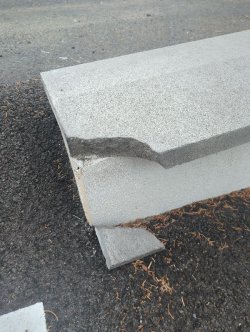 The curbs are these linear elements, most often made of concrete or stone, that separate the roadway from the pedestrian area and channel the flow of rainwater. Discreet but essential, they structure the road infrastructure, secure movement, and determine the accessibility of the city. In this guide, we take a close look at everything: types and materials, technical vocabulary of the trade, NF EN 1340 standards and PMR accessibility rules, main manufacturers and installation companies, criteria for choosing a maintenance service provider, and finally, how an application like KARTES saves time on tracking interventions.
A figure to set the scene. France has hundreds of thousands of kilometers of municipal roads, and each kilometer of urban street is accompanied, on average, by two rows of curbs, one on each side. In other words, the linear extent of curbs to manage across the territory amounts to tens of thousands of kilometers. Behind each curbstone lies a civil engineering work, a standard, a maintenance budget, and often a neighbor waiting for the cracked curb in front of their home to be repaired.
Presentation of Sidewalk Borders: Everything You Need to Know
 Before talking about standards or maintenance, let's lay the groundwork. A curb, in the jargon of roadways and various networks (the famous VRD), refers to a vertical or slightly inclined element that borders the roadway. Professionals also refer to it as roadway curb, bank element, or, more colloquially, as "sidewalk edge." The term encompasses a reality richer than one might imagine.
What exactly is a sidewalk edge?
A sidewalk curb is a prefabricated or cast-in-place element intended to separate two surfaces subjected to different uses: on one side, vehicle traffic, and on the other, pedestrian movement. This is the definition adopted by the NF EN 1340 standard. It fulfills three cardinal functions, detailed below, and constitutes the physical boundary between the road and the pedestrian area.
Concretely, stand at the corner of a street and observe. The stone or concrete that protrudes a few centimeters above the asphalt, just before the sidewalk begins? That's the curb. Its visible part is called the view. Its height determines everything: vehicle crossing, water drainage, comfort of pedestrians. Nothing is left to chance.
What is the real purpose of sidewalk curbs?
Three main roles. First, separation: they mark the boundary between the roadway and the sidewalk, protecting pedestrians from traffic flow. Next, stormwater drainage: associated with gutters, they form a water channel that guides runoff to the drains and manholes. Finally, mechanical integrity of the pavement: the curb holds the layers of the roadway and prevents the sidewalk from sagging on the sides.
Sometimes one forgets a fourth, more subtle use: aesthetics and guidance. A beautiful granite curb in a town center is not the same as a standard concrete strip in an industrial area. And for visually impaired people, the visual contrast between the curb and the surface contributes to recognition. In short, the object is smarter than it looks.
- Separation of flows : pedestrians on one side, vehicles on the other.
- Hydraulic management : routing of rainwater to the network.
- Structural Stability : maintenance of pavement and sidewalk layers.
- Guidance and Aesthetics : visual identification, quality of urban development.
What are the different types of curb boundaries?
Where it gets technical, and fascinating for those who appreciate details. The French standard NF P 98-340/CN, the national supplement to NF EN 1340, distinguishes six major profile families, designated by letters. Each family is then broken down into numbered models according to height and geometry. A quick overview, because this vocabulary keeps coming up in the specifications documents.
| Type | Designation | Main Use | Common Models |
|---|---|---|---|
| T | Sidewalk edge | Urban roads, road/pavement separation | T1, T2, T3, T4 |
| A | Shoulder Border | Roads and shoulders, rounded passable profile | A1, A2 |
| P | Parking border | Parking lots, driveways, pedestrian areas | P1, P2, P3 |
| CS | Single slope gutter | Water collection system, associated with a T or A edge | CS1, CS2, CS3 |
| CC | Double slope trench | Central collection, paved roads and drainage areas | CC1, CC2 |
| I | Island Border | Directional islands, lane separators | I1, I2, I3, I4 |
The most common model in town remains without a doubt the T2 edge. With a sight height of about 14 cm and a straight profile, it equips the majority of French streets. The T1, which is lower, is used when one wants to limit the step. The T3 and T4, which are taller, protect sensitive areas or support a higher load. As for gutters, the T2 + CS combination creates a highly effective edge-gutter set for water drainage.
A special mention goes to the crossable edge and the lowered edge, referred to as "boat". The first, with a rounded profile, allows occasional vehicle passage (cart access, adjacent property access). The second lowers the sightline almost to zero at pedestrian crossings, so that wheelchairs and strollers can cross without obstacles. We will return to this in the accessibility section, as it is a subject in its own right, regulated by specific rules.
What materials for sidewalk curbs?
Concrete dominates, and by a wide margin. Prefabricated in factories, economical, durable, standardized: it ticks all the boxes for mass equipment. But it is not the only material on the market, and the choice says a lot about the project.
The prefabricated concrete, therefore, represents the majority of installations. Standard gray or colored throughout the mass, sometimes textured or deactivated for aesthetics, it comes in a thousand references. Next comes natural stone, especially granite, which is found in historical centers and high-end developments. More expensive, but almost indestructible: some granite curbs span centuries. The dedicated standard is NF EN 1343.
- Prefabricated concrete : the standard, economical and standardized (NF EN 1340)
- Cast-in-place concrete (extruded concrete): suitable for long linear sections and curves, adaptable profile.
- Granite and natural stone : maximum durability, heritage aesthetics, higher cost (NF EN 1343).
- Pavers and edging : small elements for light demarcations, walkways, green spaces.
- Alternative Materials : recycled plastic, steel, wood for specific or temporary uses.
On site, extruded concrete (poured in place by a sliding formwork machine) is gaining ground for large linear projects: it avoids joints, follows curves, and speeds up the pace. Experience shows that a well-adjusted extrusion plant can lay several hundred meters per day. Nevertheless, the prefabricated product retains the advantage of dimensional regularity and product traceability.
Curb and gutter, what's the difference?
They are often confused, so let's clarify. The curb is the vertical element that borders and retains. The gutter, on the other hand, is the sloped, hollow piece that collects water at the base of the curb and directs it toward the drains. The two work together: the curb guides, the gutter evacuates. Hence the expression "curb-gutter" together, frequently used in markets.
The gutter can be single slope (type CS, water flows in one direction) or double slope (type CC, water converges toward the center). The hydraulic reference point, this low level where water flows, has a nice trade name: the water line. Respecting the water line ensures that no puddles stagnate. A misaligned edge by just a centimeter, and you're guaranteed a puddle after the first downpour.
The technical vocabulary of curb boundaries
A little glossary, because a neighbor who wants to understand a roadwork estimate needs to decode the jargon. And honestly, this vocabulary has its charm.
- View : height of the visible border above the covering.
- Water line : low flow line of water at the base of the edge.
- Bevel : angled edge at the top of the frame, which softens the corner.
- Talon : widened base of certain edges, which improves the fit.
- Sealing : fixing the edge on its bed, with mortar.
- Shim concrete or shoulder: concrete mass poured at the back to block the edge.
- Placement bed : layer of concrete or mortar on which the element rests.
- Joint : space filled with mortar between two successive edges.
- Arase : finished reference level of the site.
How do you lay a sidewalk curb?
The installation follows a precise choreography, codified by fascicule 31 of the CCTG (we'll talk about it again in the standards section). Here are the main steps, as a team leader would carry them out on a roadworks site.
- Installation : the axis is marked with a string line, levels are set using a laser or theodolite. The water line is planned at this stage.
- Form foundation : you excavate, you compact the soil. A stable base is half the job.
- Beton laying bed : a concrete foundation (often lean concrete) is poured, on which the curb will rest.
- Installation and adjustment : each component is removed, aligned with the string line, and adjusted with the rubber mallet. A few millimeters matter.
- Shoulder : the backfill concrete is poured at the back to stabilize the edge.
- Jointing : mortar is applied to the joints, it is smoothed, and cleaned.
- Curing and cleaning : the fresh concrete is protected, it is allowed to set before being put back into service.
A detail that seasoned professionals often mention: "a curb doesn't hold by magic, it holds by the concrete behind it." The shoulder, this rear mass that is never seen once the sidewalk is completed, is what takes the brunt of the truck wheels. Rush through it, and the curb will tip over at the first winter. Most incidents involving dislodged curbs almost always come from insufficient compaction or a poorly compacted formwork.
Regulations and standards for sidewalk curbs
Here is the core regulatory aspect of the subject, the one that distinguishes the amateur from the professional. Laying a curb is not just stacking concrete blocks: it is applying a corpus of standards, accessibility rules, and public procurement regulations. Let us briefly review the entire range, from concrete standards to PMR obligations, passing through the legal responsibilities of the community.
What are the standards for concrete sidewalk curbs?
The European reference is the NF EN 1340 : « concrete elements for kerb, requirements and test methods ». It sets the performance requirements and the tests. Its French national complement, the NF P 98-340/CN, defines and classifies the national profiles (the famous types T, A, P, CS, CC, I) and specifies their geometric characteristics. The two must be read together; one cannot be used without the other.
In practice, these texts cover four categories of performance: mechanical resistance, behavior in the presence of ice and de-icing salts, water absorption, and resistance to abrasion. Each characteristic is represented by a marking letter, allowing the public buyer to specify exactly the product needed according to the climate and traffic conditions.
| Feature | Marking | Requirement |
|---|---|---|
| Flexural Resistance (Class S) | S | 3.5 MPa (characteristic value) |
| Flexural Resistance (Class T) | T | 5.0 MPa |
| Flexural resistance (class U) | U | 6.0 MPa |
| Water Absorption | B | ≤ 6 % by mass (on average) |
| Thawing with salts | D | loss ≤ 1.0 kg/m² (on average) |
| Abrasion resistance | H / I | ≤ 23 mm / ≤ 20 mm (disk test) |
A small on-site translation. For a mountain municipality that salts its roads all winter, a " +D " is required: the edge will withstand dozens of freeze/thaw cycles without flaking. In a mild climate, a " +B " is sufficient. This option logic avoids paying for unnecessary over-quality, or conversely, installing an edge that will disintegrate by the third winter. Feedback shows that this detail, often neglected in small markets, explains many premature disorders.
CE marking and NF mark: what do they guarantee?
Two logos, two scopes. The CE marking is regulatory and mandatory: it certifies that the product meets the harmonized standard NF EN 1340 and can circulate within the European Economic Area. Without it, no market placement. It is a minimum, not a guarantee of excellence.
The NF mark, on the other hand, is voluntary and complementary. It goes further: a third-party organization (such as the CERIB) continuously checks that the manufacturer meets predefined performance levels, in line with fascicule 31 of the CCTG. In short, the CE marking says "the product is in conformity with the manufacturer's declaration," whereas the NF mark says "an independent third party has verified, and continues to verify." For a public project owner, requiring the NF mark in the specifications simplifies the process during site acceptance.
What standards for natural stone edging?
Granite and stone follow a distinct framework. The applicable standard is NF EN 1343, « natural stone curbs for external use in road paving ». It covers dimensional tolerances, flexural strength, water absorption, and resistance to freezing and slipping. Premium granite curbs, favored in protected areas and around historic monuments, comply with it.
By the way, a word about heritage. Within the protected areas of historical monuments and classified sites, the Architect of the French Buildings must be consulted regarding the choice of road materials, including furniture. One does not install standard grey concrete curbs in front of a cathedral: local stone is required, sometimes the reuse of old curbs that have been deposited and reshaped. Costs rise, as does the consistency of heritage.
Accessibility for People with Reduced Mobility: What Does the Law Say About Sidewalk Edges?
Here is the most restrictive and socially important aspect. Everything starts with the Act No. 2005-102 of February 11, 2005 on equal rights and opportunities, the participation and citizenship of people with disabilities. It establishes a principle: public space must be accessible to all, including people with limited mobility (PMR), wheelchair users, blind or visually impaired individuals.
This law is implemented through two decrees of December 21, 2006 (n° 2006-1657 and 2006-1658), and especially through the order of January 15, 2007, which sets the technical requirements for the accessibility of roads and public spaces. Since July 1, 2007, any new development, any renovation or rehabilitation of roads must comply with these rules. No exceptions: both creation and renovation are concerned.
What is a sidewalk drop and what are its dimensions?
The lowered area, or "boat," is the section where the sidewalk descends to the level of the road to allow crossing. At the location of each pedestrian crossing, it is mandatory. And its dimensions are not negotiable.
The lowered section must have a minimum width of 1.20 meters. The residual step between the lowered sidewalk and the road surface must not exceed 2 centimeters, with a rounded edge or a bevel at 45°. A tolerance up to 4 cm is allowed if the bevel is made with a slope of 1 to 3. Beyond that, it is non-compliant, period. If the sidewalk width allows, a horizontal passage of at least 0.80 m should be reserved at the crossing point, so that a wheelchair user can stop flat before proceeding.
- Maximum lift : 2 cm (rounded or beveled edge), up to 4 cm if beveled at 1/3.
- Width of the lowered part : 1.20 m minimum.
- Minimum distance between two steps : 2.50 m (successive "donkey steps" are prohibited).
- Clearway Width : 1.40 m free of any obstacle (reducible to 1.20 m in case of constraint).
- Longitudinal slope : less than 5 %, with rest platforms beyond 4 %
- Roll : less than or equal to 2 %
On site, the difficulty is not knowing these figures, but keeping them up to date across hundreds of intersections inherited from decades of disparate developments. Many municipalities discover, when auditing their road network, that a significant portion of their depressions exceeds the 2 cm regulatory limit. Bringing them into compliance then stretches over several years, prioritized according to pedestrian traffic and public establishments.
Wake-up bands of vigilance, a distinct obligation
They are called BEV, or tactile paving tiles. These raised, contrasting surfaces, detectable by cane, warn blind or visually impaired people of approaching hazards, typically the edge of a platform or a crossing. At the level of kerb drops, their installation is mandatory, 0.50 m from the edge. The reference standard is the NF P 98-351.
Detail that matters: the contrast, both visual and tactile, must be real. A podotactile tile of the same color as the flooring, or with buttons worn down by use, no longer fulfills its function. This is precisely the kind of defect that maintenance must detect and correct, otherwise compliance erodes over time, without anyone realizing it until an accident occurs.
Cart entries and crossable curbs: what rules?
Cartage entries, these vehicle accesses that cut across the sidewalk in front of a garage or a gate, present a particular case. For blind people, it is recommended that the curb height there be more than 5 cm, so as not to confuse it with a pedestrian crossing drop. Logic: a drop signals "here, people cross," whereas a cartage entry signals "here, cars come out." Confusing them would be dangerous. The geometry of the curb thus contributes to a silent tactile language, which visually impaired people decipher with their cane.
What legal responsibility for the community?
Sensitive subject, often poorly understood by elected officials. Road maintenance is a public work, and the municipality (or the road maintenance manager) is responsible for its upkeep. In the event of an accident caused by a defect, such as a loose curb, an excessive bump, or a hole in the gutter, the applicable regime is that of presumed fault due to lack of normal maintenance.
The nuance is significant. It is not up to the victim to prove that the work was poorly maintained; it is up to the public authority to demonstrate that it normally maintained the work. The reversal of the burden of proof changes everything. A commune that cannot produce any inspection or repair history finds itself in difficulty before the administrative court. Conversely, a community that documents its patrols, reports, and interventions has a solid file. Incidentally, this touches on the direct interest of a traceability tool for interventions, which we will come back to.
Let us add that municipalities of a certain size must develop a PAVE, the Accessibility Plan for Roads and Public Spaces. This document schedules, prioritizes, and budgets for compliance. It also serves as a guide for maintenance: repairs are not done at random, but follow a plan.
Key actors and service providers for sidewalk edges: the top 10
Who manufactures, installs, and maintains curbs in France? The market is structured into two main categories that complement each other: on one side, the manufacturers of prefabricated products (concrete, stone), and on the other side, the public works companies that carry out the installation and maintenance. Here is an overview of the recognized players, without any absolute hierarchy, because the "best" always depends on the territory and the type of project.
The main manufacturers of prefabricated curbs
On the production side, a few names consistently appear in tenders. These road concrete manufacturers cover the territory with regional plants, because a curb is heavy and doesn't travel well: it's bought near the construction site. The transportation cost quickly outweighs the product itself.
- Alkern : major independent player in the French prefabricated concrete industry, wide range of curbs, gutters and road infrastructure products, strong presence in the local government market.
- Stradal : historic brand of road concrete, with well-known and clearly identified references by municipal technical services.
- Marlux : recognized for outdoor design and decorative products, with a border offering for high-quality spaces.
- PBM : manufacturer of concrete solutions for road construction and infrastructure, present on both public and private markets.
- Edycem : concrete and prefabricated products manufacturer, integrated into a regional industrial group from the western region.
In addition to this list are regional manufacturers and granite carriers, notably in Brittany, who supply the natural stone market. For granite edging, the origin matters: Breton granite, Tarn granite, or imports. The choice depends on cost, color, and heritage requirements.
Installation and civil engineering companies
Installation and maintenance are handled by civil engineering and public works companies. Major national groups coexist with a dense network of local SMEs, often the most responsive for small repair projects. Here are the key players in the French road sector.
- Colas : global leader in the construction and maintenance of transportation infrastructure, a subsidiary of the Bouygues group, highly present in urban roadworks.
- Eurovia / VINCI Construction : historically the roadworks brand of VINCI, integrated into the VINCI Construction division, a reference operator in road construction works.
- Eiffage Route : road division of the Eiffage group, national network for roadworks and urban development projects.
- NGE : independent French construction group, specialized in infrastructure and roadworks.
- The fabric of local construction SMEs : paving artisans and regional roadworks companies, essential for local maintenance and quick interventions.
A field observation deserves to be highlighted. For new installations on a large development project, major groups bring resources and guarantees. But for routine maintenance, replacing ten loosened curbs here and there, redoing a non-compliant slope there, it is often local SMEs that make the difference, thanks to their responsiveness and in-depth knowledge of the site. Many municipalities combine approaches: a framework contract with a major player for the programs, and local businesses for the day-to-day operations.
Which organizations regulate the profession?
Beyond companies, a few institutions shape the sector and deserve to be mentioned for those who want to dig deeper. The CERIB (center for studies and research in the concrete industry) plays a key role in certification and research. The CEREMA (center for studies and expertise on risks, environment, mobility, and urban planning) publishes reference technical guides on accessible roadways. The FIB (federation of the concrete industry) and CIMbéton publish widely used technical collections used by engineering offices. And for company qualification, QUALIBAT remains the reference.
How to choose a maintenance provider for sidewalks?
Choosing the right service provider is a combination of administrative requirements and practical common sense. A local authority or private manager does not select a roadworks company like a plumber: there are public procurement rules, qualifications to check, and subtle signals to detect. A methodical analysis.
Which technical criteria should be checked first?
First and foremost, qualifications and insurance. A serious company will readily present its certifications (QUALIBAT for roadwork), its ten-year insurance certificate and civil liability insurance, as well as its references from comparable projects. Ask to visit a recent project: nothing beats seeing a work completed two years ago to assess its long-term durability.
- Qualifications : QUALIBAT roadworks, up-to-date certifications, team training.
- Insurance : decennial, professional liability, guarantee of perfect completion.
- References : similar projects, feedback from public clients, experience on the territory.
- Technical Means : installation equipment, extrusion capacity, stone cutting workshop.
- Responsiveness : response times for emergencies (dangerous loose edge, for example).
- Traceability : ability to account for interventions, reports, photos, geolocation.
How does a public roadworks market function?
For a local authority, the maintenance of verges most often takes place through a public procurement contract, on a call-off or framework agreement basis. The tendering process is governed by the public procurement code. The specification document (CCTP) details the requirements: types of verges, standards (NF EN 1340, NF mark), installation methods, deadlines, penalties. Fascicle 31 of the CCTG serves as the technical basis.
An often overlooked channel also exists: the UGAP, the public procurement agency, which allows local authorities to purchase certain services without initiating a full procedure. Practical for saving administrative time. Regardless of the channel, the project owner benefits from clearly drafting their reporting requirements: requiring a dated and geolocated intervention report ensures valuable traceability, especially in case of disputes over liability.
What questions to ask before signing?
A short-list of concrete questions, to bring up in a selection meeting. They quickly separate the serious from the opportunists.
- What is your response time for an immediate danger border?
- How do you document each intervention (before/after photos, geolocation, timestamp)?
- Are your edges certified with the NF brand as a complement to the CE marking?
- How do you ensure PMR compliance of the lowered sections and the wake-up bands?
- What is your guarantee on the installed works, and exactly what does it cover?
- Do you have a tracking tool that allows you to view the history of interventions on our territory?
What warning signals should cause retreat?
Be wary when a contractor is vague about their guarantees, refuses to provide verifiable references, or offers an abnormally low price (often synonymous with poorly executed work or under-dosed concrete). Another red flag: complete absence of reporting. A company that "does the job and moves on," without any written record, exposes you in the event of an inspection or accident. Documented transparency is not a luxury—it's an assurance.
In practice, the best-organized communities now impose a standard for digital reporting. The old paper notebook that gets lost is a thing of the past: each intervention is recorded, photographed, and located on a map. This level of requirement changes the relationship with the service provider, and it is precisely here that a dedicated application comes into play.
Comment KARTES improve sidewalk edge maintenance?
A lot has been said about concrete, standards, and service providers. The awkward question remains: how to manage all of this on a daily basis without getting lost in spreadsheets and paper reports? This is where KARTES, a mobile application for managing and tracking field interventions, designed for roadways, public spaces, and urban equipment, of which sidewalk curbs are obviously part.
What is KARTES concretely?
KARTES is a field intervention management solution, in other words, a tool for managing field interventions. The idea is simple: each work item (a curb, a gutter, a depression, a warning strip) becomes a geolocated object on a map. When an intervention takes place (inspection, report, repair, replacement), it is recorded on a smartphone or tablet, timestamped, photographed, and linked to its precise location. The history builds itself automatically, intervention after intervention.
Where a technical service used to juggle yesterday between a paper plan, a field notebook, and an overflowing email inbox, KARTES centralizes. The map becomes the living memory of the road infrastructure heritage. And this memory, as we saw earlier, is worth its weight in gold when it comes to proving the proper maintenance of a public work before a judge. Let's look at the concrete contribution from the perspective of each actor.
From the community's perspective: steering and proof
For a municipality or an intercommunal authority, the benefit can be summed up in three words: visibility, traceability, arbitration. The community can see, on a single map, the status of its boundary assets: what has been inspected, what has been repaired, and what remains to be addressed. No more "we thought it was done." The PAVE, this accessibility plan that was discussed, finally finds an operational tracking tool.
Traceability then legally secures. Remember the regime of presumed fault: it is up to the commune to prove that it normally maintained the work. With KARTES, each timestamped and geolocated intervention constitutes evidence. In case of a dispute regarding an accident related to a loose edge, the technical service retrieves the history: date of the last inspection, report, repair intervention, before/after photos. The file defends itself. This argument alone often justifies the adoption of the tool.
Finally, budgetary arbitration. By aggregating the data, the community identifies the sectors that consume the most interventions, spots areas that need thorough rehabilitation rather than indefinite patching, and plans its budgets based on facts, not impressions. Feedback shows that repeated repairs in the same location often cost more, over three years, than a well-conceived full renovation. However, it is essential to have the data to prove it.
From the maintainer's perspective: less paperwork, more fieldwork
For the road maintenance company or the technical agent on site, daily life really changes. Before: noting the intervention in a notebook, taking photos on a personal phone, re-entering everything at the office in the evening, trying to remember the exact address. A time-consuming headache, a source of forgetfulness and errors.
With KARTES, the agent opens the application on site, selects the relevant boundary on the map (or creates it with a tap if it doesn't exist yet), describes the intervention, takes photos directly in the app, and validates. Everything is automatically geolocated and timestamped. Double data entry disappears. Administrative time is reduced. And on site, every minute saved on paperwork is an additional minute for actual work.
- On-site data entry : no more re-entry at the office, the intervention is recorded in real time.
- Embedded Photos : before/after attached to the work, without file manipulation.
- Automatic geolocation : the exact location is captured, no more "it was around number 12, I think".
- Viewable history : the agent sees what has already been done on the edge before intervening.
- Reports ready : the reporting required by the client is generated from the data entered.
From the perspective of the resident and user: responsiveness and clarity
And what about the citizen in all this? After all, he is the first affected, it's him who stumbles on the broken curb. A well-managed intervention management system shortens the time between reporting and repair. When a neighbor reports a dangerous curb, this report can be integrated into the workflow, located, prioritized. No more paper lost in a department, no more reports that lie dormant for six months.
For people with reduced mobility, the challenge is even more direct. A non-compliant step or a worn-out warning strip can be a daily obstacle, sometimes even a danger. Rigorous follow-up on interventions allows these problem areas to be identified and corrected within the PAVE framework. Accessibility stops being a mere wish and becomes a managed, measurable project, the real progress of which can be tracked.
In what KARTES does it reduce maintenance costs?
Cost reduction does not come from a magic wand, but from the accumulation of small gains. Let's recap the concrete levers, because this is often the first question a decision-maker asks.
| Lever | Effect on Costs |
|---|---|
| Elimination of double entry | Less administrative time, agents refocused on the field |
| Geolocation of Works | Less time spent searching for locations, optimized routes |
| History of Interventions | Detection of repetitive repairs, repair/refurbishment arbitration |
| Legal traceability | Reduction of litigation risk and compensations |
| Data-Driven Prioritization | Budgets allocated to sectors that are truly prioritary |
| Automated Reporting | Reports ready for the client, fewer disputes at handover |
A telling example. Imagine an intersection where, due to the lack of a centralized memory, the same edge is repatched every eight months without ever addressing the root cause (an unstable base). Over five years, the cumulative cost of these small repairs far exceeds the cost of a complete overhaul that could have been decided earlier, had the recurring issue been recognized. KARTES make this pattern visible. That's the whole point of turning scattered interventions into usable data.
That said, let's be honest: no tool can replace the installer's expertise or the proper sizing of a project. KARTES does not set the boundaries, nor does it exempt from respecting NF EN 1340 or the 2007 decree. The application is an organizational amplifier, not a substitute for professional expertise. But when used properly, this amplifier changes the scale of what a small team can manage.
Maintenance, pathologies, and lifespan of kerb stones
A well-placed edge lasts a long time. But "a long time" is not "forever," and public space takes a beating: heavy traffic, harsh winters, tree roots, and utility work that tears up the pavement. Understanding common ailments helps anticipate maintenance rather than enduring it.
What is the lifespan of a sidewalk edge?
It depends on the material and the conditions. A properly laid and aligned concrete curb commonly lasts for several decades, often 30 to 50 years, before requiring replacement. Granite, on the other hand, belongs to a different category: there are century-old stone curbs still in use in old town centers. The limiting factor is almost never the material alone, but rather external mechanical aggression.
What are the most frequent pathologies?
The parade of border disorders, seen a thousand times on the field, looks like this. And each one tells a story about what happened underneath.
- Loose or flipped edge : insufficient rear alignment, heavy truck wheel impacts, unstable mold base.
- Flaking and chipping : impacts, freeze/thaw on poorly classified concrete, aggressive de-icing salt.
- Cracking : differential settlement, ground movement, tree roots growing underneath.
- Open joints : degraded mortar, water infiltration, weeds colonizing the gap.
- Water line recession : depressed edge, water stagnation, recurring puddles.
- Non-compliant lowering : bump has become greater than 2 cm over time, loss of accessibility.
The case of roots deserves a parenthesis. In town, alignment trees are magnificent, but their roots happily lift up curbs and sidewalks. This is one of the main causes of disorder in wooded areas. The solution is not to cut down the tree, but to anticipate with anti-root devices at planting time, and to monitor their evolution over time. Yet another point where historical data illuminates the decision.
Should a damaged edge be repaired or replaced?
The real manager's question. An isolated edge, loosened by an impact, is reattached: it is removed, realigned, and resealed. Quick, economical. But when the disorder repeats, or when an entire linear section collapses, patching becomes a bottomless pit. The right reflex: record the interventions, and switch to full-scale repair as soon as the cumulative cost and disruption of individual repairs exceeds that of a complete overhaul.
In practice, the technical services that perform best apply a simple rule: a border repaired twice in the same place within a short period of time triggers a root cause analysis. Often, it is not the border that is the problem, but what is underneath. Treating the symptom without addressing the cause is simply repaying indefinitely.
How to plan an effective preventive maintenance?
Corrective maintenance (repairing when it's broken) is always more expensive than preventive maintenance (inspecting and anticipating). For curbs, a reasoned approach combines regular inspection rounds, geolocated inventory of assets, prioritization based on pedestrian flows and accessibility issues, and tracking of interventions over time. This is exactly the framework that an intervention management tool comes into play, transforming scattered observations into a structured program.
How to choose the right type of border according to the context?
Not all edges are the same, and especially, none is universal. Choosing the right profile, the right material, and the right resistance class is a trade-off between traffic, climate, budget, and aesthetic requirements. A poor choice will cost dearly a few years later, in premature disorders. Here's how to reason, sector by sector.
What curb for a classic urban street?
For a standard residential or commercial street, the T2 edge remains the reliable choice. Sufficient sight height to deter sidewalk parking, straight profile easy to install, immediate availability from all manufacturers. It is generally paired with a CS1 or CS2 gutter to manage water. In cold climates with salting, severe freeze marking is required to prevent chipping after two winters.
When trying to limit step height, for example in a meeting area or a crossing platform, you go down to T1. Conversely, in front of a high-risk area for collision (heavy vehicle exits, delivery platform edges), you go up to T3 or T4, which are higher and more robust. The correct reflex is to adapt the view to the actual behavior of vehicles, not to install the same thing everywhere out of habit.
What kind of curb for a cart entrance or a waterfront access?
There, you want something drivable. The lowered, rounded-edge curb (often a type A curb, or a lowered T2) allows a vehicle to drive over without damaging the curb or its tires. The classic trap: installing a curb that's too high in front of a garage, and watching the user scrape their bumper every day. A few extra centimeters, and you're guaranteed to have an unhappy neighbor, with a letter to the city hall as a result.
What border for a parking lot or a parking area?
The P type makes its entrance. Designed for parking lots, driveways, and pedestrian areas, these edging solutions define boundaries without being intrusive. They are also used to border flower beds and green spaces, where a T2 would be oversized. For a simple decorative separation between a lawn and a driveway, a low-profile borderette is more than sufficient and significantly less expensive.
What kind of curb for a historic center or a listed site?
Here, standard gray concrete is generally avoided. Natural stone, most often granite, is used instead for the sake of heritage coherence. Consulting the Architect of the French Buildings is frequent, sometimes mandatory. The additional cost is real, but the durability of granite offsets it over the very long term, and the image of the town center benefits from it. Some communes even reuse their old stone curbs, retailed, in a logic of circular economy and authenticity.
| Context | Recommended border | Typical Material |
|---|---|---|
| Standard urban street | T2 + CS gutter | Precast concrete |
| Meeting zone, platform | T1 or low edge | Concrete |
| Cart entry | Lowered, passable edge (A / T2 lowered) | Concrete |
| Parking, alley, green space | Type P or edging | Concrete |
| Heavy Goods Exit | T3 or T4 | High-strength concrete |
| Historic center, classified site | Stone border | Granite / natural stone |
| Pedestrian crossing | Lowered as per + BEV | Concrete + tactile paving tiles |
A frequent remark from contractors: the right choice of edge profile is made upstream, during the design phase, never as a corrective measure on site. Once the tender is launched with a poor profile, correcting it is expensive and time-consuming. It is better to spend an extra hour on the CCTP than three weeks managing a dispute.
Laying Sidewalk Edges: Techniques, Rhythms, and Points of Caution
We've already touched on the placement earlier. Let's delve deeper, because this is where the lifespan of the structure is determined. Two major families of techniques coexist: the installation of prefabricated elements and in-situ casting by extrusion. Each has its preferred applications.
Prefabricated unit or extruded concrete, which technique to choose?
The installation of prefabricated elements remains the most common. The molded curbs are brought from the factory, placed one by one on their concrete bed, adjusted, and joined. Advantages: perfect dimensional regularity, product traceability (each element is certified), flexibility for small linear sections and spot repairs. Disadvantage: the pace is slower, and the joints may become potential weak points if the mortar deteriorates.
The extruded concrete, poured in place by a sliding formwork machine, is changing the game on large construction sites. The machine advances and lays down a continuous, jointless concrete cord that follows curves. On a straight boulevard or a roundabout, the pace explodes: several hundred meters per day are not uncommon. However, extrusion requires a specialized workshop, calibrated concrete, and is not well suited for occasional work. Therefore, the choice depends on the scale of the project.
Why is the rear alignment so critical?
Let's repeat it, for it is the backbone of the war. A curb does not hold by its weight, it holds by the filling concrete poured behind, the shoulder. It is this invisible mass, later covered by the sidewalk, that absorbs lateral stresses: wheel impacts, soil pressure, traffic vibrations. A thin or discontinuous shoulder, and the curb will tip over at the first winter. Field reports are unanimous: the majority of curbs that become dislodged prematurely betray a poorly done filling.
The subgrade plays a crucial role as well. A poorly compacted subgrade settles unevenly, the edge follows the movement, the water line becomes misaligned, and water pools. Hence the importance of the preparatory stages, often invisible to the public but decisive. As the ancients say, "what you don't see is what holds the work together."
What precautions should be taken to respect the watercourse?
The water flow line, this line of drainage, does not tolerate approximations. A centimeter of reverse slope, and the water refuses to flow toward the drain, forming a persistent puddle. Careful teams use laser leveling, check the levels at each element, and often test with water at the end of the project to ensure everything drains properly. This simple check prevents many later complaints, as a recurring puddle in front of a business quickly generates complaints.
What signage and safety measures on a kerb construction site?
A roadwork site, even a modest one, remains a risky environment. Temporary site signage is mandatory: marking, signs, secure pedestrian diversion. The pedestrian, and particularly the person with reduced mobility, must always have a protected and accessible route during works. The work area is enclosed by a rigid device, never by a simple tape that a blind person would not detect. The safety of the workers, exposed to traffic, requires the use of PPE and rigorous organization of the area.
Innovations and trends around sidewalk curbs
Can something as mundane as a sidewalk curb still innovate? More than one might think. Between ecological transition, stormwater management, and heritage digitization, the sector is evolving. A look at the changes shaping tomorrow's road infrastructure.
What is a drainage border and what is it used for?
Stormwater management is becoming a central issue with climate change and intense thunderstorm episodes. Drainage or permeable edges, slit or designed to allow water to filter through, contribute to soil de-impermeabilization. Instead of sending all the water to an overloaded network, local infiltration is encouraged. Combined with swales and porous pavements, they fit into the logic of "sponge cities," increasingly favored by urban planners.
Recycled Material Edges: A False Good Idea?
Not at all, and the market confirms it. Edges incorporating recycled aggregates, or even recycled plastic edges for certain light uses, are gaining ground under the pressure of environmental goals set by local authorities. Low-carbon concrete is also making progress. Reusing old stone edges, which are deposited and then reshaped, follows the same philosophy. However, these solutions must still meet the performance requirements of standards: ecology does not exempt from mechanical strength.
Toward connected boundaries and a connected road infrastructure heritage?
The real revolution may not be in concrete, but in data. The digitization of road infrastructure, through geolocation tools and intervention tracking, is transforming maintenance. Each curb becomes a point on a map, equipped with a history, a status, and an inspection schedule. Sometimes this is referred to as the "digital twin" of the road infrastructure. Tomorrow, sensors could even signal a settlement before it becomes visible, but we are not there yet everywhere.
What is already very real, on the other hand, is the ability to manage an entire asset base from an interactive map, to prioritize interventions based on data, and to prove the proper maintenance of works. This is exactly the area where a solution like KARTES positions itself. KARTES, bridging the gap between the field agent, his smartphone, and the decision-maker's dashboard. The sidewalk curb, this venerable piece of concrete, thus enters seamlessly into the digital age.
How to conduct an audit of the boundary heritage of a municipality?
Before repairing or scheduling work, it is first necessary to know what you own. Many municipalities manage their road infrastructure "blindly," without a precise inventory of their curbs, their condition, or their compliance. Heritage audit addresses this blind spot. Here is a proven method applicable from small villages to large urban areas.
Where to start a curb survey?
The starting point is the geolocated inventory. We survey the roadways, identify the edge lines, and note their type, material, and condition. In the paper era, this work was lost in file cabinets. Today, it is directly entered on a digital map via a smartphone, with each segment becoming a localized object. The inventory forms the basis of everything: without an inventory, no management is possible.
For a small commune, a full census can be carried out in a few days of fieldwork. For an agglomeration, the process is carried out by sectors, prioritizing key axes and the areas surrounding public establishments. The essential thing is to adopt a homogeneous rating grid, so that the "average" status means the same thing to all agents.
What criteria to evaluate for each segment?
An effective audit grid combines several dimensions, which can be quickly checked on-site. The objective is not scientific perfection, but a reliable and reproducible snapshot of the actual state.
- Type and material : profile (T, A, P...), concrete or stone, presence of a gutter.
- Structural Condition : intact, loose, cracked, tilted, missing.
- Accessibility compliance : drop of lowered areas, presence and condition of warning strips.
- Hydraulic function : proper water flow or stagnation, open joints.
- Priority Level : immediate danger, to monitor, or good condition.
- Geotagged photo : a picture is worth a thousand words, especially when it comes to tracking progress.
How to leverage audit data?
Once the data is collected, the real work begins: transforming it into an action plan. We cross-reference the condition of the infrastructure with pedestrian flows, accessibility issues, and the available budget. We distinguish between urgent matters (immediate danger, to be addressed without delay) and planned projects, which are scheduled over several budgetary periods. The PAVE is directly fed by this audit.
The value of a digital tool for managing interventions becomes clearly evident here. The audit map is not a static image; it evolves and updates with each intervention, keeping a historical record. Three years later, it is clear exactly what has been addressed, what has deteriorated, and where to focus efforts. The audit stops being a report gathering dust in a drawer and becomes a dynamic dashboard.
Common mistakes to avoid with curbs
Twenty years of roadworks have left a collection of recurring errors. Knowing them is already avoiding them. Here are the most common ones, from the engineering office to the site.
What design errors are the most expensive?
At the top of the list: the poor choice of profile, made out of habit rather than analysis. Placing T2 everywhere, including where a crossable edge or a type P was required, generates dissatisfaction and rework. Next comes forgetting accessibility during the design phase: at the end of the project, it is discovered that the lowered section is not compliant, and everything has to be redone. Finally, neglecting water management, poorly considering the water flow, dooms the work to perpetual puddles.
What installation errors compromise the lifespan?
On site, insufficient backfilling reigns supreme. It has been hammered home: without proper support, the edge collapses. Just behind, poorly compacted subgrade, causing settlement and unevenness. Then, the disregard for the water line, due to haste. And the choice of an inappropriate concrete class for the climate, which dooms the edge to flaking from the first freeze-thaw cycles with salting. None of these errors is fatal on its own, but their cumulative effect ruins a site.
What management errors hinder a technical service?
On the management side, the main error is the lack of traceability. Fixing problems without documenting anything dooms you to repeating the same mistakes and leaves you helpless in case of disputes. Another common flaw is endlessly patching up problems without diagnosing their root cause, which is like throwing money down a bottomless well. Finally, managing maintenance in a purely reactive manner, waiting for breakdowns to occur, when a bit of preventive maintenance would cost far less. Data, again and again, is the antidote to these pitfalls.
Glossary of Sidewalk Edges
To close this guide beautifully, here is a glossary of technical terms encountered throughout the article. Handy to have on hand when decoding a quote or a roadworks specification.
- Lowered (or boat) : area where the sidewalk descends to the level of the roadway for pedestrian crossing.
- Arase : finished level of reference for a site.
- Warning Surface (BEV) : detectable surface with studs, detectable by foot and cane, warning of a danger (NF P 98-351 standard).
- Alignment concrete (shoulder) : concrete mass poured behind the edge to secure it.
- Ditch : hollow element collecting water at the base of the curb (types CS and CC).
- Bevel : tapered edge softening the upper angle of the rim.
- Chapter 31 of the CCTG : reference text governing the implementation of curbs and gutters in public procurement.
- Water line : low flow line of water at the base of the edge.
- Placement bed : layer of concrete or mortar supporting the edge.
- CE Marking : regulatory certificate of compliance with the harmonized standard NF EN 1340.
- NF Mark : voluntary complementary certification, controlled by a third-party organization.
- PAVE : accessibility plan for roads and public spaces.
- Bump : residual level difference, limited to 2 cm at the location of the lowered areas.
- VRD : roads and various networks, the technical field to which curbs belong.
- View : height of the visible border above the covering.
Borders, urban greening and heat islands
The sidewalk edge today finds itself at the crossroads of issues that would have been unimaginable twenty years ago. De-impermeabilization, fight against heat islands, greenification of streets: the road infrastructure is changing its paradigm, and the edges along with it. The subject deserves our attention, as it redefines the way we design and maintain these structures.
In what way do gutters contribute to the management of rainwater?
The classical model sent all rainwater to the sewer system via gutters. Under the effects of intense thunderstorm episodes and saturated networks, this model reveals its limitations. The trend is reversing: nowadays, the focus is on infiltrating water locally rather than draining it away. Interrupted, pierced, or draining curbs allow water to reach planted basins and infiltration pits. The curb no longer merely acts as a barrier; it becomes a link in a vegetated hydraulic system.
How to reconcile edges and alignment trees?
Trees in the city provide shade, freshness, and biodiversity. However, as we have seen, their roots lift curbs and sidewalks. The challenge is to green without compromising the infrastructure. Solutions exist: generous planting pits, structured draining soils, root barriers, and curbs designed to support vegetation rather than constrain it. This requires careful monitoring over time, as the growth of a tree spans decades, and disorders appear gradually.
Why does long-term tracking become strategic?
These new developments, more vegetated and more permeable, require different maintenance and more careful monitoring. A clogged gully, a blocked drainage border, a tree pit lifting the sidewalk: all these are points that need to be monitored over time. Maintenance no longer consists solely of sealing and repairs; it now includes an ecological monitoring dimension. And again, having a geolocated historical record of works and interventions makes all the difference between a city that anticipates and a city that repairs in a crisis. Data, indeed, is the red thread of modern road maintenance.
10 Frequently Asked Questions About Sidewalk Curbs
What is the difference between a curb and a gutter?
The curb is the vertical element that separates the road from the sidewalk and holds it in place. The gutter is the sloped, hollow piece that collects water at the base of the curb and directs it toward the drains. The two work together: one guides, the other evacuates.
What is a T2 type border?
The T2 is the most common kerb model in urban areas. With a straight profile and a sight height of approximately 14 cm, it equips the majority of French streets. It is often combined with a CS gutter to form a classic kerb-gutter set.
What drop height is allowed for accessibility?
The maximum allowable protrusion at the edge of a lowered sidewalk is 2 centimeters, with a rounded or beveled edge. A tolerance up to 4 cm is allowed if the bevel is made with a 1:3 slope. Beyond that, the installation is not compliant.
Which standard governs concrete curbs?
The European standard NF EN 1340 sets out the requirements and test methods. Its national complement, the NF P 98-340/CN, defines the French profiles (types T, A, P, CS, CC, I). The 31st fascicle of the CCTG, on the other hand, governs the implementation in public procurement.
What is a sidewalk or boat lowering?
The curb cut, or drop, is the area where the sidewalk descends to the level of the roadway to allow pedestrians, wheelchairs, and strollers to cross. Mandatory at pedestrian crossings, it must be at least 1.20 meters wide with a residual lip of no more than 2 cm.
How to repair a loose seam?
The displaced element is placed back, the formwork is checked and reset, the bedding and leveling concrete at the back are redone, and then the joint is re-pointed with mortar. If the damage recurs in the same location, the underlying cause, often the ground, must be diagnosed.
What is the lifespan of a sidewalk edge?
A well-placed concrete curb typically lasts 30 to 50 years. Granite lasts even longer, sometimes more than a century. The limiting factor is almost never the material itself, but external aggressions: heavy traffic, freezing, tree roots, and utility works.
What is a wake-up alert band?
It is a raised, contrasting, and detectable surface by cane that warns blind or visually impaired people of a hazard such as a crossing. Regulated by the NF P 98-351 standard, it is mandatory at the edge of the sidewalk, installed 0.50 m from the curb.
Who is responsible for the maintenance of the curbs?
The municipality or the road manager is responsible for the maintenance, as roads are public works. In case of an accident, the presumed fault regime applies: it is up to the community to prove that the work was normally maintained, hence the importance of rigorous traceability of interventions.
Concrete or granite, which to choose for your edging?
Prefabricated concrete is economical, standardized, and suitable for mass production. Granite, more expensive, offers almost unlimited durability and a sought-after heritage quality in historical centers. The choice depends on the budget, the desired aesthetics, and site constraints.
Conclusion: The border, a small work with major stakes
We have seen throughout this guide that the curb is anything but trivial. Behind this concrete or granite profile lie vital functions (separating, draining, supporting), a set of demanding standards (NF EN 1340, NF P 98-340/CN, decree of January 15, 2007), major accessibility issues, and a real legal responsibility for local authorities. In short, a small work with major stakes.
Maintenance makes all the difference between a road network that ages gracefully and one that deteriorates silently until a disaster occurs. Choosing the right service provider, demanding traceability, anticipating rather than enduring: these are the keys. And to orchestrate all of this without getting lost in paperwork, an intervention tracking application like KARTES transforms asset management into data-driven decision making, to the benefit of local authorities, maintainers, and ultimately the residents who walk safely.
Do you manage a road infrastructure, are you a maintainer or an elected official in charge of public space? Take a few minutes to assess how your interventions are currently recorded. If the answer lies in a paper notebook or an email inbox, there is certainly a better way to go about it. Share this guide with others, it could well illuminate your next maintenance tender.