Interventions on Bicycle racks
Bike racks: comprehensive guide, standards, stakeholders and maintenance
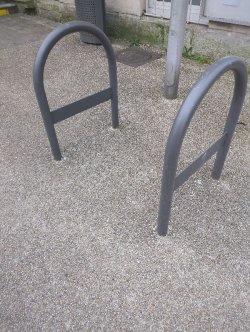 The bike racks, also known as stands, bike supports, bike holders, or shelters, are the equipment that allows for stable and secure parking and attachment of a bicycle. From the U-shaped rack embedded in a sidewalk to the enclosed bike shed, passing through double-deck racks and collective lockers, the family is vast. More than just a piece of metal, a bike rack is today a regulated equipment, subject to the LOM law and specific standards, which influence anti-theft measures and the growth of cycling. In this guide, we cover everything: types and vocabulary, dimensions and standards, main manufacturers and players, criteria for choosing a maintenance provider, and how an application like KARTES streamlines the tracking of interventions on a support park.
A figure to set the scene. Cycling has increased by about 60% in France since 2019, driven by cycling-friendly policies and the rise of electric bicycles. This surge has created a massive need for parking, and bike racks are on the front line. Behind every arch or shelter lies a regulation to follow, a piece of infrastructure to maintain, and a major challenge: theft, the primary obstacle to cycling. A poorly designed or poorly maintained rack, and the cyclist gives up.
Presentation of bike racks: everything you need to know
Let's start with the basics. In industry terminology, we refer to cycle parking furniture, or more simply, bike support, arch, bike rest, or bike shelter. The term "cycle," an official term, refers to both the classic bicycle and the electrically assisted bicycle. The range goes from the simplest, the external arch, to the most elaborate, the closed and secured bike house.
What is a bike rack?
A bike rack is a fixed device used to stabilize and secure a bicycle, ideally by the frame and at least one wheel. Its primary function is to keep the bike upright and protect it from theft. Without a rack, the cyclist looks for a pole, a barrier, or a tree, all makeshift solutions that are often unsafe and sometimes inconvenient for pedestrians.
Why attach the frame and the wheel? Because a lock placed only on the wheel allows the thief to take the rest of the bike, a classic and frustrating scenario. A good support allows you to secure the frame, the main part of the bike, in addition to a wheel. This requirement, as we will see, is even included in the regulations. The support is not just a stand, it is an anti-theft anchoring point.
What are the different types of bike racks?
Where the family expands, and this is enlightening. Depending on the need, the duration of stay, and the available space, several types of supports coexist. Each has its advantages and limitations.
| Type of support | Principle | Preferred usage |
|---|---|---|
| Inverted U-shaped bracket | Bar for attaching frame and wheel | Short-term parking, roadways |
| Bike stand | Support on which the bike rests | Public spaces, commerce |
| Wheel Clamp Rack | Maintenance by wheel only | To be avoided alone, not very secure |
| Double-deck rack | Two-level parking | High density, stations, hubs |
| Covered shelter | Weatherproof Arches | Medium Duration Parking |
| Cottage or bike shed | Secure and closed shelter | Long term, intermodality |
The inverted U-shaped bracket, often called the Sheffield bracket, is the standard. Simple, sturdy, and inexpensive, it allows you to attach the frame and wheel, and fits almost all sites. The spoke clamp, on the contrary, holds only the wheel: not recommended on its own, as it does not provide real anti-theft security. To increase security, you can go for the double stage. And for long-term use, you can upgrade to a shelter, a box, or a locker.
What is a bike shed or bike box?
The bike shed, also known as a bike box or velobox, is a closed and secured individual or collective shelter. Unlike the open rack, it fully protects the bicycle from weather conditions and prying eyes, behind a locked door. Access is via key, badge, or code, reserved for authorized users. It is the ideal solution for long-term parking and intermodality.
Individual lockers, which accommodate one or a few bikes for a single user or a household, and collective lockers, which group numerous spaces under controlled access, are becoming more common near train stations, buildings, and exchange hubs, where bikes are parked for several hours, or even all day. The bike shed meets a strong demand: a truly secure parking solution that is reassuring enough for people to leave valuable bikes there.
What is a rack and why is it recommended?
The arceau combines the advantages, which explains its omnipresence. It allows attaching at least the frame and a wheel, a condition for real anti-theft security. Its cost is very affordable, and it is easy to adjust the number according to actual needs. Grouped in series, the arceaux accommodate a dozen cycles for the equivalent of a single car parking space, making it a champion of space optimization.
Its versatility is appealing. An arch is just as suitable in front of a store as it is on an exchange hub. Positioned upstream of an intersection, it even improves the visibility of the pedestrian crossing while preventing illegal vehicle parking. The U-shaped system remains an excellent reference, sturdy and readable. However, its security also depends on the quality of the lock the cyclist associates with it. The support does half the job, the lock does the other half.
The technical vocabulary of bike components
A small survival glossary, to decode a specification document or an exchange with a manufacturer. This jargon keeps coming up constantly in the field of bike parking.
- Cycle : official term referring to the bicycle, classic or electrically assisted.
- Frame Clamp : U-shaped support allowing to attach the frame and wheel.
- Bike stand : device on which the bike rests.
- Rack : supports the bike by the wheel, not very secure on its own.
- Span : distance between two arches or supports.
- Double level : two-level parking system.
- Bike shed or bike hut : enclosed and secure shelter.
- Collective shelter : grouped shelter under controlled access.
- VAE : electrically assisted bicycle.
- Attach frame and wheel : anti-theft security standard.
How to size a bike rack?
Sizing is the key to a successful fleet, and the most frequent error on the ground. Underestimating demand condemns users to seek makeshift solutions and exposes them to costly repetitions. A few numerical guidelines, drawn from current rules, help to clarify the situation.
- Area per location : Minimum 1.5 m², excluding the clearance zone.
- Length per location : 1.80 m to 2 m depending on the orientation.
- Width between two arches : 0.60 m to 0.75 m, often a spacing of about 82 cm for an inverted U.
- Maneuvering clearance : 1.50 m minimum in front of each row.
- PMR Access : 1.20 m minimum between the arches.
- Height under roof : 2.20 m minimum for a shelter.
Beyond the numbers, proper sizing anticipates growth. The practice of cycling is progressing rapidly, and a park calibrated to the minimum will quickly become saturated. It is better to plan for expandable modules that can be added as demand increases. On the ground, shelters designed without room for growth quickly become bottlenecks. Anticipating needs is the way to avoid having to start over two years later.
Regulations and standards for bike racks
Set aside the regulatory framework, and it has evolved significantly in recent years. Bicycle parking has moved from optional comfort to a legal obligation, driven by the LOM law. Understanding this stack of texts, from major laws to the technical dimensions of the rack, is essential to avoid non-compliance, which exposes to administrative risks and user dissatisfaction. Let's unravel the thread.
What does the LOM law say about bicycle parking?
Everything starts with the Mobility Orientation Act, Law No. 2019-1428 of December 24, 2019, also known as LOM. A foundational text, it has transformed bike parking into a real regulatory challenge. It requires new constructions and certain renovations to include secure bike parking spaces in tertiary buildings, collective housing, and public establishments.
This law is detailed in precise technical documents. The decree No. 2022-930 of June 24, 2022 and the order of June 30, 2022 have set the procedures, notably for securing parking in the attached automotive parks of buildings. The deadline for compliance for existing affected parking lots was set for December 26, 2022. The obligations now apply to many buildings, both public and private.
What obligations according to the type of building?
The Building and Housing Code details obligations by category. Articles R113-11 to R113-18, which recodified the previous articles from Decree No. 2016-968 of July 13, 2016, set the rules for housing, offices, industry, and public services. Each type of building must provide a bicycle parking space sized according to its capacity.
| Building type | Indicative requirement |
|---|---|
| New collective housing | Enclosed, covered, secure space, frame and wheel attachment |
| New Offices | Minimum surface area around 1.5% of the floor area |
| Tertiary in progress | Compliance with local or secure shelter |
| Public establishment | Reserved spots according to parking capacity |
| Public Service and Commerce | Parking within 50 m of the main entrance |
Several constants run through these texts. The space must include a secure locking system or be monitored, and fixed devices allowing bicycles to be attached by the frame and at least one wheel. Each space must provide an area of at least 1.5 m², excluding clearances, with a minimum of two spaces. When it is outdoors, the space must be covered, enclosed, and located on the same land parcel, within 50 meters of the entrance in certain cases. Compliance is not improvised.
What seat ratios to consider?
Ratios vary depending on the building's use, and it is better to know them. For offices, the area dedicated to bicycle parking should be at least 1.5% of the floor area. For a company whose building is undergoing renovation, a ratio of around 10% of the workforce is often targeted, and up to 15% for a new building.
Schools have their own benchmarks. For a primary school, student numbers often account for 20 to 30%, plus the entire teaching staff. For a middle school or high school, student numbers frequently account for 15 to 25% depending on the geographic area, plus the staff. These ratios, which are indicative, reflect a logic: adapting the offer to actual attendance. An undersized facility becomes overcrowded, while an oversized one wastes space.
Should stations offer bicycle parking?
Yes, and it is a recent requirement. The transportation code, through its dedicated articles, mandates the provision of secure parking areas for bicycles at train stations. Since January 1, 2024, all stations must offer secure bicycle parking. This measure aims to encourage intermodality, allowing the combination of cycling and train travel on the commute from home to work or home to study.
This obligation has accelerated the deployment of bike storage and secure lockers at train stations. For the cyclist, being able to leave their bike safely before boarding the train makes all the difference. The intermodality of cycling and public transport only works if the initial parking is reliable. As a result, train stations have become a major area for secure bike facilities, with significant challenges in terms of capacity and maintenance.
Which standard governs the arches and bike supports?
From a technical standpoint, the reference standard is the NF P99-610, which governs the dimensions and specifications of bike racks and bike supports. It guides manufacturers and buyers toward compliant and functional furniture. A rack that meets the standard ensures proper bike retention and effective attachment, while respecting space constraints.
Other requirements complete this foundation. For enclosed shelters in public buildings, fire safety regulations impose required distances from emergency exits. The local urban planning scheme, on the other hand, may set aesthetic integration criteria. It is therefore better to check the PLU before any installation. Between product standards, fire safety, and urban planning, a bike shelter project crosses several regulations that must be coordinated.
Should the bike racks be accessible to people with reduced mobility?
Yes, accessibility also applies to bike parking. Shelters and parking areas must be accessible to everyone, including people with reduced mobility and users of adapted bicycles. This requires a minimum width of 1.20 meters between the frames, a stabilized and non-slip floor, and appropriate signage. The goal: to allow a tricycle, a cargo bike, or a person in difficulty to park without any obstacles.
This requirement aligns with an underlying trend: the diversification of bike types. Cargo bikes, longtails, adapted bikes, and trailers do not fit into standard tight arceaus. Providing dedicated spaces with appropriate dimensions becomes necessary to accommodate everyone. On site, many older parks, calibrated only for the standard bike, struggle to accommodate this new diversity. Accessibility and adaptability go hand in hand.
What does the road code say about arches in road infrastructure?
On public space, the installation of arches crosses the road code. The new provisions consider very inconvenient the parking of vehicles less than 5 meters before pedestrian crossings, which encourages the installation of arches at these locations. The decree of July 2, 2015, relating to the action plan for active mobility and parking, has favored this type of development.
This dual use is clever. By placing arches upstream of a pedestrian crossing, it frees up bike parking space while preventing cars from obscuring visibility when crossing. The arches then serve a road safety function, beyond just bike parking. This development logic, supported by cycling federations, illustrates how well-placed bike parking serves multiple objectives at once.
Key Actors and Providers of Bike Support Services: The Top 10
Who designs, manufactures, installs, and maintains bike racks in France? The sector involves several categories of stakeholders: manufacturers of bike furniture, specialists in secure shelters and boxes, distributors and installers, and organizations that standardize or support. Here is an overview of recognized stakeholders, without a fixed hierarchy, as the right contact depends on the need and the territory.
Who are the main bicycle furniture manufacturers?
The manufacturing of bike racks, bike stands, and bike storage systems is a market specialized in urban furniture. These manufacturers offer ranges compliant with the NF P99-610 standard and compatible with frame and wheel attachments.
- Mottez, French manufacturer of bike racks, arches and shelters, featured in many catalogs.
- Procity, manufacturer of urban furniture including bike racks and bike stands.
- Sineu Graff, recognized actor in urban furniture and cycle parking.
- Vélo Galaxie, French manufacturer of parking furniture and bike shelters.
Who manufactures the secure shelters and bike boxes?
For covered shelters, cabins, and collective lockers, specialists offer secure solutions with access control. These equipment meet the requirements of the LOM law.
- Altinnova, specialist in bike shelters and bike racks, including secure and accessible ranges.
- Abri Plus, manufacturer of covered and enclosed bike shelters for communities and businesses.
- Cyclabri and other box specialists, who offer enclosed shelters and secure lockers.
Who distributes and installs the bike racks?
Between the manufacturer and the client, distributors and installers play a key role. They advise, size, and install the equipment on site.
- Specialized distributors like Delcourt or Idequip, who offer catalogs of bike racks and shelters compliant with LOM.
- Urban furniture installers and companies, who ensure the installation and anchoring on site.
- Vélostation operators, who manage secure bike storage at stations and in town.
Which organizations oversee and support the sector?
Several institutions hold authority. The FUB, the French Federation of Bicycle Users, publishes reference guides on parking and advocates for the practice. The CEREMA develops technical guides for infrastructure development. The ADEME financially supports projects, notably through dedicated programs for cycle parking. And the AFNOR publishes the NF P99-610 standard.
This panorama reveals a sector in full ferment, driven by the rise of cycling and legal obligations. For a support park manager, this diversity means a wide range of choices, but also a chain of actors to coordinate, from purchasing to maintenance. And it is precisely in the long term, in maintenance, that the success of a bike parking facility is decided. Installation alone is not enough; maintenance is also essential.
How to choose a maintenance provider for bike racks?
Selecting the right maintenance provider means combining technical expertise with sound operational judgment. A local authority, a landlord, or a company does not choose a bike support maintainer at random: it is a matter of anti-theft security, compliance, and the attractiveness of the system. Step-by-step method.
Which technical criteria should be checked first?
First requirement: versatility. A bike rack facility includes frames to monitor, anchors to check, shelters to maintain, boxes with locks, badges, or digital codes to manage. The service provider must master this diversity, from simple frame retrieval to access control troubleshooting. Ask to see a sample intervention report: its accuracy speaks volumes about the company's seriousness.
- Flexibility : arches, anchors, shelters, locks, access control, lighting.
- Anti-theft capability : maintenance of the integrity of security devices.
- Responsiveness : intervention time on a degraded support or a blocked box.
- Management of suction bike removal : identification and removal of wrecks.
- Knowledge of compliance : maintaining LOM requirements over time.
- Traceability : geolocated reports, photos, history by support.
Why is anti-theft security decisive?
Theft is the first barrier to cycling usage. A poorly secured shelter, a loose anchoring, a faulty lock, and the support loses all credibility in the eyes of users. Feedback shows that a shelter where thefts occur is quickly abandoned, ruining the investment. Therefore, maintaining anti-theft security is not a detail; it is the core of the device's value.
The link between maintenance and trust is direct. A loose mounting turns a frame into mere decoration that a thief can easily remove. A jammed box lock eventually leads the user to leave the door open, undermining collective security. A serious maintainer checks these points and acts quickly. On site, the long-term effectiveness of anti-theft security depends directly on the rigor of follow-up. A secure support on the day of installation can become a sieve due to lack of maintenance.
What questions to ask before signing?
A few concrete questions, to bring up in the selection meeting. They quickly separate the serious candidates from the opportunists.
- What is your guaranteed response time for a degraded support or a blocked box?
- How do you control the anchorages and integrity of anti-theft devices?
- Are you managing the tracking and removal of suction cup bikes?
- Are your intervention reports geolocated, timestamped, and photographed?
- How do you maintain the LOM compliance of shelters over time?
- Can I view the history of each asset and shelter in the park?
What warning signals should cause retreat?
Skepticism toward a provider vague about their ability to maintain access controls on the boxes, unable to produce a standard report, or offering abnormally low pricing. On security equipment, low cost often translates into neglected anchoring and locks left inoperable. Another red flag: the absence of digital traceability. A company that provides ad-hoc support, without exploitable data or an overall view of the park, leaves you blind to the actual condition of your equipment.
The best-organized managers now impose a standard for geolocated digital reporting. Each controlled support is recorded, photographed, and positioned on a map, along with the status of the anchoring, lock, and compliance. This level of requirement changes the game, especially on a dispersed park of arches and shelters. And that's exactly where an intervention management application comes into play.
Comment KARTES improve the maintenance of bike racks?
We've discussed types, standards, and service providers. What remains is the question that occupies managers on a daily basis: how to manage a network of bike racks, often hundreds of racks and dozens of shelters scattered across an entire territory, without getting lost among the scattered reports and spreadsheets? This is precisely the field of KARTES, a mobile application for managing and tracking field interventions, perfectly suited for bicycle support maintenance.
What is KARTES concretely?
KARTES is a field intervention management solution. The principle: each support, arch, shelter, or box becomes a geolocated object on a map, equipped with its identifier, characteristics (type, capacity, access control, installation date), and its entire history. When an intervention occurs (anchoring repair, lock assistance, cleaning, scrap removal, compliance check), it is recorded on a smartphone, timestamped, photographed, and linked to the relevant support. The park's memory is built automatically.
Where a manager juggled yesterday between a plan, an Excel file, and a reporting email inbox, KARTES centralizes on an interactive map. This map becomes the live dashboard of the asset park. And this data is worth its weight in gold to manage availability, ensure anti-theft security, and allocate budgets. Let's look at the contribution for each stakeholder.
From the community's perspective: compliance and cycle-friendly attractiveness
For a local authority or a landlord, the benefit can be summed up in three words: compliance, attractiveness, managed responsibility. On a single map, the state of the park is visible: which supports are functioning, which are degraded, and which are waiting for intervention. Compliance with LOM obligations, which can deteriorate over time, becomes monitored rather than assumed.
Cyclable attractiveness is the core issue here. A reliable, safe, and well-maintained bike parking encourages usage; a degraded park discourages it. By monitoring the condition of its facilities, the community directly influences the modal shift it aims to promote. Since theft is the primary barrier to cycling, ensuring operational anti-theft facilities directly supports the cycling policy. The data becomes a lever for sustainable mobility, not just a management tool.
Finally, budgetary arbitration. By aggregating data, the community identifies often vandalized supports, recognizes aging shelters, and plans its investments based on facts. Rather than endlessly repairing a regularly torn-down arch, a more robust setup is decided upon in the right location. Feedback shows that well-maintained data transforms a passive management into an informed steering.
From the maintainer's perspective: less paperwork, more fieldwork
For the agent or company responsible for maintaining the infrastructure, daily operations change radically. Before: noting the intervention in a notebook, taking a photo with a personal phone, re-entering the data at the office, and then trying to locate the exact position of the bracket or memory shelter. A tedious process, prone to forgetfulness and duplicates, especially on a dispersed site.
With KARTES, the technician opens the application on site, selects the asset on the map, describes the intervention, takes photos directly in the app, and validates. Geolocation and timestamping are automatic. Double data entry disappears, the report is ready. Every minute saved on administrative tasks becomes an additional asset controlled during the tour. And the consultable history prevents rediscovering a problem that has already been addressed.
- On-site entry : nature of the intervention recorded directly, without re-entry.
- Embedded Photos : condition of the anchor, lock, shelter, attached to the object.
- Automatic geolocation : no more unfindable arches and shelters on a map.
- History by support : the technician sees previous interventions.
- Reporting ready : reports generated, compliance tracking fed.
From the cyclist's and resident's perspective: a parking area that inspires confidence
And the user? They are the ultimate beneficiary. A dislodged arch, a shelter with a broken lock, a box squatted by debris, this is a parking area that no longer inspires confidence, and a cyclist who gives up on leaving their bike, or even on cycling. An effective intervention management system shortens the time needed to restore order. Some local authorities even integrate citizen reports into the workflow, turning every cyclist into a field sensor.
For the resident, the issue is also about the quality of life. Clean arches and well-maintained shelters enhance the public space and the neighborhood. On the contrary, a tagged shelter, abandoned wrecked bicycles, and a bent arch degrade the image of the place and clutter the space. A well-managed park, where anomalies are quickly detected and corrected, benefits everyone, from the hurried cyclist to the resident attached to their quality of life. Careful maintenance is visible and inspires the desire to ride.
In what KARTES does it reduce maintenance costs?
Cost reduction results from the addition of concrete gains. Let's recap the levers, because this is often the first question a decision-maker asks.
| Lever | Effect on Costs |
|---|---|
| Elimination of double entry | Reduced administrative time, agents refocused on the field |
| Geolocation of supports | Optimized routes on a dispersed fleet |
| History by Identifier | Detection of problematic media, repair/replace decision making |
| Anti-theft security tracking | Reliable parking, practical cycling encouraged |
| Wreck Management | Release of spaces, actual available parking |
| Data-Driven Prioritization | Targeted investments in the most heavily used areas |
A telling example. Imagine a bike shelter where some anchor points gradually loosen unnoticed until the day a bike is stolen because a bracket gave way. Confidence in the shelter collapses, users abandon it, and the investment is lost. With a regularly traced control system, the loosening is detected early, it is tightened, and theft is prevented. KARTES makes visible what is deteriorating in silence. Turning scattered interventions into usable data, that is the real gain.
Let's be honest: no software tightens an anchor or repairs a lock in place of the technician. KARTES does not replace professional expertise or compliance obligations. The application is an organizational amplifier, not a magic wand. But when used properly, this amplifier changes the scale of what a team can manage, shifting maintenance from reactive and endured to proactive and controlled.
Pathologies, lifespan, and maintenance of bike supports / KARTES / GMAO
A bike rack seems indestructible, firmly planted there to welcome cycles season after season. Yet, it wears out, degrades, and loses safety over time. Knowing common failures helps anticipate rather than endure. An overview of the ailments that threaten arches, shelters, and boxes.
What is the lifespan of a bike rack?
It depends on the type. A well-installed galvanized steel frame typically lasts fifteen to twenty years, or even longer. Shelters and boxes, which are more complex, age at the pace of their components: cladding, roof, locks, and access control. The limiting factor is almost never the metal of the frame, but rather the anchoring, security components, and exposure to weather conditions. A well-maintained support structure can withstand the years without weakening.
What are the most frequent damages?
The list of incidents, observed on site, looks like this. Each one tells a story of wear, weather, or incivility.
- Loose anchoring : the bracket moves, or even comes loose, compromising anti-theft security.
- Corrosion : rust attacking metal, especially near the sea or in humid areas.
- Broken lock or access control : inaccessible box or left open.
- Damaged cladding or roof : shelter that no longer protects against weather conditions.
- Vandalism and tags : aesthetic and functional degradation.
- Suction Bikes : wrecks occupying the spots and cluttering the park.
- Failing Lighting : dark shelter, sense of insecurity in the evening.
Loose anchoring deserves attention, as its deterioration is subtle and has serious consequences. A moving bracket is no longer a secure attachment point: a thief can pull it off and take the bike. No one notices until the theft occurs. Hence the importance of regularly checking the fastenings. An anti-theft support is only valuable if its anchoring is secure. Checking the fastenings is part of the fundamentals of maintenance.
What is a suction bike and how to manage it?
The vacuum bike, or bike wreck, is an abandoned bicycle that permanently occupies a parking spot. Torn tire, rusted frame, missing parts: it no longer serves any purpose, but takes up a valuable space. In an already saturated park, these wrecks reduce the actual available capacity just as much, frustrating active users. Their presence is a recurring problem in bike parks.
Their management requires method and legal rigor. The wreck is identified, marked, or reported, a legal deadline is respected, and then the removal is carried out according to the applicable procedure. Recording these operations is essential, both to free up spaces and to protect against any disputes. A well-managed park actively monitors the suction cups and regularly removes them. Without this work, the displayed capacity of a park becomes theoretical.
Why is preventive maintenance cost-effective?
Corrective maintenance discovers defects at the worst possible moment, often after a flight or a complaint. Preventive maintenance, on the other hand, anticipates issues: checking anchorages, verifying locks, treating corrosion, and removing debris. For a fleet of supports, a reasoned approach combines inspection rounds, geolocated inventory, and tracking of deterioration over time. An intervention management tool precisely structures this approach, turning isolated observations into a coherent and profitable program.
How to perform an audit of a bike rack inventory?
Before optimizing maintenance or scheduling work, it is first necessary to know what you possess. Many managers are unaware of the exact condition of their equipment, especially after several waves of installations mandated by the LOM law. An audit corrects this blind spot. Here is a method applicable from small equipment parks to large networks.
Where to start the inventory of media?
The starting point is the geolocated inventory. We survey the territory, locate each support, note its type, capacity, condition, and level of compliance. In the paper era, this work was lost in disparate folders. Today, it is directly entered on a digital map, each bracket or shelter becoming a localized and durable object. Without a reliable inventory, no management is possible.
For a small park, the survey can be completed in a few days. For a large urban area, the process is carried out by sectors, prioritizing areas with high cycling demand. The key is a homogeneous grid, to ensure that the evaluation is reproducible from one agent to another. This solid foundation conditions the entire maintenance and compliance strategy that will follow.
What criteria to evaluate for each medium?
An effective audit grid combines several dimensions, quickly checked on site. The goal is not perfection, but a reliable and reproducible snapshot of reality.
- Identification : type, capacity, identifier, installation year.
- Physical Condition : anchoring, corrosion, structural integrity.
- Anti-theft security : frame and wheel lock, locks, access control.
- LOM Compliance : coverage, closure, surface, accessibility.
- Occupancy : usage rate, presence of suction bikes.
- Geotagged photo : a picture is worth a thousand words, especially to track progress.
How to leverage audit data?
Once the data is collected, the real work begins: transforming it into an action plan. We cross-reference the condition of the infrastructure with the cyclical demand, regulatory compliance, and the budget. We distinguish between urgent issues (dangerous or non-compliant infrastructure) and projects that can be scheduled over several fiscal years. The strategy for developing bike parking is directly fed by this audit.
The value of a digital tool becomes evident here. The audit map is not a static image: it lives, updates with each intervention, and keeps a history. Two years later, it is clear which supports have deteriorated, where demand exceeds capacity, and where to focus efforts. The audit stops being a forgotten report and becomes a permanent dashboard for cycle parking.
Common mistakes to avoid with bike racks
Field experience leaves a rich collection of recurring errors. Knowing them is already avoiding them. Here are the most common ones, from design to daily management.
What is the most common sizing error?
At the top of the list, and by far: underestimating demand. This is the most common error in bike parking projects. Too few parking spaces are installed, the facility becomes overcrowded, cyclists park their bikes anywhere, and the additional costs of expansion are difficult to justify to elected officials. It is better to plan for ample and expandable capacity, as cycling is growing rapidly. Anticipating growth avoids costly expansions.
What errors compromise anti-theft security?
Installing a wheel clamp that only holds the wheel is a common mistake: the thief takes the frame. Choosing a support that does not allow the frame to be attached, neglecting the quality of anchoring, forgetting about lighting: all these mistakes undermine security. Theft is the first obstacle to cycling. An insecure parking spot is quickly abandoned, ruining the investment. Security must be considered from the design stage, never as an option.
What management errors burden a fleet?
From an operational standpoint, the main error is the lack of structured follow-up: supports are installed and then forgotten until a complaint or theft occurs. Another flaw is allowing vacuum cleaner bikes to proliferate, which gradually erode actual capacity. Finally, neglecting the inspection of anchors and locks turns a secure park into a sieve. Reliable data and regular monitoring are again the antidote. A well-managed park remains secure and available in the long term.
Innovations and Trends in Bike Carriers
Is bike parking innovation still going strong? Much more than one might imagine. Between connected boxes, double-deck racks, integrated charging for e-bikes, and bike stations, the sector is modernizing rapidly, driven by the growing popularity of cycling and legal requirements. A look at the developments shaping tomorrow's bike parking.
What do connected boxes and instructions bring?
The major recent evolution is connectivity. New-generation lockers and consignments can be opened with a badge, mobile application, or code, and their usage can be managed remotely. Online reservations, dematerialized access control, and occupancy tracking: the consignment becomes intelligent. For the operator, it means simplified management and a better understanding of actual usage. For the cyclist, it offers smooth and secure access.
This connectivity also opens the way for supervision. A connected instruction can signal an anomaly, a forced door, a malfunction. Combined with an intervention tracking tool like KARTES, which structures the work of technicians, it marks a turning point for maintenance. The bike support, long purely mechanical, thus enters the digital era. The bike shed becomes a communicating equipment.
How to increase bike parking density?
When space is limited, densification becomes crucial. Double-level racks allow bikes to be parked on two levels, almost doubling the ground capacity. Level-shifting systems, on the other hand, bring bikes closer together without fully switching to a double-level configuration, offering a good compromise between density and ergonomics. These solutions are valuable in stations and exchange hubs, where demand is exploding on limited surface area.
Densification has its limits, that said. A poorly designed double level, too high or not ergonomic enough, discourages use, especially for heavy bikes like e-bikes. The right balance between density and ease of use is key. On site, the densest systems are only relevant where demand justifies them and where ergonomics remain acceptable. Densify yes, but without sacrificing user comfort.
Should we include charging for electric bikes?
The rise of electrically assisted bicycles is changing the game. E-bikes, which are heavier and more expensive, require safer parking and, increasingly, a recharging option. Some shelters and lockers now include charging points, allowing the battery to be recharged while parked. A feature much appreciated, especially for long-term parking at train stations or workplaces.
This integration meets a growing need. An e-bike commuter who can recharge during the workday expands their range of action. However, recharging adds a technical dimension and requires safety awareness, as lithium-ion batteries pose risks in case of failure. The shelter with charging must therefore combine convenience and precautions. This emerging trend accompanies the growing popularity of electric bicycles.
What is a bike station?
Bike parking pushes the logic of secure parking to its maximum. It is a dedicated space, often located at train stations or in city centers, grouping numerous parking spots under controlled access, sometimes with associated services: rental, repair, inflation, information. Some are guarded. Bike parking becomes a real hub for cycling services, far beyond simple parking.
These facilities, supported by mobility policies, are multiplying due to the requirement for secure parking at stations. Their operation requires careful management: access control, equipment maintenance, monitoring of usage, and passenger services. The more a bike parking facility offers in terms of services and reliability, the more it encourages intermodal cycling and train travel. It is a strategic link in sustainable mobility, which requires maintenance that matches its ambitions.
Bike parking and intermodality: a major challenge
Cycling parking cannot be considered in isolation: it is part of a mobility chain where cycling combines with trains, trams, and buses. This integration, intermodality, has become a central issue in cycling policies. An analysis of a strategic topic for local authorities.
Why is parking key to intermodality?
Bike-and-public-transport intermodality only works if cyclists can leave their bikes securely at the starting point. A cyclist who is worried about their bike's safety will not dare to leave it at the train station and will give up on combining modes of transport. Secure parking is therefore a prerequisite for intermodality. That is precisely why the law now requires secure bike parking areas at train stations.
The type of support matters more here than elsewhere. For parking lasting several hours, or even an entire day, a simple open archway is not sufficient: the goal is a closed shelter, a box, or a secure locker. The duration of parking guides the choice of equipment. For short-term parking, an external archway is suitable; for long-term intermodal parking, secure facilities are required. Adapting the support to the usage is the golden rule.
How to adjust the support to the parking duration?
Usage duration is the determining factor in the choice. For short-term use, less than two hours, in front of a store or a library, a simple outdoor arch is sufficient. For several hours, near a cinema or a cultural center, the arch must be weatherproof and clearly visible. For long-term use and intermodality, the ideal is a closed and secure space.
| Parking duration | Adapted support | Example of a location |
|---|---|---|
| Short, less than 2 hours | Outer frame | Commerce, library, public service |
| Average, several hours | Sheltered and visible bracket | Cinema, cultural center, commercial |
| Long, day or night | Box, locker or enclosed shelter | Station, building, workplace |
This logic of adaptation avoids many errors. Installing an expensive box where a simple rack would suffice wastes resources; placing an open rack where a secured one is needed discourages usage. The right support, in the right place, for the right use: this is the guiding principle of a successful bike parking policy. A serious cycling policy always includes a thoughtful parking component.
History and Development of Bike Supports
To understand today's bike parking solutions, a detour through their history sheds light on many aspects. Bike parking was long the neglected cousin of urban planning, before becoming a major issue. A short journey through time, instructive for those who want to grasp current dynamics.
How has bike parking evolved?
For decades, cycling has been the forgotten aspect of urban planning. Here and there, some rudimentary bike racks were installed, those racks that cover the wheels and attach only the wheel itself. Due to lack of better options, cyclists would hook their bikes to a pole, a barrier, or a tree. Bike parking was a matter of improvisation, without any overall consideration or safety requirements.
The U-shaped rack marked a turning point. Simple, sturdy, allowing the attachment of frame and wheel, it became the benchmark for quality parking. Then came shelters, boxes, and lockers, as cycling practice developed. What was once a neglected piece of furniture has become a thoughtfully designed, standardized, and regulated equipment. This evolution accompanies the growing importance of cycling in our cities.
Why did the LOM law change everything?
The 2019 Mobility Orientation Act marked a turning point. By mandating secure bike parking in many buildings and at train stations, it transformed a discretionary comfort into a legal obligation. Overnight, or almost, developers, landlords, and local authorities had to incorporate cycling into their projects. A paradigm shift, accelerated by the surge in cycling practice.
This obligation has boosted the entire sector. Manufacturers, installers, and operators of bike parking have seen demand surge. With the practice of cycling increasing by about 60% since 2019, the need for parking has only grown. Bike parking, long considered marginal, has become a dynamic market and a public policy issue. The trajectory is clear: bike parking is firmly establishing itself at the heart of urban planning.
What future for bike racks?
The future is written around three words: security, connectivity, integration. Security, because theft remains the main obstacle to usage. Connectivity, with smart boxes and lockers. Integration, finally, which makes bike parking a link in the mobility chain, connected to transport and services. Three dynamics that turn the humble rack into a future equipment, serving a more bike-friendly city.
Funding and deployment of a bike support facility
Installing a bike rack park represents an investment, but assistance is available to ease the burden. Carefully planning your project and its funding is essential for the successful deployment. Decoding the options to effectively equip without draining your budget.
What assistance is available to fund bike parking?
Several initiatives support bike parking projects. ADEME supports efforts that link mobility and transition, sometimes through dedicated programs for cycle parking. Local authorities can subsidize part of the works, within the framework of local plans. The optimal setup generally combines equity, financing, and public grants, which significantly reduces the remaining burden.
For a community or a company, these aids change the equation. A project for a secure shelter, sometimes considered expensive, becomes accessible once subsidies are secured. However, these fundings often require compliance conditions, which encourages careful project planning from the start. Researching available aids before launching a deployment is a reflex to have. The right financial setup makes the difference between a completed project and a buried one.
How to succeed in deploying a fleet?
A successful deployment starts with a study of the demand and usage. Needs, flows, destination locations, and parking durations are mapped out. This analysis determines where to install which supports and in what quantity. It is better to have a few well-placed devices than a multitude poorly positioned. Success lies in this alignment between the offer and the actual demand.
Next comes implementation, followed by operation. Too many projects stop at installation, forgetting about long-term maintenance. However, support is only useful if it remains safe and functional. Planning, from the outset, the organization of monitoring and maintenance prevents you from ending up, a few months later, with a degraded and abandoned site. The project does not end with installation; it truly begins with operation and maintenance.
How to encourage the use of installed equipment?
Installing racks is not enough; cyclists must use them. Visibility is key: a well-signed, easily accessible park, located immediately near the destination, will be used. A hidden or poorly marked shelter will remain empty, while bikes will be attached elsewhere. Informing users about the existence and location of racks, through signage and maps, encourages their adoption. And a well-maintained, clean, and safe park inspires trust and retains users. Usage is gained through quality and visibility, not just through installation.
Glossary of Bike Supports
To close this guide, here is a glossary of the cross-referenced terms throughout the article. Handy to have on hand when facing a specification sheet or a furniture catalog.
- Bike support : fixed device allowing to stabilize and attach a cycle.
- Frame Clamp : U-shaped support allowing to attach the frame and wheel.
- Bike stand : device on which the bike rests.
- Rack : supports the bike by the wheel, not very secure on its own.
- Span : distance between two supports.
- Double level : parking on two levels to increase density.
- Bike shed or bike hut : enclosed and secure shelter.
- Collective shelter : grouped shelter under controlled access.
- Bike Station : secure parking area with services.
- Suction bike : derelict bike occupying a space permanently.
- VAE : electrically assisted bicycle.
- LOM : 2019 Mobility Orientation Act.
- NF P99-610 : standard for bike racks and bike supports.
- Cycle : official term referring to the bicycle.
- Attach frame and wheel : anti-theft security standard.
What materials and finishes for a durable bike rack?
The choice of material determines the longevity of a bike rack, especially outdoors where it faces rain, frost, and sometimes seawater. Choosing wisely helps avoid premature corrosion and costly replacements. Let's explore the options and their respective advantages.
What materials for the arches and supports?
Galvanized steel dominates the arch market. Durable, corrosion-resistant thanks to its zinc coating, and affordable, it offers an excellent quality-to-price ratio. Thermally painted steel adds a colored finish and extra protection, appreciated for its aesthetic integration. Stainless steel, more expensive, appeals to demanding or design-oriented environments. Each material has its preferred field of application.
The choice depends on the context. By the seaside, salt air corrodes metals: reinforced galvanization or stainless steel are then preferred. In a historic city center, aesthetics take precedence, and thermal painting or wood may be chosen to blend with the landscape. Feedback shows that a material unsuitable for its environment deteriorates quickly, leading to frequent interventions. Adapting the material to the site is a matter of common sense, too often neglected.
How to fight corrosion?
Corrosion is the number one enemy of outdoor supports. It attacks metal, weakens anchors, and degrades aesthetics. The first line of defense is choosing appropriate materials and finishes: hot-dip galvanization, thermocoating, stainless steel. The second is maintenance: regular inspections allow early detection of rust spots and treatment before the damage spreads.
Wet areas require increased vigilance. A shelter in a rainy area or a support exposed to water splashes rusts faster. A stabilized ground and good drainage limit stagnant moisture. On site, treating a corrosion point early costs a fraction of what replacing a corroded support would cost. Rust prevention is an integral part of maintaining a sustainable park.
What importance for anchoring and installation?
A support is only as good as its anchoring. The best frame in the world, poorly embedded, becomes an illusory attachment point that a thief can easily pull off. Installation, embedding, and securing to the ground are therefore crucial for anti-theft security. A robust anchoring, in accordance with the manufacturer's recommendations, ensures that the support will resist attempts to pull it away. The quality of the installation directly conditions the actual security of the device and deserves as much attention as the choice of the support itself.
How to maintain a bike rack park on a daily basis?
Regular maintenance is the key to the longevity of a bike rack system. Cleanliness, checking the fastenings, inspecting safety devices: these simple actions extend the life of the equipment and preserve users' confidence. Here are the good maintenance practices to implement.
What regular maintenance operations should be planned?
The maintenance of a support structure involves several regular tasks. Cleaning surfaces prevents the buildup of dirt and helps prevent corrosion. Checking fastenings ensures that supports and shelters remain securely anchored. Inspecting safety devices, such as arches, locks, and access points, ensures they are in good condition. And quickly repairing any damage limits vandalism and preserves the aesthetic appearance.
- Cleaning : surfaces, shelters, floors, to avoid dirt and corrosion.
- Fixing Control : anchoring of arches and shelters.
- Security Check : locks, access control, anti-theft integrity.
- Corrosion Treatment : identification and treatment of rust spots.
- Removal of wreckage : freeing up positions occupied by suction cups.
- Quick Repair : restoration of damages and vandalism.
Why does responsiveness limit degradation?
Reactivity is the best weapon against the spiral of degradation. Degradation left unchecked leads to more, according to the well-known broken window effect. A tag quickly removed discourages further ones; a shelter left tagged attracts imitators. Prompt repair preserves as much the aesthetics as the function and the users' sense of security.
This responsiveness requires effective reporting and structured follow-up. The best-organized managers rely on field reports, sometimes from citizens, integrated into a tool that locates and prioritizes each intervention. Every reported degradation becomes usable data, processed as quickly as possible. The data thus directly supports responsiveness, and responsiveness preserves the heritage. A well-maintained park remains in good condition for much longer.
How to plan maintenance on a large fleet?
On an extensive site, planning makes all the difference. Instead of reacting to each incident as it arises, regular inspection rounds are organized, sensitive areas are prioritized, and inspections are scheduled according to exposure and usage. Geolocation of equipment allows for optimized movement and efficient coverage of the site. A preventive maintenance calendar, fed by field data, transforms reactive management into organized control. On a site with hundreds of structures and shelters scattered across the area, this structuring is not a luxury: it is the condition for truly controlled maintenance at the best cost.
One last practical tip: involve users in the process. Cyclists are the first to notice a loose arch, a temperamental lock, or a suction bike that has been lying around for months. Providing them with a simple way to report these anomalies, and then incorporating these reports into the maintenance workflow, multiplies the surveillance capacity of a park. The cyclist then becomes a partner in maintenance, not just a passive user. This well-organized collective intelligence often makes the difference between a park that deteriorates and a park that lasts.
10 Frequently Asked Questions About Bike Supports
What is a bike rack?
A bike rack is a fixed device used to stabilize and secure a bicycle, ideally by the frame and at least one wheel. This includes arches, bike stands, racks, covered shelters, and enclosed boxes. Its primary function is to hold and secure the bike against theft.
What is the best way to secure one's bike?
The inverted U-shaped bracket, known as the Sheffield bracket, is the reference. It allows attaching both the frame and a wheel, being sturdy and cost-effective. The wheel-clamping rack, which holds only the wheel, is not recommended on its own as it does not provide real anti-theft security.
What is a bike house?
The bike shed, or bike box, is an individual or collective closed and secure shelter. It protects the bicycle from weather conditions and theft, behind a door locked by key, badge, or code. It is the preferred solution for long-term parking and intermodality.
Does the law require the installation of bicycle racks?
Yes. The 2019 LOM law requires secure bicycle parking in many new and renovated buildings: multi-family housing, offices, ERP. Since January 1, 2024, all train stations must also offer secure bicycle parking. The requirements are specified by decree.
What area to provide per parked bike?
Regulation requires a minimum area of 1.5 m² per space, excluding the clearance zone. Each space measures approximately 1.80 to 2 m in length, with a maneuvering clearance of 1.50 m in front of each row. A passage of 1.20 m is required for accessibility.
How many bicycles can be parked in a car parking space?
A dozen cycles can be parked in the space equivalent to a single car parking spot, thanks to grouped arches spaced 50 to 60 cm apart. This is one of the major advantages of bike parking: excellent optimization of available urban space.
Which standard applies to bike racks?
The NF P99-610 standard governs the dimensions and specifications of bike racks and bike supports. It ensures furniture that is compliant, functional, and allows for proper bike retention. Added to this are the requirements of the LOM law regarding security, accessibility, and the sizing of spaces.
How to secure a bike shelter against theft?
Safety relies on a robust anchoring system, supports that allow the frame and wheel to be attached, a secure closure system for the covers, and adequate lighting. Since theft is the primary obstacle to cycling, safety must be considered from the design stage, never added as an option.
What is a vacuum bike?
A suction bike, or derelict bike, is an abandoned bicycle that permanently occupies a parking space without being used. Tired tire, rusted frame, it reduces the actual capacity of the park. Its identification and regular removal, according to a legal procedure, free up the spaces.
How to choose a support based on the parking duration?
The duration guides the choice. For a short duration, less than two hours, an external rack is sufficient. For several hours, a sheltered and visible rack is preferable. For long duration and intermodality, a box, a locker, or a closed and secure shelter is better.
Conclusion: bike supports, discreet base of a bike-friendly city
We've seen throughout this guide that bicycle parking facilities are far from being insignificant equipment. Behind a simple arch or a small bike shelter lie strict regulations (LOM Act, Construction Code, NF P99-610 standard), an asset to maintain, and a crucial challenge: the fight against theft, the main obstacle to cycling. A well-designed and well-maintained facility allows the cyclist to ride with confidence; a neglected facility leads to giving up.
Maintenance makes all the difference between a reliable, safe, and attractive fleet, and a set of assets that degrade silently, losing their anti-theft security and discouraging usage. Inventory, inspecting anchors, quick troubleshooting, managing wrecks, tracking: there are the keys. And to orchestrate all this without getting overwhelmed, an intervention tracking application like KARTES transforms the management of a support infrastructure into data-driven operations, benefiting local authorities, maintainers, cyclists, and residents.
Do you manage a bike rack park, are you a maintainer, lessor, or elected official in charge of mobility? Take a few minutes to assess how the condition and safety of your racks and shelters are currently being monitored. If the answer lies in a flooded inbox, there's certainly a better way to go about it. Share this guide with others; it could illuminate your next bike parking project.
At bottom, a bike-friendly city is not measured only by its bike lanes: it is also judged by the quality of its parking. What's the point of cycling if you fear for your bike upon arrival? Secure, well-placed, and well-maintained parking facilities are the discreet but essential condition for a peaceful bike mobility. Designing them well and maintaining them properly is simply about giving people the desire to leave their car in the garage and ride their bike day after day.
Finally, keep in mind a simple idea: in bike parking, the real difference is not determined by the purchased furniture, but by how it is maintained over time. Two communities equipped with the same racks and shelters can achieve opposite results, depending on whether they control and mark or let things go. Geolocated inventory, regular inspection of anchorages, active management of suction bikes, responsiveness to damage, and compliance tracking: these fundamentals, modest but decisive, ensure the reliability of a park. The rest—manufacturers, materials, design—are only the raw material for a service that is only valuable through the consistency of its maintenance.
And let us never forget the fundamental issue at stake: behind every well-maintained bike rack, there is a cyclist who dares to leave their bike, thus adding another trip by bike instead of by car. Bike parking, long relegated to the status of a detail, proves to be a powerful lever for the transition toward more peaceful cities. Investing in high-quality racks and, above all, in their rigorous maintenance, is investing in a softer, healthier, and more sustainable mobility. A well-anchored, well-maintained, and always available rack is another small stone in the patient edifice of the bike-friendly city of tomorrow.