Interventions on Gutters
Canals: The Complete Guide to Understanding, Equipping, Maintaining, and Modernizing the Stormwater Drainage Network in Municipalities
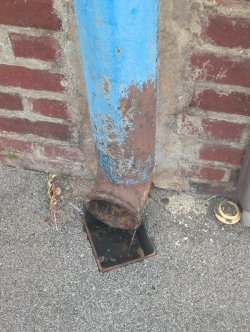 The gutters represent in France a considerable length, estimated at several million kilometers when adding up the gutters of municipal, departmental, motorway, and private roadways. Behind these simple ditches along the roads lies a technical reality: urban hydraulics, European standards, load resistance, runoff water management, flood prevention, and groundwater protection. This guide details everything a manager, an elected official, a road service, or a maintenance provider needs to know about gutters, their rules, their stakeholders, and their daily maintenance.
Presentation of canals: an often invisible hydraulic heritage
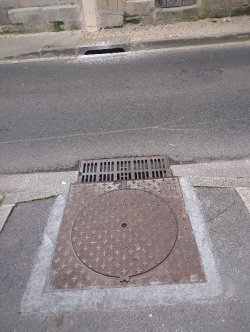 In technical terms, a gutter refers to a linear device for draining surface water, generally located at the edge of the road or integrated into the surface covering. Specifically, it is an open channel or a channel covered with a grid that collects runoff water and directs it to the storm drains or manholes connected to the stormwater drainage network. It is also referred to as gutter, water channel, slot gutter, grated gutter, or surface drainage channel.
These equipment are found in a variety of contexts. Urban roads, parking lots, industrial and logistics areas, service stations, airport platforms, railway depots, condominiums, housing developments, tertiary buildings, agricultural sites. The diversity is such that the design, sizing, and maintenance vary significantly from one site to another. Indeed, behind the generic term "canal," one can also refer to a simple brick channel or an industrial canal made of polymer concrete with a ductile cast iron grid, class F900.
What exactly is a gutter?
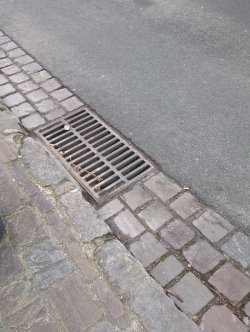 The standardized definition mainly comes from the NF EN 1433 standard, which covers the "drainage channels intended for traffic areas used by pedestrians and vehicles". This standard classifies channels by resistance class, from A15 (pedestrian areas) to F900 (areas subjected to very heavy loads). The channel is composed of a body (the channel itself), a grate or a slot at the top part, and connections to the stormwater network via vertical or horizontal outlets.
From a typological point of view, several major families can be distinguished. The grated gutters, the most common, with a removable grid that facilitates cleaning. The slit gutters, more aesthetically discreet, with a simple longitudinal opening. The paved gutters or brickwork gutters, traditional in heritage areas. The central gutters, integrated in the middle of a road. The draining gutters, more recent, which collect water along their entire length. And the special grid gutters (anti-slip, anti-theft, aesthetically pleasing for PMR).
Why are gutters strategic for a community?
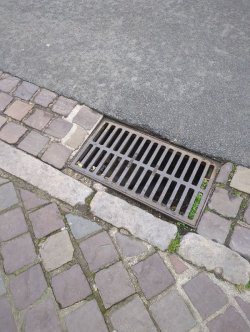 A gutter is not just a minor detail of public works. On site, feedback from elected officials shows that urban flooding, water puddles, and wastewater backflow through drains are among the recurring complaints from citizens. A clogged or malfunctioning gutter can trigger a localized flood within minutes, damage road surfaces, damage private property, or even endanger the lives of users during a violent storm.
The hydrological challenge is well documented. According to Cerema, more than 50% of urban floods are related to runoff and the saturation of stormwater networks, rather than river overflows. With climate change and the intensification of extreme rainfall events (Mediterranean region, but also the North and East of France), the performance of the gutter network becomes a territorial resilience issue. Not to mention the environmental challenge: a gutter also collects pollutants (hydrocarbons, microplastics, heavy metals) that must be treated before discharge.
What are the main types of gutters available?
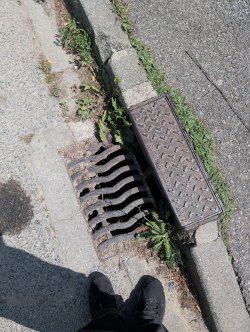 Manufacturers distinguish several categories based on material and typology. The polymer concrete gutters, now standard for demanding applications, combine lightness, strength, and durability. The fiber-reinforced concrete gutters, more economical, are suitable for common uses. The HDPE gutters (high-density polyethylene), lightweight and corrosion-resistant, are preferred in aggressive environments (chemical industries, food processing). The cast iron gutters are used in heavily loaded and heritage areas.
In addition, there are ductile cast iron grating channels (classes C250 to F900) for high-traffic roads, galvanized steel grating channels for industrial areas, stainless steel grating channels for corrosive environments, and slit channels in stainless steel or polymer for aesthetic areas. Traditional paved channels remain in historic town centers, where heritage integration takes precedence over pure hydraulic performance.
How many gutters are there in France?
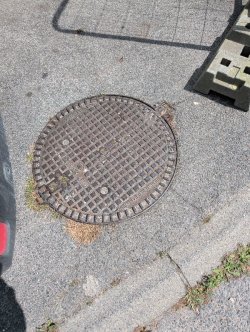 There is no comprehensive national inventory. However, several estimates converge. Considering that municipal roads account for approximately 700,000 km, and that most urban roads are flanked by gutters on at least one side, the total length of gutters in France is estimated to be between 500,000 and 800,000 km. Paris alone counts more than 2,500 km of gutters and about 100,000 stormwater grates and manholes. Major metropolitan areas manage tens of thousands of related hydraulic elements.
For comparison, the French sewer network (all types combined) totals approximately 400,000 km of pipelines, according to the Observatory of Water and Sewerage Services. The gutter, on the surface, is the visible and accessible interface of this vast underground network. Unfortunately, it is also the first victim of maintenance failures and the main cause of malfunctions reported by residents.
What is the lifespan of a gutter?
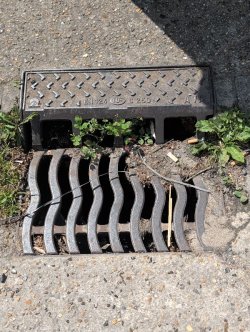 The service life varies according to the material and usage intensity. For a well-installed polymer concrete channel, the service life reaches 30 to 50 years. For a fiber-reinforced concrete channel, 20 to 30 years. For a HDPE channel, 25 to 40 years depending on the aggressiveness of the environment. For gratings, the service life varies from 15 to 30 years depending on the material (ductile cast iron resists better in the long term than galvanized steel, which is prone to corrosion).
The experience feedback from road services shows that it is almost never the gutters themselves that fail first, but rather the grids (theft, vandalism, damage by vehicles), the watertight joints (aging, roots), and the connections to the storm drains (siltation, deformation of manholes). A regular maintenance program doubles the useful lifespan compared to a neglected network. On the contrary, the absence of maintenance leads to costly and disruptive major reconstructions.
What materials for durable gutters?
 The choice of materials affects the lifespan and maintenance cost. The polymer concrete (mixture of resins + mineral aggregates) is today the benchmark for high-performance gutters: low roughness (thus good flow), mechanical strength, and lightness facilitating installation. The fibrous concrete remains widely used for municipal roads, offering an excellent quality-to-price ratio.
The PEHD is preferred in corrosive environments (chemical industries, food processing, service stations). Ductile cast iron is dominant for grids subjected to heavy loads. Stainless steel 304 or 316 is used for aesthetic gutters (pedestrian areas, commercial zones) or in marine environments. Natural pavers (granite, limestone, sandstone) remain the reference in heritage areas, where they withstand centuries with minimal maintenance.
What are the current trends in the field?
The sector has been evolving since 2015 under several influences. First, sustainable stormwater management: integrating gutters into broader systems (culverts, drainage trenches, reservoir roads, infiltration basins), promoting infiltration rather than systematic evacuation into the network. This approach, known as "sponge city," is supported by Cerema, the Water Agency, and many pioneering metropolitan areas.
Next, eco-design: integrated filtration gutters (pre-treatment of runoff water), vegetated gutters, recycled materials (polymer concrete incorporating recycled aggregates). Several cities (Lyon, Strasbourg, Bordeaux) have implemented ambitious programs for de-impermeabilization, where gutters play a key role.
Third trend, connectivity: level sensors in gutters, real-time monitoring of flood risks, remote management of pumping stations. "Smart cities" now integrate the stormwater network into their IoT platforms. Finally, climate resilience: resizing networks to handle decadal or even centennial rainfall (in contrast to decadal rainfall before the year 2000), with a significant investment effort at the national scale.
Regulations and standards for gutters: a demanding technical framework
French regulation regarding gutters is based on a set of harmonized European standards, legislative texts on water and sanitation, and public technical references. Understanding this framework is essential, both for the project owner and for the installation or maintenance company.
What are the texts that govern the ditches in France?
Several texts structure the framework. The General Code of Territorial Collectivities (article L. 2224-10) grants municipalities competence in the field of sanitation, including stormwater. The Water Act of January 3, 1992, revised into the Environmental Code, sets the principles for the management of stormwater. The Road Traffic Code and the Typical Departmental Sanitary Regulation (RSDT) complete the framework.
For the management of stormwater, several recent texts deserve attention. The NOTRe Act of 2015 gradually transferred the "GEMAPI" and urban stormwater competencies to the EPCI. The decree of July 21, 2015 (amended) sets the technical requirements applicable to collective sanitation systems. Each commune's Local Urban Planning Scheme (PLU) now includes provisions on stormwater management at the plot level, with runoff discharge coefficients and infiltration obligations.
Which EN standards apply to gutters?
The technical foundation is based on some harmonized European standards. The NF EN 1433 standard, titled "Hydraulic gutters for pedestrian and vehicle traffic areas", is the absolute reference. It defines the resistance classes (A15, B125, C250, D400, E600, F900), mechanical, hydraulic, and material characteristics, as well as qualification tests.
Other related standards apply. The NF EN 124 standard on manhole covers and frames (grates, manholes), with equivalent classes from A15 to F900. The NF EN 858 standard on hydrocarbon separators, often placed downstream of fuel station or parking lot gutters. The NF EN 1610 standard on the installation and testing of sewer connections and collectors. The standard NF P98-440 on prefabricated concrete curbs and gutters.
What are the resistance classes of a gutter?
The classification of NF EN 1433 is essential for proper sizing. Here is the standard grid:
| Class | Test Load (kN) | Typical application area |
|---|---|---|
| A15 | 15 | Pedestrian-only zones, cycle-friendly zones |
| B125 | 125 | Sidewalks, passenger vehicle parking areas, pedestrian zones accessible to vehicles |
| C250 | 250 | Road edges, supermarket parking lots |
| D400 | 400 | Traveled roads, municipal and departmental roads |
| E600 | 600 | Industrial zones, logistics platforms, unloading docks |
| F900 | 900 | Airports (taxiways, aprons), ports, military sites |
The choice of class is crucial. On site, feedback shows that undersizing classes is a frequent cause of premature failure. A C250 grid mistakenly placed on a road used by heavy trucks (which require a minimum of D400) will not last long. Conversely, unnecessarily oversizing increases costs without any real benefit. The golden rule: refer to actual traffic and anticipate future developments over the next 10 to 20 years.
How to size a gutter?
The hydraulic sizing of a gutter depends on several parameters. The upstream catchment basin (drained area), the runoff coefficient (close to 1 on asphalt, 0.7 to 0.8 on paving stones, 0.1 to 0.3 on green areas), the reference rainfall intensity (usually the decadal rainfall, sometimes the triennial or centennial rainfall for strategic structures), and the longitudinal slope of the gutter. The discharge to be evacuated is calculated using the rational formula Q = C × i × A.
Once the flow rate is known, the hydraulic profile of the gutter (internal width, height, cross-section geometry) is selected based on the charts provided by manufacturers. Standard profiles range from 100 mm to 300 mm internal width, sometimes up to 500 mm for industrial works. Experience shows that undersizing hydraulically causes overflow during storms, whereas excessive oversizing unnecessarily increases cost and siltation (due to too low flow velocity).
What are the responsibilities of the manager regarding gutters?
The manager (municipality, EPCI, department, State, concessionaire) has several cumulative obligations. First, the obligation of maintenance: keeping the gutters in working condition, which includes regular cleaning, replacing broken or stolen grates, and unclogging drains. Next, the obligation of signaling in case of temporary dangerous defects (missing grate, sagging).
The obligation of monitoring is central, particularly before risk seasons (autumn with leaves, spring with thunderstorms). Finally, the obligation of maintaining a documentary heritage: collection plans, technical sheets, work history, incident register. This heritage, often referred to as "SIG remediation" or "heritage database", is the central element of sustainable management. It is also required by the "self-monitoring" decrees for remediation systems with more than 2,000 EH.
How often should a gutter be maintained?
The maintenance frequency depends on the type of gutter and its environment. Here are the practices observed in French communities:
| Type of intervention | Subject | Usual Frequency |
|---|---|---|
| Visual Surveillance | Identify missing grids, clogged gutters, sinkholes | Weekly to monthly |
| Cleaning of gutters | Sediment, leaves, debris aspiration | At least 1 to 2 times per year |
| Gutter cleaning | High-pressure hydro jetting | 1 to 3 times per year depending on the environment |
| Camera inspection | Crack, root, deformation detection | Every 5 to 10 years |
| Grid Renewal | Replacement of broken or stolen grids | By the water, according to findings |
The frequency must be adapted to local conditions. A gutter under deciduous trees requires cleaning before and after autumn (to remove leaves). A gutter in an agricultural area must be cleaned after harvest periods (mud, straw). An urban gutter with heavy pedestrian traffic accumulates more household waste. Feedback shows that an annual systematic cleaning program, supplemented with occasional interventions, yields the best results. Without regular cleaning, gutters can lose up to 50% of their hydraulic capacity within a few years.
What should the network drainage system's asset file contain?
The heritage file is the key element of sustainable management. It must include, for each section:
- The up-to-date drainage plan, with precise location of gutters, downspouts, manholes, and connections to the stormwater network.
- The technical inventory, with material, resistance class, internal dimensions, type of grid, installation year.
- Conformity certificates (NF EN 1433, NF EN 124) provided by the manufacturer or installer.
- Successive camera inspection reports, with analysis of detected anomalies.
- Work history: sporadic resumptions, cleanouts, grid replacements.
- The associated markets and purchase orders (contracting companies, amounts, guarantees).
- DT-DICT statements to dealerships.
- The incident register (floods, overflows, citizen complaints).
On site, this asset remains too often fragmented between paper plans and tacit knowledge. However, in the event of a dispute following a flood incident, the absence or incompleteness of the file is almost always considered an aggravating fault. It is precisely this point that is pushing more and more local authorities to move towards a centralized and geolocated digital management.
What does the law on stormwater management say?
The management of stormwater falls under a dual framework. On one hand, the public administrative service for urban stormwater management (SPGEPU), created by the law of December 27, 2019, distinct from the collective sanitation service. On the other hand, the obligations set forth by the Environmental Code regarding the quality of discharges and the prevention of pollution.
At the local level, the sanitation master plans and rainwater zoning specify the applicable rules. The rainwater zoning, provided for by article L. 2224-10 of the CGCT, identifies the areas where measures are necessary to limit impermeabilization, control runoff, and ensure the quality of discharges. For construction and development projects, permits now require rainwater management files that are often restrictive: habitat coefficient, limited runoff rate (5 to 20 l/s/ha depending on the municipalities), storage and infiltration requirements.
What risks does a manager face in the event of flooding related to a gutter?
The manager's liability can be engaged on several grounds. Administratively, in the event of a failure to maintain public works properly (permanently clogged gutter, missing grid not replaced), liability is engaged according to the consistent jurisprudence of the Council of State. The victim (flooded resident, accidented driver) does not have to prove fault; it is up to the manager to demonstrate that proper maintenance was carried out.
From a criminal law perspective, in cases of serious injury or death linked to a known defect that was not corrected, Article 121-3 of the Penal Code on deliberate endangerment of others may be invoked. Several local authorities have been condemned after floods attributed to maintenance defects (such as gutters clogged with leaves for several months, for example). The traceability of inspections and interventions is often what distinguishes a defensible case from a case already lost.
Key actors and service providers in the canals: top 10 of the sector
The French market for gutters and their maintenance is driven by several major players: industrial manufacturers, specialized distributors, civil engineering companies, and hydro-jetting service providers. Here is an overview of the main stakeholders, along with their specificities. This list aims to inform the choice without any commercial hierarchy.
1. ACO: the European leader in industrial gutters
ACO, a German group founded in 1946, is the world leader in surface drainage systems. Its French subsidiary, ACO France, offers an extensive range: ACO Drain (polymer concrete gutters), ACO Self (residential gutters), ACO Multiline, and industrial ranges for aggressive environments. The group covers all resistance classes from A15 to F900, and ensures comprehensive integration (gutters, manholes, oil separators, connection pipes). It is the historical partner of engineering offices and installers in France.
2. Hauraton: the reference German challenger
Hauraton, founded in 1956, is the other major German player in the European market. Its range of products, Faserfix (fiber-reinforced concrete), Recyfix (recycled materials based on polypropylene), Top X (polymer concrete) covers all applications. Hauraton stands out with a strong ecological approach (recycled materials, carbon neutrality) and a refined design. Its French subsidiary is well established in the tertiary sector and industry.
3. Birco: German reliability for demanding applications
Birco, a leading third German player, offers high-end gutters particularly appreciated in industrial environments. Based in Baden-Baden, the manufacturer focuses on manufacturing quality, continuous innovation, and sustainability. Its range is very extensive, from residential gutters to F900 gutters for airports and port areas. Birco equips numerous logistics platforms in France.
4. Saint-Gobain PAM: the French specialist in casting
Saint-Gobain PAM, heir to Pont-à-Mousson, is the leading French foundry for water and sanitation. The group notably produces gutter grids and manhole seals in ductile iron, compliant with NF EN 124 and NF EN 1433 standards. Its Alsatian and Lorraine foundry produces tens of thousands of tons annually. PAM is the reference contact for road casting in France.
5. Norinco: the complementary French foundry
Norinco, based in Burgundy, is the other major French foundry manufacturer for urban infrastructure. A direct competitor of PAM, it offers grids, seals, grates, and accessories made from ductile iron. Its responsiveness and regional presence make it a valued player among local authorities, particularly for specific orders or occasional replacements.
6. Stradal: the national concrete prefabricator
Stradal, a subsidiary of the CRH group, is one of the leading French manufacturers of prefabricated concrete products for public works. Its range includes fiber-reinforced concrete gutters, integrated gutter curbs, and combined products. Well established throughout the territory with its 30 production sites, Stradal is a regular supplier to local authorities for standard roadways and residential areas.
7. Bonna Sabla: the historic prefabricator
Bonna Sabla, another major French player in the prefabricated concrete industry, offers a complete range of surface drainage and sanitation elements. The group covers France through a dozen regional factories. Its strength lies in its geographical proximity to construction sites, which reduces delivery times and transportation costs. It is a common partner for local civil engineering companies.
8. Veolia, Suez and SARP: the players in cleaning and maintenance
For cleaning and maintenance, several large groups are involved. Veolia (through its Water France activity), Suez (now Suez Recyclage et Valorisation), and SARP (a Veolia subsidiary specialized in sanitation) employ thousands of agents equipped with hydrojetting trucks and inspection cameras. They operate on public market cleaning of stormwater networks, including gutters and catch basins. Their strengths: operational capacity, national coverage, certifications (Qualibat, MASE).
9. Cerema : the reference public expertise
Beyond businesses, the Cerema (Centre d'études et d'expertise sur les risques, l'environnement, la mobilité et l'aménagement) is the reference public operator on issues of sanitation and stormwater management. Its technical guides (stormwater management, network sizing, effluent quality) are the bible for engineering firms. Cerema also supports local authorities in their stormwater master plans.
10. Local SMEs and Regional Civil Engineering Companies
Beyond the major players, the French market includes hundreds of SMEs specialized in the installation and maintenance of gutters. For routine municipal roadworks, these local companies often offer superior responsiveness and competitive costs. They work as subcontractors for the large groups or directly with the local authorities. This diversity of actors is a strength of the French market, provided that references are carefully selected based on technical criteria.
Are there any other notable players in the market?
The panorama does not stop at these ten names. Polieco (PEHD ranges), Mea (special drainage channels), Wavin (plastic sanitation), Nicoll (PVC for construction), KE Kelit (residential), as well as specialized players such as Aliaxis or Zollikofer (hydrocarbon separators) can also be mentioned. For decorative and personalized grates, art foundries (Fonderie de la Loire, GHM) intervene in heritage areas. The market remains fragmented, which is actually good news for the project owners who can compare.
How to choose a maintenance provider for gutters?
Choosing a maintenance provider for the drainage network is a structuring decision. It affects flood prevention, the legal liability of the manager, and represents a budget item that can amount to tens or even hundreds of thousands of euros per year for an average commune. Here are the essential criteria and pitfalls to avoid.
What criteria to select a good hydrojetting service provider?
Several criteria come into play. The technical capacity is the top priority: fleet of hydrovac trucks adapted (water tank, high-pressure pump, suction), camera trucks for inspection, teams trained in specific risks (confined spaces, hydrogen sulfide). Certification is a key criterion: Qualibat, MASE (safety), certification for interventions in confined environments.
The response time in case of emergency (blocked gutter causing imminent flooding) must be guaranteed, ideally within 2 to 4 hours for critical defects. The traceability of interventions is also a key differentiator: detailed reports, before/after photos, geolocation, and statistics on the volume of material removed. Finally, the ability to handle waste generated from cleaning (sand, sludge, potential hydrocarbons) in accordance with regulated disposal channels is essential, otherwise the environmental responsibility would be transferred to the project owner.
Should a large group or a local SME be preferred?
The question comes up regularly. Large groups (Veolia, Suez, SARP) offer nationwide coverage, significant technical resources, financial capacity, and regulatory expertise. Local SMEs often provide superior responsiveness, a detailed knowledge of the local network (often acquired through decades of relationship with the municipality), and competitive costs on smaller markets.
On site, a mixed approach can be relevant. A multi-year, fixed-price contract for routine cleaning awarded to a responsive local SME. Specialized interventions (camera inspection, rehabilitation, pollution treatment) entrusted to a regional reference service provider. This subcontracting strategy is increasingly practiced and yields good results, provided it is well managed.
What questions to ask before signing a contract?
Before any commitment, here is a list of concrete questions:
- What is your fleet of equipment (hydroexcavators, cameras, vacuum sweepers)?
- How many municipalities equivalent to ours are you currently operating?
- What is your guaranteed response time for an urgent reported defect?
- What format do your service reports (paper, digital, application) have?
- How do you manage photographic traceability and the geolocation of interventions?
- What is your waste treatment process for dredging sludge, sands, and hydrocarbons?
- Do you have current Qualibat and MASE certifications?
- Can you provide client references for similar municipalities to ours?
- What is your policy regarding employee safety (confined spaces, toxic gases)?
- What is your civil liability and decennial insurance coverage?
How to formalize an effective cleaning market?
A solid market must clearly define the scope. Inventory of the affected sections (linear length of gutters, number of catch basins, number of manholes). Detailed price list (BPU with unit prices per type of service: simple cleaning, high-pressure hydrocleaning, camera inspection, emergency). Detailed operating procedures. Intervention deadlines in case of emergency. Quality commitments and performance indicators (rate of evacuated pollutants, quality of reports). Penalty terms. Pricing revision clauses according to TP indices.
The market must also anticipate exceptional situations: major weather events (Cevenol episodes, violent thunderstorms), accidental pollution (hydrocarbons on the road), and health emergencies. Climate crisis is multiplying these situations, and local authorities must contractually anticipate the rapid mobilization of resources. On the ground, feedback shows that a "rapid mobilization" clause within two hours has become essential in flood-prone areas.
What is the annual maintenance cost of gutters?
The cost varies significantly depending on the length, the density of the gutters, and the environment. As an example, annual cleaning of a gutter can amount to several tens of euros. Hydraulic cleaning of one kilometer of ditch can amount to several hundreds of euros depending on the complexity. For an average commune with 50 km of ditches and 1,000 gutters, the annual maintenance budget can range between 30,000 and 80,000 euros.
In addition to these costs are the replacement of grids (stolen or broken), spot rehabilitations, and periodic camera inspections. The total annual budget for an average municipal network commonly ranges between 50,000 and 150,000 euros, not including major renewals. Not surprisingly, it is a cost that weighs heavily, but it is justified by the prevention of flood damage, whose compensations can exceed several million euros.
What mistakes to avoid when choosing a service provider?
Several recurring errors are reported by technical services. The first: accepting the lowest bid without analyzing the economic consistency of the offer. An abnormally low price often hides an underdimensioning of resources (a shared truck across several markets, reduced teams), which results in poorly executed work and undetected defects. Public procurement law allows for the rejection of abnormally low offers: do not hesitate to activate this procedure.
Second error: not requiring a traceable waste treatment process. Sludge from dredging often contains pollutants (hydrocarbons, heavy metals, microplastics) that must be treated in specialized waste treatment channels. A service provider who cannot prove this treatment exposes the project owner to a major legal risk. Third pitfall: underestimating the quality of reporting. Without digital traceability of interventions, it is very difficult to objectively assess the quality of the service and therefore to defend it, especially in the event of a flood incident.
Should we internalize or externalize the cleaning of gutters?
The "make or buy" question arises regularly. Internalization (municipal or intermunicipal agency) allows for maximum responsiveness and direct integration with other road maintenance tasks. However, it requires investing in hydrocleaning trucks (costly equipment) and training staff on specific risks. Outsourcing is generally the norm, for technical reasons (heavy equipment) and economic reasons (economies of scale).
The hybrid model is the most widespread. Municipal agents are responsible for routine monitoring, minor manual unclogging, and leaf collection at manhole entries. A multi-year, order-based market covers periodic hydraulic cleaning. Specialized interventions (camera inspection, rehabilitation, post-pollution expertise) are handled through ad-hoc contracts. It is a proven model that balances proximity and economic efficiency.
Comment KARTES does it improve gutter maintenance?
KARTES is a mobile and web application for managing field interventions, specifically designed for local authorities. Initially developed for anti-graffiti monitoring and urban planning, the platform perfectly applies to the maintenance of the drainage network, where traceability, geolocation, and responsiveness are particularly crucial. Here's how this tool concretely transforms the daily routine of each involved party.
What is the application's philosophy? KARTES ?
KARTES part of a simple observation: the management of gutters is today often fragmented across paper documents, Excel spreadsheets, lost photos on personal phones, intervention tickets circulated by email, and citizen reports received at the town hall reception. This dispersion creates legal blind spots (impossible to prove that a gutter was cleaned on a certain date) and operational inefficiencies (duplicate interventions, omissions, delays). The promise of KARTES, it's about centralizing, geolocating, and tracking all actions on a single simple tool, accessible to field agents as well as managers.
The approach is pragmatic: no heavy IT deployment, no lengthy training, no prohibitive per-user licensing. The agent opens his phone, takes a photo of the clogged gutter, validates it. The manager sees in real time what is being done on the field, who did it, where, and with what results. User feedback shows that this type of tool saves agents an average of 30 to 40% of administrative time and gives managers visibility they previously did not have.
Comment KARTES does it improve the traceability of interventions on the gutters?
Traceability is a critical point. With KARTES, each intervention on a gutter or a drain is timestamped, geolocated, and photographed. The application records the date, the exact time, the GPS coordinates, the agent involved, the type of action (report, manual cleaning, hydrocleaning, grate replacement, camera inspection), textual observations, and before/after photos.
In the event of localized flooding and liability of the community, the manager can generate the complete history of interventions on the affected section with dated and geolocated photographic evidence with just a few clicks. This capability radically changes the legal landscape. It is irrefutable proof that the obligations of monitoring and maintenance have been fulfilled, or alternatively, an early warning signal that allows the disaster to be avoided. In both cases, objective data replaces the "it seems that" statements before the judge.
Comment KARTES does it make the field agent's job easier?
The road maintenance agent is the key link. Without their commitment, no tool works. KARTES was designed with him in mind first: simple interface, few fields to fill out, functionality even without a connection (data synchronize upon returning to a covered area). On the road, the agent opens his phone, takes a photo of the clogged grate, selects the type of intervention from a preconfigured list, optionally adds a voice comment, and validates. The operation takes less than two minutes.
For a weekly inspection tour covering several hundred manholes, administrative time is thus reduced from 30 to 45 minutes upon returning to the office (data entry in Excel, scanning photos, filing, email transmission) to zero administrative time after the tour. For a team of 5 agents, this represents several hours per day that can be reinvested in higher value-added tasks. And data quality improves drastically, which completely changes the situation for management.
How does the application help the community in its overall management?
From the community's perspective, the benefits are measured at several levels. First, in terms of visibility: the road or sanitation service manager can see in real time the condition of the network. How many manholes have been cleaned this week? How many ditches have been reported as blocked? Which areas are experiencing recurring issues? This dashboard replaces manually updated Excel sheets, which are often delayed.
Next, in budgetary management: centralization allows for the precise calculation of maintenance costs by section, by defect typology, by supplier. Feedback shows that this analysis often highlights costly areas that need to be isolated: for example, a street where the grates are constantly clogged, indicating a slope or connection issue that needs to be investigated. Investment decisions become factual rather than intuitive: should the slope be redone, additional grates be added, or enhanced cleaning be planned?
Finally, in terms of communication: automated reports can be presented to the works committee, shared with elected officials, and transmitted to the prefectural services as part of the "self-monitoring" decrees required for wastewater treatment systems. The data becomes a shared asset, not a tacit knowledge limited to one or two agents.
What is the impact on the neighboring area?
The adjacent party is rarely the direct recipient of a business application. Yet, they benefit from it indirectly and sometimes directly. KARTES enables the setup of a citizen reporting channel, where a resident noticing a clogged gutter or an overflowing drain can take a photo, indicate the issue, and send it in a few seconds to the technical service. The ticket is automatically created, geolocated, and tracked until resolution.
From the user's perspective, the benefit lies in the speed of response. A blocked gutter reported on a Monday morning can be addressed within 24 to 48 hours, instead of several weeks. On the ground, several local authorities that have deployed a citizen channel report a noticeable decrease in complaint letters and a tangible improvement in the perception of public service. Better still: during high-risk seasons (autumn, summer thunderstorms), crowdsourcing allows for the rapid identification of critical areas and the prevention of cascading floods.
What contribution for the maintainer or service provider?
For an external service provider, KARTES change the rules. Instead of sending paper work orders or PDFs that get lost, the service provider receives his tasks directly through the app, with photos, geolocation, and precise description. On site, he documents his intervention (photo after cleaning, volume aspirated, observations), which automatically closes the ticket. The benefits are multiple: standardization of reports, administrative time savings, irrefutable proof of the service, and faster payment.
For the community, it is a means to audit the service provider's performance in real time: how many manholes cleaned, in how much time, with what volume of sludge extracted. Discrepancies between what was promised (for example, 100 manholes per day) and what is delivered appear immediately. On the contrary, good service providers find in it a tool to highlight their work, demonstrate their reliability, and justify potential tariff reassessments based on objective data.
Comment KARTES does it help reduce costs?
Cost reduction comes from several concrete levers. First, avoiding duplicates: without a centralized tool, two reports can concern the same clogged gutter and trigger two interventions. With KARTES, the duplicate is automatically detected by geolocation. Secondly, prioritization: a critical drain (flood risk area) is immediately reported with a photo, which avoids unnecessary inspection trips.
Thirdly, optimizing cleaning routes: agents or service providers can group their interventions by geographic area using the integrated mapping, rather than making costly back-and-forth trips. Fourthly, prevention: fine traceability allows for the detection of sections with accelerated degradation and enables action in advance (enhanced cleaning rather than multiplying emergency interventions after flooding). On the field, communities equipped with such a tool report productivity gains of 20 to 35% and a reduction in emergency intervention costs of 15 to 25%.
Comment KARTES does it integrate with existing tools?
A frequent concern of local authorities is the proliferation of digital tools (road GIS, GMAO, self-monitoring sanitation systems, citizen platforms). KARTES was designed to integrate into this ecosystem rather than replace it. The platform exposes geolocated data exportable to existing GIS (QGIS, ArcGIS, Géo), can feed a /no GMAO in interventions, and offers CSV exports or API for consolidated reporting.
The goal is to not make any KARTES not an "information island", but a specialized module that communicates with the other building blocks of the community's information system. This open integration philosophy is appreciated by IT departments and greatly facilitates deployment. Concretely, a commune can test / KARTES on a few pilot districts for a few months, then gradually expand it to the entire territory, without abrupt breaks.
What are the concrete user feedbacks?
Early user feedback from adopting communities highlights three systematic benefits. The legal certainty: the ability to produce at any time the history of reports and interventions is cited as the top benefit, particularly valuable after a flood incident. The productivity of teams: elimination of re-entry, administrative time savings, and better distribution of interventions. The quality of dialogue with residents: citizen reports receive a traceable response.
More broadly, the introduction of a digital tool transforms the professional culture of services. Employees shift from an execution mindset to a management mindset, which is highly rewarding. Managers move from reactive management (waiting for issues to arise) to proactive management (scheduling preventive maintenance). Finally, elected officials have concrete indicators to manage a rainwater policy beyond the mere feeling derived from letters received at the town hall.
10 Frequently Asked Questions About Gutters: Everything You Want to Know
What is the average lifespan of a gutter?
A concrete polymer manhole lasts 30 to 50 years, concrete fiber 20 to 30 years, HDPE 25 to 40 years depending on the environment. Grates have a lifespan of 15 to 30 years depending on the material. Ductile cast iron resists better over time than galvanized steel. Regular maintenance doubles the useful lifespan.
Who is responsible in case of flooding due to a clogged gutter?
The responsibility lies with the road manager, generally the municipality. Administrative case law holds the manager liable in the event of a failure to perform normal maintenance, without the victim needing to prove negligence. The traceability of road clearing and interventions is essential for legal defense in the event of an accident.
What standards govern gutters in France?
Drains are governed by the NF EN 1433 standard, which defines resistance classes from A15 to F900. The NF EN 124 covers grids and gratings. The NF EN 858 deals with hydrocarbon separators. The NF EN 1610 regulates installation. These standards define technical characteristics and qualification tests.
Which type of gutter to choose based on usage?
The choice depends on traffic. A15 for pure pedestrian zones. B125 for sidewalks and VL parking areas. C250 for road edges. D400 for roads used by all vehicles. E600 for industrial and logistics areas. F900 for airports, ports, and sites subjected to exceptional loads. Underdimensioning leads to premature failure.
How often should a gutter be cleaned?
The frequency depends on the context. Annual cleaning of gutters is the minimum for regular roadways. Biannual cleaning is required in wooded areas (before and after leaf fall). Agricultural or industrial areas require more frequent cleanings. A camera inspection every 5 to 10 years completes the preventive maintenance.
How to know if a gutter is in good condition?
Several indicators allow for evaluation. Visually, the absence of water stagnation, overflow, broken or stolen grates. Hydraulically, proper drainage during rainfall. Technically, camera inspection reveals cracks, deformations, roots, deposits. A comprehensive audit allows for an objective diagnosis and scheduling of necessary rehabilitation interventions.
What to do if a blocked gutter is overflowing?
A gully that overflows must be reported immediately to the road manager. Municipalities generally offer a reporting method by phone, online form, or mobile application with photo and geolocation. A cleaning intervention should normally take place within 24 to 48 hours, or even within the following hours in case of an imminent flooding risk.
Can you install a gutter yourself at a private residence?
Yes, an individual can install a residential gutter (class A15 or B125) in a yard, driveway, or garden. Installation requires proper preparation of the base (concrete or mortar bed), an appropriate slope (minimum 1%), and a correct connection to the rainwater network or an infiltration system. Manufacturers provide detailed instructions for common uses.
What modern techniques exist for maintaining gutters?
Several techniques are used. High-pressure hydro jetting removes deposits and cleans the walls. Vacuuming recovers sludge without dispersion. TV camera inspection detects hidden defects. The lining technique (internal tubage) allows rehabilitation without excavation. IoT sensors continuously measure levels and alert in case of saturation.
Should gutters be accessible to people with reduced mobility?
Yes, the grids installed on pedestrian pathways must comply with PMR accessibility rules. The spacing between bars must be less than 2 cm to prevent wheelchairs, canes, and crutches from getting stuck. The surface must be non-slip. The "PMR" models meet these requirements set by the December 8, 2014 decree on accessibility.
Conclusion: canals, discreet but strategic works for urban resilience
Drainage ditches are much more than simple gutters along roads. They embody at the same time an essential public service, a considerable heritage asset, a lever for resilience against climate change, and a major legal vigilance point. Their management today calls for a professional approach, based on knowledge of standards, the rigor of controls, document traceability, and multi-year anticipation of investments.
The regulatory and technical framework, which may seem dense, is in fact structuring. The NF EN 1433 standard, the Environmental Code, Cerema guidelines, and administrative case law provide a clear reference for anyone wishing to act as a responsible manager. Compliance with these rules is not only a legal protection, but above all a guarantee for users and residents, who must be able to move around and live without suffering the consequences of urban flooding.
The selection of service providers (manufacturers, installation companies, hydrojetting service providers, engineering firms) plays a decisive role. The French market offers a range of serious players, from European giants to local SMEs. The key is not so much to choose the cheapest option, but to build a balanced contractual relationship based on clear commitments, shared traceability, and a genuine quality requirement. On the ground, the most advanced local authorities are those that have structured their policy over several years, with a comprehensive stormwater management plan and regular performance monitoring.
Digital, finally, is deeply transforming the daily management of gutters. Tools such as KARTES enable the road and sanitation services to move from a craft-based management to an industrial management, without losing the closeness to the field. Centralization, geolocation, timestamped photos, real-time dashboards, citizen reporting, logistic optimization: all these features save time, provide legal security, and improve the quality of service provided to residents. Today, it is a competitive advantage for local authorities who want to offer the best to their citizens while optimizing increasingly constrained budgets.
In conclusion, the stormwater drainage system of the 21st century will be sustainable, integrated, connected, and clearly defined. Sustainable, because recycled materials and trenchless rehabilitation techniques are becoming indispensable. Integrated, because stormwater management must be part of an overall strategy for de-impermeabilization and climate resilience. Connected, because sensors and data open up unprecedented possibilities for predictive control and flood prevention. Clearly defined, because legal security for managers and physical safety for residents require it. Each community must recognize the significance of this evolution and commit now to transforming its practices in stormwater network management.