Interventions on Graffiti
Unauthorized graffiti constitute a major visual degradation of urban spaces, costing French communities tens of millions of euros each year. Wild tags, offensive inscriptions, throw-ups: their removal involves specialized contractors and technical services, carried out within a strict legal framework (Article 322-1 of the Penal Code) and precise technical standards.
Understanding Urban Graffiti: Definitions, Typologies, and Issues
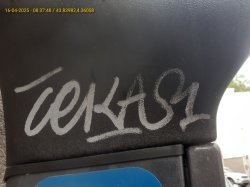 When talking about graffiti in the context of urban cleanliness, we are not referring to the same thing as in a contemporary art gallery. Here, there are no Banksy pieces or murals commissioned by city councils. We are talking about tags, wild signatures, offensive inscriptions, and hastily sprayed throw-ups on building facades in the middle of the night. In short, damages that dirty up the urban landscape and must be removed quickly and thoroughly.
The word comes from the Italian graffito (« small scratch »), plural graffiti. Etymologically, it refers to a mark drawn on a surface, without implying its value. But in the language of communities, social landlords, and cleaning service providers, a graffiti is almost always a problem to solve. And an additional cost to include in the cleanliness budget.
What's the difference between tag, throw-up and mural?
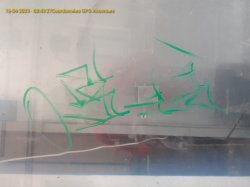 The technical vocabulary of graffiti artists has become widespread, even among professionals in the cleaning industry. It is better to master it in order to speak the same language as your interlocutors. Here are the main terms encountered on site:
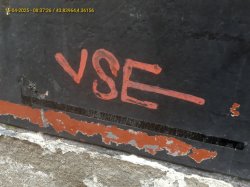
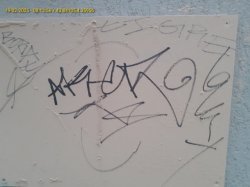
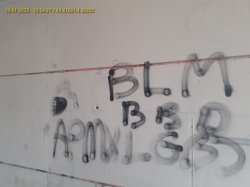
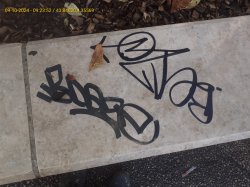
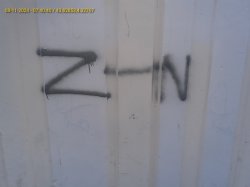
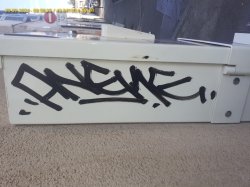
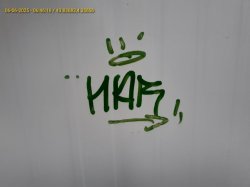
- Tag : stylized signature, monochrome, executed with a spray can or marker. It is by far the most common form. Quick to apply (a few seconds), it proliferates in dozens on certain axes.
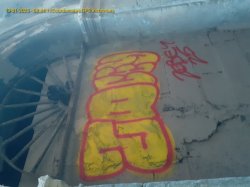
- Throw-up (or « flop »): two-color bubble lettering, outline and fill. More visible, more intrusive, longer to remove.
- Blaze : fast lettering, round, intermediate between tag and throw-up.
- Piece (short for masterpiece): elaborated work, multicolored, sometimes several square meters. On an authorized wall, it can be impressive. On a heritage building, it's a disaster.
- Wildstyle : highly stylized lettering, intentionally illegible.
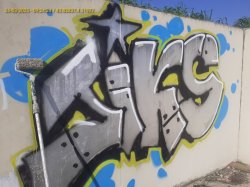
- Chrome : silver graffiti with black outline, classic of derelict areas.
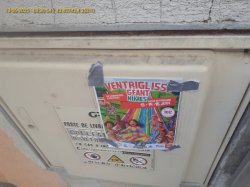
- Stickers and wild posters : stickers, posters, and flyers applied without authorization. Legally, this is the same category as graffiti.
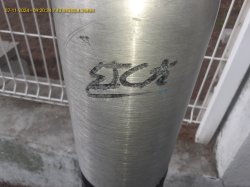
- Scratching or etching: acid or cutter scratches on windows and urban furniture. The worst case, because you can't « clean » it, you have to replace it.
This nomenclature comes directly from the New York hip-hop culture of the 70s and 80s. A small nod to history: the graffiti as we know them today were born on the New York subway trains, before crossing the Atlantic in the mid-80s. Today, the phenomenon has become global, and every major European city has its own "spots" and active crews.
Degradating Graffiti or Tolerated Street Art: Where Is the Line Drawn?
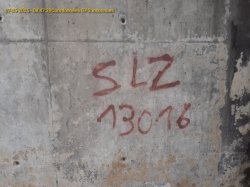 The question keeps coming up again and again, and the answer is actually very simple: the criterion is the prior authorization from the property owner. A mural commissioned by a town hall on a dedicated wall is considered art. A tag on a private facade at night is considered vandalism and is legally punishable. The artistic quality doesn't matter; only the consent counts.
That said, some cities have opted for a pragmatic approach by setting up "free expression walls." Paris, Lyon, Bordeaux, Nantes, Rennes: all have experimented with this way of channeling the phenomenon. It doesn't solve everything, far from it, but it provides an outlet for the most creative practitioners and defuses part of the problem.
The true extent of the phenomenon in France
 Difficult to obtain reliable national statistics, because many damages are not even reported. However, some figures give an idea of the scale. SNCF cleans several hundred thousand square meters of graffiti on its trains and infrastructure each year, with an estimated annual budget of over 30 million euros. RATP deploys dedicated teams across its entire network, with daily interventions on trains and stations.
On the local government side, the City of Paris allocates several million euros annually to anti-tagging efforts, with a stated goal of cleaning up within 10 days after reporting. Lyon, Marseille, Toulouse, and Bordeaux each have their own systems, sometimes managed in-house, often entrusted to private specialized contractors. On the ground, the cleaning services of large metropolitan areas report that graffiti-related interventions account for between 5 and 15% of their total cleaning activities. A role that weighs heavily on already strained budgets.
Which media and which areas are most affected?
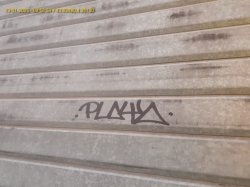 Field feedback is quite clear. The most targeted supports, in approximate order of frequency: ground-floor building facades, metal shutters of closed commercial premises at night, urban furniture (sheltered bus stops, benches, trash cans, time clocks), traffic signs, Enedis transformers, SNCF bridges and civil engineering structures, cemetery enclosure walls, outdoor sports facilities, underground parking lots.
The most exposed areas? Pedestrian city centers, areas around train stations and subway stations, industrial wastelands, peripheral commercial zones, residential neighborhoods along heavily trafficked routes. The logic is always the same: maximum visibility for the graffiter, easy access, and virtually no nighttime surveillance.
Why do graffiti pose a real problem for cities?
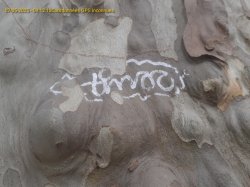 One might be tempted to downplay it. After all, they are just drawings, aren't they? Except that the consequences go far beyond mere aesthetics, and that's precisely why communities invest so many resources in them.
First, there is the well-known broken windows theory (broken windows theory), formulated by American criminologists James Wilson and George Kelling in 1982. The central idea is that an environment left to decay, with broken windows, unremoved graffiti, and accumulated waste, sends a signal of a lack of social control. And this signal encourages the emergence of more serious deviant behaviors. Although discussed and sometimes criticized by sociologists, this theory remains nevertheless a reference for urban cleanliness policies. In practice, and all service providers will tell you, an unremoved graffiti tag tends to attract others in the following days. The graffiti artists themselves admit this: a wall that is already tagged is an easier target, because the degradation has already begun.
Then there is the direct economic impact on businesses. A street covered in graffiti sees its foot traffic decline, its commercial rents collapse, and its merchants eventually move out. Several urban planning studies have documented this vicious cycle in neighborhoods in Marseille, Saint-Étienne, or in the Parisian suburbs. The phenomenon is real, measurable, and particularly difficult to reverse once it has started.
And then there is the human dimension, more difficult to quantify but certainly present. The feeling of insecurity, the discouragement of residents, the impression that "no one anymore cares about the neighborhood." Social landlords confirm this in their annual surveys: the cleanliness of common areas, halls, and facades is one of the first criteria of tenants' well-being. Facing noise, sometimes even in the face of security.
The particular case of offensive and discriminatory graffiti
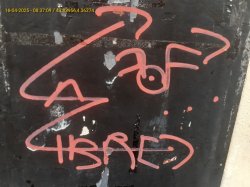 Apart from that, racist, antisemitic, homophobic, sexist, or defamatory inscriptions pose an additional problem. Beyond the material damage, they constitute specific criminal offenses, much more severely punished by the Penal Code and the 1881 Press Law. And their psychological impact on the targeted individuals or concerned communities can be considerable.
The golden rule for managers: these graffiti must be removed with absolute priority, ideally within 24 hours. Most municipal charters and agreements with social landlords indeed include this emergency clause. Some cities have even set up dedicated green numbers or mobile apps for immediate reporting by residents. An effective mechanism, provided that the intervention chain behind it is well-established.
Regulations and standards governing the fight against graffiti
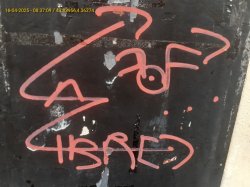 The French legal framework is quite comprehensive on this issue. Several texts complement and intersect, which can sometimes make reading complicated for someone new to the profession. Overview of the main references.
What does the Penal Code say about graffiti?
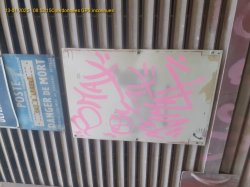 The main reference is Article 322-1 of the Penal Code. It states that the destruction, degradation, or damage to property belonging to another person is punishable by up to two years' imprisonment and a fine of 30,000 euros. The second paragraph, more specifically dedicated to graffiti, specifies that the act of making inscriptions, signs, or drawings without prior authorization on building facades, vehicles, public roads, or urban furniture is punishable by a fine of 3,750 euros and a community service sentence when it results in only minor damage.
When aggravating circumstances are present (graffiti on a classified historical monument, on a place of worship, with discriminatory motivation), penalties increase significantly. Article 322-2 provides for up to 5 years' imprisonment and a fine of 75,000 euros in certain cases. And if the damage targets a religious building or a cemetery due to the ethnicity, nationality, or religion of the people involved, the penalties rise to 7 years and 100,000 euros. In other words, the legislature is not joking, even though the difficulty in identifying the perpetrators often limits the effective application of these sanctions.
The powers of the mayor and the General Code of Territorial Collectivities
 The mayor has specific powers regarding urban cleanliness. Article L.2212-2 of the CGCT entrusts him with municipal policing, of which maintaining cleanliness is an integral part. More interestingly, Article L.2213-25 allows him, after a warning has proven ineffective, to order the cleaning of graffiti on private properties visible from public roads, at the expense of the delinquent owner. A provision not widely known but which gives the mayor a real tool for action.
In practice, many municipalities go even further and offer a free removal service to private property owners under a formal agreement. It is simpler, faster, and avoids disputes. Paris, Lyon, Toulouse, and Strasbourg have been operating this way for years, with surface area thresholds (often a maximum of 30 m² per intervention) and eligibility conditions (visibility from the public road, absence of authentic artistic messages, etc.).
What technical standards for graffiti cleaning?
 From a technical standpoint, several standards govern the practice of dismantling, mainly focused on operator safety, protection of equipment, and waste management. Note in particular:
- EN 16096 NF Standard : Cultural heritage conservation, condition and diagnosis of built heritage. Useful when working on historical buildings.
- Norme NF P 95-103 : products and systems for the protection and repair of concrete structures. Relevant for degraded concrete supports.
- ISO 12944 Standard : paints and varnishes, corrosion protection of steel structures. To be aware of when dealing with metallic urban furniture.
- Water Framework Directive (DCE 2000/60/CE) and its French transpositions: regulate discharges from washing water. No direct discharge into the natural environment is tolerated.
- REACH Regulation : European regulation on chemical substances. Applies to solvents and degreasers used.
- Labour Code, articles R.4412-1 and following: prevention of chemical risks for operators. Obligation of assessment, training, and appropriate PPE.
In addition to these standards, the recommendations from the CNAM (National Health Insurance Fund) regarding hygiene and workplace safety are particularly relevant for high-altitude work (scaffold, lift) and the use of high-temperature pressure. Field reports show that accidents on this type of site are rare, but when they occur, they are often serious: chemical splashes, falls from height, thermal burns. Therefore, operator training remains a major challenge for the sector.
Protection of Classified Buildings and Historical Heritage
 When graffiti touches a historical monument, classified or listed, a different regime comes into play. The Heritage Code then imposes intervention protocols validated by the Architect of the Buildings of France (ABF). There is no question of arriving with a high-pressure cleaner and a common graffiti remover on a 18th-century stone façade. Accepted techniques are much gentler: laser, micro-aerogommage, selective chemical poultices. And each intervention must be the subject of a documented report.
The LRMH (Laboratory for Research on Historic Monuments), based in Champs-sur-Marne, is the reference organization on these matters. Its publications and recommendations are authoritative in the sector. Any service provider working on protected heritage should be familiar with its work and refer to it.
Environmental regulation and waste management
 The products used to clean graffiti often contain organic solvents, surfactants, sometimes weak bases or acids. Their direct discharge into drains or gutters is strictly prohibited under the 1992 Water Act and its implementing regulations. In practice, the service provider must collect the washing water (floor tarps, industrial vacuum cleaners) and treat it or dispose of it through an approved waste management channel.
The ICPE (classified installations for environmental protection) impose specific constraints on product storage depots. For a service provider with a technical room containing several hundred liters of solvents, this can quickly become restrictive. Hence the growing interest in so-called "eco-labeled" products, water-based or bio-sourced, whose effectiveness has greatly improved in recent years.
Actors and service providers: who operates in the graffiti removal market?
 The French graffiti removal market is fragmented. It includes large multiservice cleanliness groups, regional specialized SMEs, and independent artisans. Each with its own strengths, weaknesses, and areas of operation.
Top 10 Providers and Actors in the Sector in France
 Here is a presentation, without commercial hierarchy, of the main players encountered on public and private graffiti removal markets in France. This is a non-exhaustive list, based on notoriety and on-the-ground presence.
- Onet Propreté et Services : French giant in cleaning services, present everywhere. Anti-graffiti activity integrated into its overall urban cleaning offering. Particularly active with major local authorities and transport operators.
- Veolia Propreté : another major player, with multiservice contracts often including tag removal as part of a broader urban cleaning service.
- Derichebourg Propreté : present on many municipal markets, has specialized teams and dedicated equipment (equipped trucks, hydrovacuum cleaners).
- Atalian Global Services : multiservice operator with a significant cleaning activity, regularly intervenes on anti-graffiti services as part of framework agreements.
- Samsic Propreté : Rennes-based group experiencing strong growth, present on a variety of municipal markets.
- GSF (Groupe Services France) : historical player in cleanliness, offers specialized graffiti removal services.
- API Restoration and Services : diversified operator with a significant cleaning activity in certain regions.
- Net Plus : SME specialized in tag removal and facade renovation, notably present in Île-de-France.
- Graffiti Removal Services and other specialized regional SMEs: numerous local SMEs (Anti-Tag Services, Stop Graffiti, Tag Out, etc.) that have positioned themselves exclusively in this niche, with real technical expertise. Often the most skilled in dealing with complex surfaces.
- Municipal Agencies: apart from that, several major cities (Paris in particular, with its Paris Cleaning Technical Service, as well as Lyon, Strasbourg) keep internally a part of the graffiti removal activity. With their own teams, their own trucks, their own procedures.
- We also mention specialized SMEs: Groupe HTP, TV NET, SOS-TAGS, Décap'Express, Nova Clean, HVNET, Hydrogommage France, Wonder Glass, Excellent Propreté...
Beyond these operators, the sector also relies on suppliers of specialized equipment and products. Among the leading brands for anti-graffiti removers: Guard Industrie, Sika, Karcher (for equipment), Tip Top Industries, Fila Solutions. These suppliers play an important role because they often train the operators in application techniques and safety protocols.
Professional Federations and Reference Organizations
 Several professional organizations oversee or represent the sector. Le Monde de la Propreté (FEP, Federation of Cleaning Companies) brings together most of the companies in the cleaning sector in France. It regularly publishes technical guides and industry recommendations. The INRS (National Institute for Research and Safety) issues practical sheets on the prevention of risks related to the use of cleaning chemicals. And the AITF (Association of French Territorial Engineers) brings together technicians from local authorities, many of whom manage anti-graffiti contracts.
Municipal Registries vs. Outsourced Services: What to Choose?
 The issue regularly comes up in municipal councils. Should graffiti removal be handled internally or outsourced to a service provider? There is no universal answer; it depends on the size of the community, the volume of graffiti to be treated, and the existing structure of technical services.
In-house management allows full control, quick response, and agents are very familiar with the territory. However, this requires investing in equipment (equipped truck, high-pressure washer, hydroextractor, PPE), continuous training, managing product stocks, and absorbing seasonal activity fluctuations. For a commune with less than 30,000 inhabitants, it is rarely profitable.
In an outsourced service model, you benefit from the expertise of specialized operators, often more advanced equipment, and contractual flexibility. The downside: you depend on the service provider's response times, and managing the market requires specific skills (specification document drafting, quality monitoring, service control). Many medium-sized cities opt for a mixed model: in-house for urgent interventions, and outsourced for planned cleaning campaigns.
How to choose the right graffiti removal service provider?
 Choosing the right service provider to remove tags and graffiti from your municipality or heritage is not just a matter of price per square meter. Several factors come into play, and experience shows that a poor choice can be costly: delayed interventions, damaged surfaces, disputes with neighbors, and a tarnished image of the community. Here are the points to consider.
Which technical criteria to prioritize?
 The provider's technical expertise is the first criterion. It is verified through several concrete points. First, mastery of various removal techniques: hydrogommage, sandblasting, laser, cryogenic, chemical strippers, and coating paint. Each surface, each type of graffiti, and each season requires an adapted approach. A provider who only has one technique in their toolbox will quickly be limited.
Knowledge of the substrates comes next. Limestone is not treated like raw concrete, which is not treated like plaster, which is not treated like galvanized steel or glass. A good technician must be able to identify the substrate in a few seconds and immediately adjust his method. Otherwise, it's a guaranteed disaster: stains, erosion, discoloration, or even more severe damage than the original graffiti.
Product and waste management, finally. Reputable service providers today use eco-labeled, biodegradable products and collect their washing water. This is a sign of professionalism and respect for current regulations. A requirement to systematically ask for during the consultation.
Which certifications and qualifications to verify?
 Several labels and certifications can guide the choice of a service provider:
- QUALIPROPRE : professional qualification for cleaning companies, issued by FEP. Testifies to a minimum level of organization and quality.
- ISO 9001 Certification : Quality management. Not mandatory but a good indicator of internal organization.
- ISO 14001 Certification : Environmental management. Particularly relevant for services using chemicals.
- Label MASE : Enterprise Safety Improvement Manual, a guarantee of seriousness in terms of professional risk prevention.
- QUALIBAT qualification in certain specialties, notably when working on heritage sites.
- Electrical authorizations for operators working near energized equipment (transformers, electrical panels).
- CACES aerial platform for high-level interventions.
Beyond labels, systematically request proof of professional liability insurance (with a sufficient guarantee amount, generally at least 1 million euros per incident), and proof of chemical risk training for operators. Serious service providers provide these documents without hesitation.
How to evaluate responsiveness and territorial integration?
 Responsiveness is often the decisive criterion. An offensive graffiti reported on a Saturday morning must be removed before noon on Monday. A classic tag on a municipal building must be addressed within 7 to 10 days following its report. These deadlines must be clearly contractually agreed upon, with penalties in case of non-compliance.
The provider's territorial coverage also matters. A company located 200 km away from the site will inevitably have unavoidable travel times and higher logistics costs. Whenever possible, prioritize local players or those with an office within a reasonable radius. Bonus: it supports the local economy and reduces the carbon footprint of interventions.
Specification document and public procurement: points to watch out for
 For public authorities, going through a public procurement process is generally mandatory above certain thresholds. The specification document must be carefully drafted, incorporating several key elements:
- Precise definition of expected services, by support and graffiti typology.
- Differential response times based on urgency (offensive graffiti within 24 hours, standard graffiti within 7 days).
- Reporting and validation procedures for interventions.
- Environmental requirements (products, waste management).
- Reporting and statistical tracking of activities.
- Penalty and Termination Clauses.
- Offer Evaluation Criteria (giving priority to technical quality and not just price)
Practical tip: do not neglect the weight of the technical criterion in the offer analysis grid. Too many markets are still judged 70% on price, which pushes operators to cut margins, hence quality, hence deadlines. A 50/50 balance between price and technical quality gives much better results in the long run.
Quality tracking and performance indicators
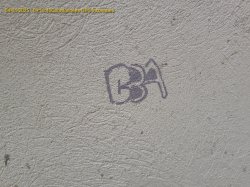 Once the service provider is chosen, the work is not over. Quality monitoring is essential to ensure long-term performance. Key indicators to implement: number of monthly interventions, treated areas, average intervention delays, re-intervention rate (a graffiti retouched within the month is a warning signal), residents' satisfaction rate.
And it is precisely there that digital intervention management tools come into play. Because without detailed traceability of operations, without geolocated before/after photos, without an exploitable history, this tracking quickly becomes unmanageable. Excel spreadsheets and WhatsApp messages cannot keep up beyond a few dozen interventions per month.
Comment KARTES improve the management of graffiti removal interventions?
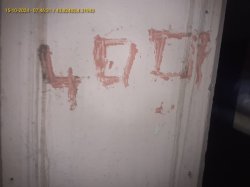 On the ground, anti-graffiti maintenance faces very concrete problems. How can you know where the reported tags are? How can you assign them to the right teams? How can you prove to the community that an intervention has been properly carried out? How can you avoid unnecessary travel? How can you feed the end-of-month reporting without spending three days on it? It is precisely these questions that are answered by KARTES, the urban intervention management application designed for cleaning and maintenance professions.
A platform designed for field interventions
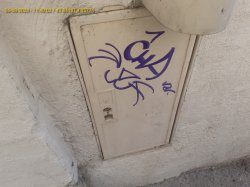 KARTES is a mobile and web application that allows graffiti removal teams to manage the entire lifecycle of an intervention: reporting, assignment, planning, execution, validation, archiving. Everything is geolocated, timestamped, and photographed. Everything is traceable. And everything is usable for management and reporting.
In practice, on the field, an operator receives his daily routes on his smartphone or tablet. For each graffiti to be treated, he has a complete file: precise location on a map background, "before" photo, type of surface, recommended technique, potential history. Once the intervention is completed, he takes an "after" photo, validates the operation with a few clicks, and the information is instantly sent back to management. No more paper, double data entry, or manual reports at the end of the day.
Riverside view: a simplified reporting and a visible feedback
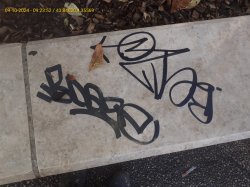 For the resident who notices an offensive tag or vandalism on their street, the experience is often frustrating. They report it, and then... nothing. No follow-up, no visibility on timelines, no confirmation that the intervention has been properly scheduled. With KARTES integrated into a citizen reporting system, the resident receives a receipt confirmation, can track the progress of their request, and may even view the "after" photo once the cleanup has been completed.
This simple change transforms the relationship between the community and its residents. It shifts from a feeling of abandonment to a perception of active support. Feedback from municipalities that have implemented this type of initiative shows a significant increase in user satisfaction rates, sometimes exceeding 30 points on urban cleanliness indicators.
Community perspective view: steering, reporting, and cost control
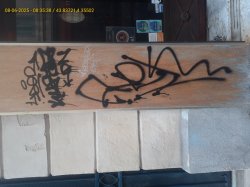 For the public client, KARTES provides full visibility into the vendor's activities. There is no longer a need to rely on verbal reports of the figures presented during monthly meetings. Everything is in the tool, verifiable, exportable, and comparable. How many interventions this month? In which sectors? With what average delays? What are the recurring problem areas? What is the evolution over 6 months, 12 months?
This traceability changes the game on three fronts. First: budget control. By cross-referencing intervention data with market price sheets, we know exactly what we are paying and for what. No more approximate invoicing. Second: strategic analysis. By mapping the most affected areas, we can adjust our prevention policy, deploy targeted video surveillance, or install anti-graffiti coatings on the most exposed supports. Third: contractual management. In case of disputes or market renewal, we have objective elements to discuss with our service provider or draft the next specification document.
Maintenance side view: route optimization and productivity
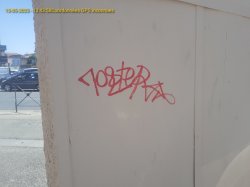 For the erasure service provider, KARTES radically change the daily organization. Routes are automatically optimized based on the geolocation of interventions, which reduces the kilometers traveled, downtime, and therefore costs. Experience feedback shows productivity gains of around 15 to 25% on this single lever.
Another major benefit: the reduction of administrative workload. No more need to fix in the evening the intervention reports filled out by hand all day long. Everything is already in the system, in a structured format. The team leader can dedicate his time to what really matters: supervision, quality, and customer relations. And invoicing can be directly based on the validated intervention data, supported by photos and geolocation. End of endless disputes.
On site, operators also appreciate having a history of interventions for each point. When returning for the third time to the same metal curtain, it is immediately known which technique worked, which product was used, and mistakes are avoided. This collective memory is a valuable asset for the company, no longer depending on the individual skills of a single technician.
User view: ergonomics and quick adoption
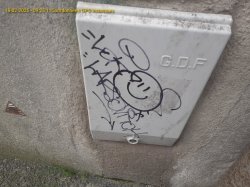 A field application is useless if operators do not use it. This is the classic pitfall of poorly conceived tools, designed from an office by people who have never held a high-pressure cleaner. KARTES was designed with field users from the very beginning: simple interface, offline functionality when mobile network is weak, integrated photo capture, validation in just a few clicks. The onboarding time for a new user is measured in hours, not weeks.
And the offline mode is crucial. Because on the field, between two buildings or in a parking basement, the 4G network is not always available. Data is stored locally and synchronizes as soon as the connection is back. The operator never loses their work, and the data uploads are reliable.
Quantified benefits and return on investment
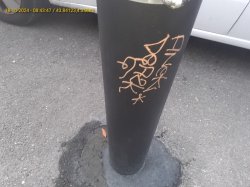 Concretely, what does it bring KARTES to a service provider or to a local authority? Documented user experiences (several French local authorities and private operators) highlight several orders of magnitude:
- Reduction of administrative time for team leaders: between 30 and 50 %
- Route optimization and reduction in kilometers traveled: 15 to 25%.
- Reduction of billing disputes thanks to photo traceability: almost elimination.
- Improvement of average intervention times: in the range of 20 to 40 %.
- Increase in satisfaction of residents and clients: very significant in surveys.
These gains quickly result in a positive return on investment, generally observed from the very first months of use. And this without even considering the less tangible but very real benefits: enhanced image of the service provider, increased ability to respond to demanding tenders, and operator loyalty through the use of modern tools.
FAQ: 10 Frequently Asked Questions About Graffiti and Their Removal
What exactly is a degrading graffiti?
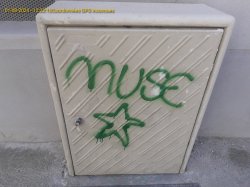 A degrading graffiti is an inscription, a drawing, or a mark applied without authorization on a surface for which it was not intended: building facade, urban furniture, sign, transformer. Regardless of the content, it is the lack of prior authorization that qualifies the act as a punishable offense.
What is the difference between a tag and a graffiti?
 The tag is a stylized, monochrome signature executed quickly with a spray can or marker. Graffiti is a more generic term encompassing all types of wild inscriptions: tags, throw-ups, pieces, blazes. In practice, within the profession, the two terms are used interchangeably depending on the context.
What is the criminal penalty for graffiti in France?
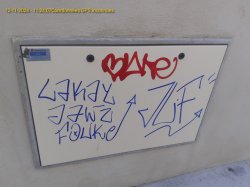 Article 322-1 of the Penal Code provides for a fine of up to 3,750 euros and community service for minor damage. In cases of aggravating circumstances (historic monument, discriminatory motive, place of worship), the penalties may reach up to 7 years' imprisonment and a fine of 100,000 euros.
Who is responsible for cleaning up graffiti on a private wall?
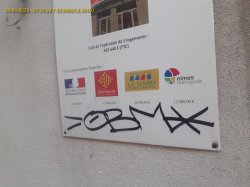 The property owner is responsible for cleaning. However, many municipalities offer a free service to private owners under certain conditions (visibility from the public road, limited area). In case of inaction, the mayor may proceed with the cleaning at the expense of the delinquent owner.
How long does it take to delete a tag?
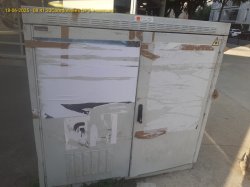 It depends on the surface and the technique. A recent tag on a surface treated with anti-graffiti coating can fade in a few minutes. On a porous stone, the process may take one to two hours and require several passes with specific products.
What techniques are used to remove graffiti?
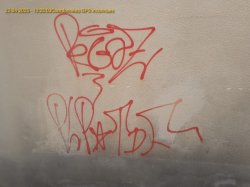 The main techniques are hydroblasting, sandblasting, cryogenics, chemical stripping, high-pressure hot water cleaning, laser, and coating painting. The choice depends on the surface, type of graffiti, and environmental constraints of the site.
Are anti-graffiti coatings effective?
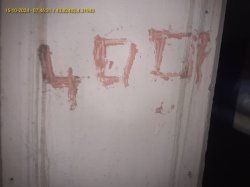 Yes, provided the product is chosen carefully. Sacrificial coatings allow for easy cleaning but must be reapplied after each intervention. Permanent coatings resist multiple cleaning cycles. Their application is particularly recommended on regularly vandalized surfaces.
How to report graffiti to your city hall?
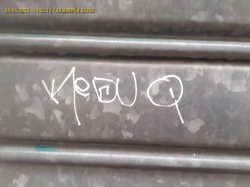 Most major cities now have mobile applications or dedicated online platforms for reporting urban damage. Otherwise, a phone call or email to the municipal cleanliness service is sufficient. For offensive graffiti, the report is handled with absolute priority.
How long is a graffiti visible before cleaning?
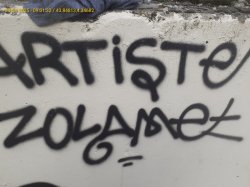 Depending on each community's commitments, the deadline varies from 24 hours (offensive or discriminatory graffiti) to 10 days (classic tag). These deadlines are generally part of the terms and conditions of public contracts assigned to removal service providers.
Can the appearance of graffiti be prevented?
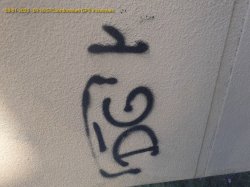 Several measures are available: applying anti-graffiti coatings on exposed surfaces, targeted video surveillance on recurring problem areas, enhanced public lighting, installation of climbing vegetation, and providing free expression walls. No miracle solution, but a combination of measures significantly reduces the phenomenon.
Conclusion: Making anti-graffiti efforts an asset for urban quality
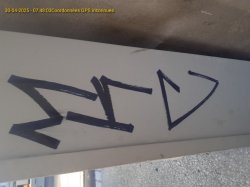 At the end of this overview, a conclusion is clear: graffiti management is neither a cosmetic detail nor an inevitability. It is a real issue concerning urban quality, perceived safety, social cohesion, and economic attractiveness for territories. Local authorities that take this subject seriously, that invest in modern tools, and that rely on competent service providers reap the benefits in the short and medium term.
For specialized service providers, the market remains promising, but it is evolving rapidly. Environmental requirements, expectations regarding responsiveness, pressure on costs, and the need to track every intervention are transforming a profession that was long artisanal into a technical, regulated, and data-driven activity. Those who adapt and invest in the right digital tools will gain an advantage. The others will be left behind.
KARTES fully aligns with this transformation. By providing field teams with a simple, reliable, and powerful tool, and by giving clients full visibility over their services, the application contributes to professionalizing an entire sector. Ultimately benefiting the residents, who regain clean public spaces, neat facades, and the precious feeling of living in a city that someone truly cares for.
If you manage a community facing the daily challenge of graffiti, or if you are a service provider looking to take your operations to the next level, do not hesitate to explore what modern intervention management tools can offer. The return on investment is quick, and the benefits are long-lasting. Urban cleanliness is everyone's responsibility, and every tag removed is a small step toward a more welcoming city.