Interventions on Time stamps
Time Stamps: Complete Guide, Regulation, Stakeholders and Maintenance
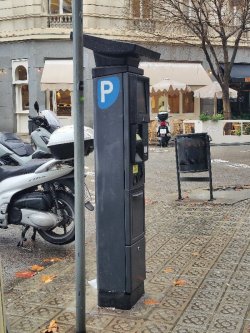 The timekeepers are these payment kiosks installed at the edge of sidewalks that allow payment for paid parking on public roads. Connected to the network, solar-powered, equipped with contactless bank card readers and now also with license plate entry, they have replaced the old parking meter and constitute the most visible face of urban parking policy. In this guide, everything is covered: operation and technologies, industry vocabulary, 2018 reform and legal framework (FPS, RAPO, ANTAI), main manufacturers and operators, criteria for choosing a maintenance provider, and how an application like KARTES streamlines the tracking of interventions on this equipment park.
A number to set the scene. Approximately 800 French communes implement paid parking on public roads, involving tens of thousands of parking meters. Behind each gray kiosk lies a complex system, a regulatory framework turned upside down by the depenalization of 2018, a significant public revenue stream, and a busy user who just wants to pay for their spot without hassle. A broken parking meter is not a minor detail: it's a revenue stream that evaporates and a motorist who risks a fine they didn't deserve.
Introduction to time stampers: everything you need to know
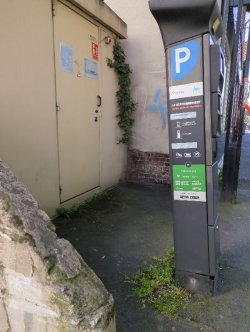 Let's start with the basics. The word "horodateur" itself tells us about its function: horo for time, dateur for date. Originally, the device issued a stamped ticket, marked with the time when the authorized parking period ended. Professionals also refer to it as parking meter, parking payment terminal, or, more colloquially, as the "city's slot machine." The term parcmètre, historically refers to the ancestor of the modern device, a counter per parking space.
What exactly is a timestamp?
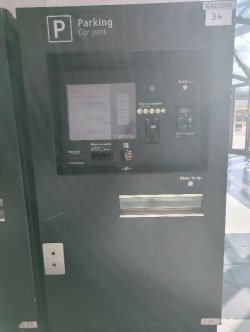 A time-stamping machine is a road-side automaton that collects the parking fee and grants the right to park for a given period. In short, it is an outdoor, robust, autonomous, and connected cash register. On recent models, the paper ticket is replaced by a dematerialized right linked to the vehicle's license plate, verifiable remotely by enforcement officers.
Stop in front of one of these devices. You will see a screen, a keyboard, a slot for the credit card, sometimes a coin acceptor, a solar panel on top, and a discreet antenna. Everything is designed to process transactions quickly, in all weather conditions, by transmitting payment data to a central server. The apparent simplicity hides sophisticated electronics and a complete software chain.
What is the difference between a parking meter and a time-stamp machine?
The nuance is historical, and it matters to those who appreciate precision. The parking meter, invented in 1935 in Oklahoma City, was designed for a single spot: a counter, a dial, a coin, a time. The time-stamp machine, born in France in 1972 in the Besançon workshops of the Compagnie des compteurs, manages several spots at once and issues a ticket to be placed behind the windshield. A considerable change in scale.
Today, the individual parking meter has almost disappeared from the French landscape. The shared parking meter has taken its place, and has itself evolved: from paper ticket dispensers we have moved to connected kiosks with license plate entry. The final stage is full digitization via mobile applications, where the smartphone completely replaces the kiosk. The object is evolving rapidly, driven by technology and regulatory reform.
How does a modern time-stamping device work?
The principle has profoundly changed with the connected generation. On a recent time-stamping device, the user enters their license plate, selects a duration, pays by contactless card or in coins, and validates. The device records the transaction and transmits it in real time to a central server via a mobile link (GSM, 3G/4G). The parking right is then linked to the license plate and can be checked by controllers without the need for any ticket behind the windshield.
Power supply is most often provided by solar panel, supplemented by a battery, which avoids connecting each post to the electrical grid. In practice, an autonomous time recorder can be placed almost anywhere, without trenching or heavy cabling. This energy autonomy has been a key factor in their widespread deployment. However, feedback shows that the battery remains one of the weak points to monitor, especially after several winters with little sunshine.
Why is it necessary to enter your license plate number?
The issue annoys many motorists, so let's explain it clearly. Entering the license plate enables automated parking control, notably through the LAPI (automated license plate reading) system. Cameras, mounted on enforcement vehicles or fixed at strategic points, scan the plates and instantly check, by querying the payment database, whether the vehicle has a valid permit.
Direct consequence: no need to display a ticket anymore. The right to park is digital, linked to the license plate. On the downside, a typing error (a forgotten character, a zero mistaken for an O) can generate an unfair post-parking charge, since the system does not find the payment. Fortunately, case law has recognized that a simple typing error does not prevent proof of payment, but it is better to type your license plate carefully.
What are the different payment methods for a time recorder?
Current timekeepers accept a wide range of payment methods, and the variety continues to expand. An overview of the options encountered on the field.
| Payment method | Status |
|---|---|
| Coin pieces | History, disappearing from recent models |
| Contactless bank card | Spread |
| Contactless bank card (NFC) | Standard on modern terminals |
| Mobile application (PayByPhone, EasyPark, Flowbird) | Strong growth, without passing the limit |
| QR code | Increasingly proposed for switching to mobile payment |
Mobile payment is changing the way people use parking meters. There's no need to go back to the machine anymore; users can now extend or end their parking from their couch. Field data show a rapid increase in adoption: in some parking lots, a third to 40% of transactions are already done via smartphone. A virtuous side effect of this dematerialization is the reduction of wear and tear on the mechanical parts of the meter (coin acceptor, card reader), and therefore fewer breakdowns.
The technical vocabulary of time recorders
A small survival glossary, to decode a specification document or a maintenance report. This jargon keeps coming up constantly in the parking industry.
- Parking fee : amount due for occupying a paid parking space on public roads.
- FPS : post-parking fee, due in case of non-payment or insufficient payment.
- LAPI : automated license plate reading, for inspection.
- Monnayeur : device that collects and sorts coins.
- Payment Module : card reader and secure banking link.
- Safe : armored compartment that collects cash in coins.
- Remote Data Collection : remote transmission of transaction and kiosk status data.
- Tariff Zone : area where a specific fee schedule applies.
- Authorized Agent : agent authorized to verify the absence of payment and issue a FPS.
- ASVP : public road monitoring agent, often in charge of inspection.
How do I install a timestamp?
The installation of a time-stamping device, although lighter than before thanks to solar power, follows a precise method. Far from being a simple sealing, it ensures the reliability of the entire parking service.
- Location selection : position the kiosk at a reasonable distance from the served areas, accessible and visible, not obstructing pedestrians.
- Mounting : the base is fixed on a concrete foundation or by means of a bolted plate, to withstand shocks and vandalism.
- Solar Orientation : the panel is oriented to maximize battery charging.
- Rate configuration : zones, rate scales, and time slots are configured in accordance with the decision of the local authority.
- Network connection : enable the mobile link for data collection and payment transmission.
- Testing and commissioning : payment, printing, license plate entry, data reporting are checked.
One point that seasoned technicians never overlook: accessibility. A time-stamping device must be usable by everyone, including people in wheelchairs, which imposes constraints on screen height and keyboard placement. On site, unfortunately, we often see poorly located kiosks, in full sunlight that blinds the screen, or too high to be reached from a wheelchair. These ergonomic details make the difference between a successfully implemented public service and a source of complaints.
Regulations and Standards for Time Stamps
Set aside the regulatory framework, and it experienced a seismic shift in 2018. The reform of paid parking has completely changed everything: the legal status, the stakeholders, the remedies. Understanding this architecture, from the MAPTAM law to the post-parking lump sum, is to grasp who decides, who collects, and how the user can contest. Let's unravel the thread.
What is the depenalization of paid parking?
Here is the keystone. Until 2017, not paying for parking constituted a criminal offense, punishable by a fixed fine of 17 euros, the same everywhere in France. Since January 1, 2018, this is no longer an offense: it is a matter of a fee for the use of public property. The paying nature of parking now falls under a domain logic, not a criminal one. This is depenalization.
Meanwhile, the reform has implemented decentralization: it is now the local authorities (municipalities or intermunicipal communities) that set the rates and rules. The user no longer pays a uniform "fee" imposed by the State, but a locally determined charge. This double change, depenalization and decentralization, gives elected officials full control over street parking. A quiet but profound revolution.
What texts govern paid parking?
The reform is based on a well-identified legal foundation. Memorize it, it structures the entire system.
- Act No. 2014-58 of 27 January 2014 (known as the MAPTAM Act), and in particular Article 63, which provides for the depenalization and decentralization.
- Effective as of January 1, 2018 : the reform becomes effective after a preparation period.
- Articles L. 2333-87 to L. 2333-87-11 of the CGCT : they govern the fee and the post-parking lump sum.
- Articles R. 2333-120-1 and following of the CGCT : they specify the practical and contentious procedures.
The underlying principle also stems from the general code of public property: occupying public land incurs a cost, the fee. This legal basis changes the very nature of the payment. One no longer "risks a fine," but "owes a fee." A subtle distinction for a lawyer, but with very concrete consequences for those who wish to contest it.
What is the post-parking package (FPS)?
The post-parking fine is the cornerstone of the reform. When a driver does not pay, or pays insufficiently, he no longer receives a 17 euro fine: he must pay a FPS, the amount of which is set by the local authority. This amount varies from one city to another, and even from one area to another within the same commune. However, the law sets a limit: the FPS cannot exceed the fee due for the maximum allowed parking duration in the area.
The FPS is officially not a penalty, but a fee paid retroactively. A significant nuance. It is issued by an authorized agent (municipal police, ASVP, or an agent from a service provider), then notified to the user. The community may provide a reduction in case of prompt payment, generally within a few days. Many cities have therefore introduced a reduced rate to encourage spontaneous payment.
How is the FPS payment opinion sent?
It is the ANTAI, the national agency for automated processing of offenses, that takes the stage. On behalf of local authorities, it issues and sends the FPS payment notice to the address listed on the vehicle registration certificate, via the SIV (vehicle registration system) file. The notice arrives by mail at the residence of the vehicle registration certificate holder.
A major difference compared to the previous fine deserves to be highlighted: you cannot designate another driver. The owner of the vehicle registration certificate is liable, period. If you have sold the vehicle, you must prove it via the transfer certificate. Payment must take place within three months. After this deadline, a surcharge applies (20% of the due FPS, with a minimum of 50 euros), and the ANTAI issues an enforceable title recovered by the DGFiP. The mechanism is relentless.
How to dispute a post-parking charge?
The dispute procedure is strictly regulated, and many users find it confusing. First mandatory step: the RAPO, mandatory preliminary administrative appeal. Within a month following notification of the notice, the liable party must submit their appeal to the local authority, along with supporting documents (vehicle registration certificate, proof of payment, statement of facts). The local authority then has one month to respond.
Second step, in case of rejection: filing a case with the paid parking tribunal (previously the paid parking dispute commission, the CCSP), a specialized administrative court with national jurisdiction. A notable particularity is that you must have previously paid the disputed FPS in order to file a case with this tribunal. This prior payment condition has generated a lot of discussion, with the Defender of Rights highlighting the difficulties it creates for some users. The process is therefore clearly defined, but demanding.
What technical standards for time stampers?
On the hardware side, the timestamping device is not subject to a single product standard like other equipment, but it must comply with several technical frameworks. The CE marking is required for the electronic part (electromagnetic compatibility, electrical safety). Most importantly, whenever there is payment by card, the PCI-DSS (Payment Card Industry Data Security Standard) governs the security of banking data, with encrypted data streams and up-to-date certificates.
In addition, there are the accessibility requirements of the road infrastructure, inherited from the 2005 law on disability: adapted screen and keyboard height, contrast, readability. And the data protection dimension, since the license plate entry and the LAPI check process personal data, under the watch of the CNIL and in compliance with the GDPR. Designing a compliant time-stamping device therefore involves juggling with several regulations at the same time.
How does the community manage its time-stamping devices?
Three organizational models coexist. The community can manage parking in housekeeping (with its own staff and resources), entrust it to a third-party contractor via a contract, or fully delegate it to a private operator within the framework of a public service delegation (DSP). The choice depends on the size of the municipality, its resources, and its strategy.
Regardless of the model, the community must at a minimum provide physical payment solutions, such as parking meters, within a reasonable distance from paid parking spaces. It must also maintain an information counter and produce an annual report on the follow-up of complaints. This obligation implies that the terminals must function: a poorly maintained parking meter system legally weakens the community, because a user who cannot pay cannot be lawfully sanctioned. Here, we already touch on the central issue of maintenance.
Main actors and service providers of the time stamping: the top 10
Who manufactures, operates, controls, and maintains time-stamping devices in France? The sector involves three families of stakeholders: the manufacturers of kiosks, the developers of mobile payment applications, and the operators who manage and control parking on behalf of local authorities. Here is an overview of the recognized stakeholders, without a fixed hierarchy, as the best interlocutor depends on the territory and the management model chosen.
Who are the main manufacturers of time clocks?
The manufacturing of time recorders is a market dominated by specialists in rugged electronics and payment. In France, one name historically prevails, heir to a long industrial tradition from Besançon.
- Flowbird (ex-Parkeon, ex-parking division of Schlumberger): French and global leader, a company born from the invention of the parking meter in 1972, with its R&D and production center in Besançon. Now integrated into the Swedish group EasyPark since the authorized acquisition at the end of 2024.
- IEM : French manufacturer based in Grenoble, recognized player in time recorders and parking solutions, a credible alternative on public markets.
- EasyPark Group : Swedish group that, through the acquisition of Flowbird, has become a major player both in parking meters and mobile payment.
- European specialized manufacturers : several European time-stamping industrialists complete the offering on the tenders of local authorities.
What are the main applications of mobile payment?
Dematerialized payment has given rise to a new generation of players, the application publishers. These solutions coexist with physical kiosks, and local authorities choose which applications to authorize on their territory.
- PayByPhone : widely leading in France, most used application, owned by the Volkswagen group, renowned for its simplicity.
- EasyPark : major European player, highly present in many French cities, now owner of Flowbird.
- Flowbird (application) : the mobile solution from the manufacturer, natively integrated with its time recorders.
Who operates and controls the paid parking?
The operation and control, when delegated, are carried out by specialized operators. It is they who deploy sworn agents, organize inspection rounds (sometimes via LAPI vehicles), and handle part of the appeals.
- Indigo : French leader in parking management, also active in road maintenance through its inspection subsidiary.
- Streeteo : subsidiary of Indigo specializing in the enforcement of paid parking on public roads.
- Q-Park, Effia, Urbis Park and other operators : parking operators involved in the management and control on behalf of local authorities.
On site, the distribution of roles varies significantly depending on the management model. A large city under DSP often entrusts the entire cycle (parking meters, operation, monitoring) to an operator. A municipality under direct management purchases its parking meters from a manufacturer and handles the operation itself. The common point? Everyone needs functioning meters and reliable data on their condition, which naturally leads us to maintenance.
Which organizations oversee the sector?
Beyond companies, some institutions hold authority. The ANTAI manages the sending of FPS payment notices. The paying parking court (former CCSP) settles disputes. The CEREMA publishes recommendation guides on parking. The GART (group of transport-responsible authorities) and the FNMS (national federation of parking professions) represent the industry. And the CNIL oversees the processing of license plate data. A dense institutional ecosystem, matching the scale of the challenge.
How to choose a maintenance provider for time clocks?
Selecting the right maintenance provider means combining technical requirements with sound operational judgment. A local authority does not choose a time-stamping maintainer at random: it is a matter of service availability, public revenue, and legal security. Step-by-step method.
Which technical criteria should be checked first?
First requirement: mastery of the various embedded technologies. A time stamp is electronics, a banking payment module, a solar battery, a coin acceptor, a screen, a network connection. The service provider must be able to intervene on each of these components, and ensure PCI-DSS compliance during interventions on the payment section. Ask to see a sample intervention report: its accuracy speaks volumes.
- Multitechnology expertise : electronics, card payment, solar, vending machine mechanics, telecommunications.
- Responsiveness : response time to a faulty kiosk, since each day of downtime is a lost revenue opportunity.
- Parts : availability and compatibility with the installed fleet.
- Payment Compliance : adherence to banking security rules during interventions.
- Remote Monitoring : ability to detect failures remotely via telemonitoring.
- Traceability : geolocated reports, photos, history viewable by kiosk.
How does a timekeeping maintenance market work?
For a public entity, maintenance is carried out through a public procurement contract or is integrated into the overall operation contract. The specification document outlines the scope (number of kiosks, type of equipment), response times, availability commitments of the fleet, and reporting procedures. Often, preventive maintenance (scheduled visits) is distinguished from corrective maintenance (repairing breakdowns).
A key indicator structures these markets: the availability rate of the fleet. The community wants the maximum number of kiosks in service at all times, because a broken kiosk means a double loss: no revenue, and a user who cannot pay, potentially leading to a contestable FPS. Requiring a high availability rate and imposing penalties in case of failure protects the community's interests. Monitoring this indicator requires, once again, reliable data.
What questions to ask before signing?
A few concrete questions, to bring up in the selection meeting. They quickly separate the serious candidates from the opportunists.
- What is your guaranteed response time for a non-operational kiosk?
- How do you detect failures, through remote monitoring or only upon reporting?
- Are your intervention reports geolocated, timestamped, and photographed?
- How do you ensure security compliance during interventions on the payment module?
- What availability rate of the fleet are you committed to maintaining?
- Do you have a tool that allows you to view the history of each timestamp?
What warning signals should cause retreat?
Skepticism toward a vague service provider regarding deadlines, unable to produce a standard report, or offering abnormally low pricing (often synonymous with superficial interventions and recurring breakdowns). Another red flag: the absence of digital traceability. A company that provides assistance on an ad-hoc basis, without exploitable data or an overall view of the fleet, leaves you blind to the actual health of your kiosks.
The best-organized communities today impose a standard of geolocated digital reporting. Each repaired utility pole is recorded, photographed, and plotted on a map, along with the nature of the fault and the repair performed. This level of requirement changes the game, and it is exactly here that an intervention management application comes into play.
Comment KARTES improve the maintenance of the time recorders?
We have discussed technology, regulation, and service providers. What remains is the question that occupies technical services on a daily basis: how to pilot a parking meter fleet, sometimes several hundred meters scattered throughout the city, without getting lost in spreadsheets and scattered reports? This is precisely the field of KARTES, a mobile application for managing and tracking field interventions, perfectly suited for the maintenance of urban parking furniture.
What is KARTES concretely?
KARTES is a field service management solution. The principle: each time stamp becomes a geolocated object on a map, equipped with its identifier, its characteristics (model, tariff zone, installation date) and its entire history. When a service occurs (preventive visit, breakdown, battery replacement, cash drawer cleaning, tariff update), it is recorded on a smartphone, time-stamped, photographed, and linked to the relevant kiosk. The memory of the fleet builds itself automatically.
Where a service juggled yesterday between a paper plan, an Excel file, and a reporting email inbox, KARTES centralizes on an interactive map. This map becomes the live dashboard of the metering park. And this data is worth its weight in gold to manage availability, prove maintenance, and allocate budgets. Let's look at the contribution for each stakeholder.
From the community's perspective: availability and revenue
For a municipality or an intercommunal authority, the benefit can be summed up in three words: availability, revenue, legal security. The community can view, on a single map, the status of its equipment: which terminals are operational, which are out of service, and which are awaiting intervention. The availability rate, this key indicator for markets, becomes measurable in real time rather than roughly estimated.
The financial stakes are direct. A broken time stamp means revenue evaporating every day. By reducing the time between failure and repair, effective monitoring preserves public revenue. Feedback shows that a well-managed fleet, where failures are quickly detected and addressed, generates significantly more revenue than a fleet managed on a random reporting basis. Avoiding just a few days of downtime across dozens of kiosks results in a significant gain over the course of the year.
Legal security, finally. Let us recall the mechanism: a user who cannot pay because the terminal is out of order cannot be validly held responsible for a FPS. If the community can prove that it quickly restored the terminal to service, or reported the periods of unavailability, it protects itself from disputes. The traceability of interventions becomes part of the file in case of a dispute over a post-parking fee.
From the maintainer's perspective: less paperwork, more fieldwork
For the agent or company responsible for maintaining the time recorders, daily life changes radically. Before: noting the malfunction in a notebook, taking a photo with a personal phone, re-entering the data at the office, and then locating the exact position of the memory unit. A tedious process prone to forgetfulness and duplicates.
With KARTES, the technician opens the application on site, selects the kiosk on the map, describes the intervention, takes photos directly in the app, and validates. Geolocation and timestamping are automatic. Double data entry disappears, the report is ready. Every minute saved on administrative tasks becomes another kiosk repaired during the day. And the viewable history prevents rediscovering a problem already addressed the previous week.
- On-site Entry : nature of the breakdown and repair recorded directly.
- Embedded Photos : status of the kiosk before/after, attached to the object.
- Automatic geolocation : no more unfindable landmarks on a paper map.
- History per kiosk : the technician sees the history before intervening.
- Reporting ready : reports generated for the community, availability indicators populated.
From the perspective of the resident and the user: a service that works
And the driver? They are the end beneficiary. A well-managed parking meter system is a service that works when you need it most. Nothing is more frustrating than a broken kiosk in front of which you circle around, with the risk of a FPS on the line. An effective intervention management system shortens the time to restore service, and some local authorities even integrate citizen reports into the workflow.
In practice, a user who reports a non-operational parking meter through a dedicated channel sees their alert localized and prioritized, rather than getting lost within a service. The meter is repaired faster, the user can pay, and the risk of unfair penalties decreases. Pay parking, often seen as a constraint, gains at least in reliability. And a public service that keeps its promises always regains trust.
In what KARTES does it reduce maintenance costs?
Cost reduction results from the addition of concrete gains. Let's recap the levers, because this is often the first question a decision-maker asks.
| Lever | Effect on Costs |
|---|---|
| Elimination of double entry | Reduced administrative time, technicians refocused on troubleshooting |
| Geolocation of beacons | Optimized routes, less time spent locating the time recorders |
| History by Identifier | Detection of problematic terminals, repair/replace decision making |
| Reduction of downtime | Preserved recipe, improved fleet availability |
| Legal traceability | Fewer contestable FPS, solid files in case of dispute |
| Data-Driven Prioritization | Targeted investments on aging kiosks |
A telling example. Imagine a terminal at the end of an area that, due to the lack of centralized memory, breaks down every two months on the same coin acceptor without addressing the root cause. Over two years, the cumulative cost of repairs, plus the revenue lost during each downtime, far exceeds the cost of replacing the module, which could have been decided earlier if only the recurring issue had been noticed. KARTES make this pattern visible. Turning scattered repairs into usable data, that's the real gain.
Let's be honest: no software changes a battery or repairs a card reader in place of the technician. KARTES does not replace professional expertise or banking security obligations. The application is an organizational enhancer, not a magic wand. But when used properly, this enhancer changes the scale of what a team can manage, shifting maintenance from reactive and endured to proactive and controlled.
Failures, malfunctions, and lifespan of time recorders
A time stamp appears sturdy, firmly placed there to withstand rain, frost, and wandering hands. Yet, it ages, loses accuracy, and breaks down, sometimes at the worst possible moment. Knowing common failures helps anticipate rather than endure. An overview of the ailments that threaten these road maintenance automatons.
What is the lifespan of a timestamp?
A properly maintained road marking timer typically lasts 10 to 15 years, sometimes even longer. The steel casing can withstand decades, but the electronics and mechanical components age more quickly. The limiting factor is not the housing, but technological obsolescence: a device designed before the 2018 reform, without license plate capture or contactless payment, quickly becomes outdated, even if it still functions mechanically.
What are the most frequent breakdowns?
The list of failures, observed on-site by technicians, looks like this. Each one tells a story of wear, weather, or malice.
- Dead battery : dirty solar panel or winter with little sunshine, the post turns off. The most common failure.
- Faulty card reader : module wear, clogging, contactless failure.
- Stuck coin acceptor : jammed coin, seized mechanism, sometimes deliberate sabotage.
- Jam or printing failure : on terminals still issuing paper tickets.
- Unreadable screen : display wear, reflections, degradation.
- Network connection loss : the station is operational but no longer transmits data.
- Vandalism and attempted break-ins : forced locks, graffiti, stickers covering the screen.
The battery deserves closer attention, as it is the Achilles' heel of solar time recorders. A panel covered with dust, droppings, or dead leaves no longer charges sufficiently, and the station shuts down silently. Without remote monitoring, no one knows about it until a user reports it. Hence the interest in remote status reporting, which turns an invisible failure into an immediate alert.
Should a faulty timer be repaired or replaced?
The real manager's question. A battery, a card reader, a coin acceptor: these can be replaced quickly and at low cost. But when a kiosk accumulates breakdowns, or when it is technologically outdated (no contactless, no license plate entry), patching becomes a bottomless pit. The right reflex: track interventions, and switch to replacement as soon as the cumulative number of repairs and lost revenue exceeds economic sense.
In practice, the services that perform best apply a simple rule: a kiosk that is repaired three times for the same cause in a short period triggers an arbitration. Often, the real calculation includes the lost revenue during downtime, which is often forgotten to account for. A poorly reliable kiosk on a high-traffic location costs much more than just its repair cost.
Why is preventive maintenance decisive?
Corrective maintenance discovers failures at the worst moment, when the user is in front of the kiosk. Preventive maintenance, on the other hand, anticipates: cleaning of solar panels, battery checks, reader tests, lock control. For a parking meter park, a reasoned approach combines scheduled visits, remote monitoring of statuses, and tracking of failures over time. An intervention management tool exactly structures this approach, turning isolated repairs into a coherent program.
How to conduct an audit of a municipality's time-stamping park?
Before optimizing maintenance or replacing equipment, it is first necessary to know what you own. Many municipalities are unaware of the exact condition of their equipment, especially after several installation waves. The audit addresses this blind spot. Here is a method applicable from the town center to large agglomerations.
Where to start the survey of the beacons?
The starting point is the geolocated inventory. We survey the pay zones, locate each timestamp device, and record its model, identifier, age, and condition. In the paper era, this work was lost in disparate folders. Today, it is directly entered on a digital map, each device becoming a localized and durable object. Without a reliable inventory, no management is possible.
For a small commune, a full census can be completed in a few days. For a large city, the process is carried out by tariff zones, prioritizing sectors with high revenue potential. The essential point: a homogeneous rating grid, so that the "average" status means the same thing to all agents.
What criteria to evaluate for each timestamp?
An effective audit grid combines several dimensions, quickly checked on site. The goal is not perfection, but a reliable and reproducible snapshot of reality.
- Identification : identifier, model, manufacturer, installation year, tariff zone.
- Operational Status : in service, out of service, degraded, obsolete.
- Payment methods : cash, card, contactless, mobile compatibility.
- Physical Condition : bodywork, screen, lock, signs of vandalism.
- Energy and connectivity : battery status, solar panel status, network link status.
- Accessibility : height, ergonomics, screen visibility.
- Geotagged photo : a picture is worth a thousand words, especially to track progress.
How to leverage audit data?
Once the data is collected, the real work begins: transforming it into an action plan. We cross-reference the status of the equipment with revenue by area, the age of the assets, and the budget. We distinguish between urgent issues (a non-operational device at a key location) and planned replacements, spread over several fiscal years. The modernization strategy of the fleet is directly fed by this audit.
The value of a digital tool becomes evident here. The audit map is not a static image: it lives, updates with each intervention, and keeps a history. Two years later, it is clear exactly which points are problematic, which are approaching obsolescence, and where to focus investments. The audit stops being a forgotten report and becomes a permanent dashboard.
Common Errors to Avoid with Timestampers
Field experience leaves a rich collection of recurring errors. Knowing them is already avoiding them. Here are the most common ones, from the office to the site.
What deployment errors are the most costly?
Header: Installing kiosks without considering ergonomics and accessibility, which leads to complaints and rework. Next comes under-equipment of an area, which places the user too far from the kiosk and hinders spontaneous payment. And the classic mistake of neglecting solar exposure at the installation, dooming the battery to repeated failures starting from the first winter. Anticipating avoids these troubles.
What management errors hinder a service?
On the management side, the main error is the lack of remote monitoring and traceability: outages are discovered only through user complaints, always too late. Another flaw is managing maintenance in a purely corrective mode, without any preventive measures, allowing batteries and readers to die a natural death. Finally, neglecting the link between the availability of stations and the validity of FPS, which exposes the community to well-founded disputes. Reliable data, again and again, is the antidote.
What errors harm the relationship with the user?
A broken pay station that goes unnoticed, an unreadable screen, a faulty payment method: all these small frustrations erode acceptance of paid parking. Worse, penalizing a user who couldn't pay due to a non-functional station fosters a sense of injustice and distrust. Ensuring the availability and reliability of the park is also about nurturing trust with citizens. Paid parking is already unpopular; there's no need to make it worse with inadequate maintenance.
Innovations and trends around time clocks
The time-stamping system, an automaton born in the 1970s, is it still innovating? More than one might think. Amidst dematerialization, artificial intelligence, and the announced end of paper tickets, the sector is moving quickly. A look at the evolutions shaping tomorrow's parking.
Are we heading toward the end of physical time clocks?
The question is being raised seriously. With the rise of mobile payments, some envision a future without limits, where the smartphone replaces everything. However, the reality is more nuanced. The law requires local authorities to offer, at a minimum, physical payment solutions within a reasonable distance from the locations. Until everyone has a smartphone and an application, the kiosk remains essential, if only to ensure equitable access to the service.
That said, the role of the kiosk is evolving. From a ticket dispenser, it is becoming a payment point among others, complementary to the mobile. Many cities are reducing the number of ticket machines while modernizing them, betting on the complementarity between kiosk and app. The object does not disappear; it transforms and becomes rarer. A subtle balance between modernity and accessibility for all.
How does control evolve with LAPI?
Parking enforcement has entered the automated era. The LAPI vehicles, equipped with cameras, patrol the streets and scan license plates on the fly, checking payment in real time. A single vehicle can thus control in one hour what several foot patrol officers used to do in a day. Efficiency has soared, as has the inspection rate.
This automation, however, raises questions, particularly regarding data protection and the risk of erroneous FPS in case of incorrect license plate entry. The CNIL is watching, and local authorities must strictly regulate these devices. The debate on the proper balance between control efficiency and users' rights remains lively, and the jurisprudence of the paid parking court continues to clarify it.
What role for data and artificial intelligence?
The real revolution may not be in the meter itself, but in the data it generates. Analyzing payments by zone and by time allows for adjusting rates, understanding traffic flows, and optimizing parking supply. Some cities are experimenting with analysis tools, sometimes enhanced by artificial intelligence, to centralize and exploit these parking data. Parking is becoming a lever for mobility policy, not just a source of revenue.
What is already very real is the ability to manage an entire fleet from an interactive map, to detect failures remotely, and to prove maintenance. This is the playground for a solution like KARTES, which bridges the gap between the field technician, his smartphone, and the manager's dashboard. The timestamping device, this venerable automaton, thus enters fully into the era of data.
Accessibility, Vandalism, and Urban Integration of Time Stamps
A time stamp is not just a cash machine: it is an urban furniture that fits into the public space, must serve all users and withstand attacks. These dimensions, often relegated to the background, nevertheless condition the success of the daily service.
Is a timestamp accessible to everyone?
Accessibility is a requirement, not an option. Inherited from the 2005 law on disability, the framework requires that the screen, keyboard, and payment slot be reachable and readable by a person in a wheelchair. Appropriate height, sufficient contrast, thoughtful ergonomics: these are criteria that modern kiosks incorporate, but older models do not always respect.
On site, accessibility is not limited to the post itself. The path to reach it must be clear, the ground stable, and the environment free of obstacles. A perfectly designed post but installed in the middle of a crowded sidewalk remains inaccessible. Maintenance and monitoring of the fleet therefore also contribute to ensuring this accessibility over time, by identifying posts that have become unreachable.
How does one combat the vandalism of time clocks?
The coin boxes, which contain money and stand in the middle of the street, are targets. Attempts to break in to steal the proceeds, graffiti, stickers covering the screen, free vandalism: vandalism is a costly reality. Manufacturers respond with bulletproof cash boxes, reinforced locks, and the widespread adoption of cashless payments, which reduces the amount of stored cash and therefore the appeal to thieves.
Rapid detection of damages limits the extent of the damage. A forced post or a masked screen identified early means a less severe repair and a service quickly restored. Again, tracking interventions and field reports play a key role. The less a post remains damaged for a long time, the fewer new depredations it attracts, according to the well-known "broken window" effect.
How to integrate a timestamp into the urban landscape?
Aesthetic integration matters, especially in historical centers and protected areas. A standard gray time stamp is not inconspicuous in front of a listed monument. Some cities choose specific color or design models, in consultation with the Architect of French Buildings in sensitive areas. The challenge: making the service as visually unobtrusive as possible while keeping it noticeable. A delicate balance between function and discretion.
Glossary of Time Stamps and Paid Parking
To close this guide, here is a glossary of the cross-referenced terms throughout the article. Handy to have on hand when facing a specification sheet or an invoice.
- Timestamp : street equipment collecting the parking fee.
- Pay-by-plate : ancestor of the time recorder, a counter per space.
- Parking fee : amount due for occupying a paid parking space.
- FPS : post-parking fee, due in case of non-payment or insufficient payment.
- RAPO : mandatory preliminary administrative appeal, first step in contestation.
- CCSP / TSP : commission, now a tribunal, handling disputes related to paid parking.
- ANTAI : national automated offense processing agency, which sends payment notices.
- LAPI : automated license plate reading, for inspection.
- MAPTAM : 2014 law organizing the depenalization of parking.
- Decriminalization : shifting from a penal logic to a fee-based logic for paid parking.
- Decentralisation : transfer of parking management to local authorities.
- DSP : public service delegation, a management mode by a private operator.
- Authorized Agent : agent authorized to verify the default of payment and issue a FPS.
- PCI-DSS : payment card data security standard.
- Remote Data Collection : remote transmission of transaction and kiosk status data.
History and Evolution of Time Stamps in France
To fully understand today's time-stamping device, a detour through its history sheds light on many aspects. The apparatus has a precise French lineage, and its evolution parallels that of our cities and the automobile. A small journey through time, instructive for those who wish to grasp the logic of modern parking.
Who invented the time stamp?
The story begins in the United States. The parking meter was born in 1935 in Oklahoma City, to regulate parking in an overcrowded downtown area. In France, it is the Compagnie des compteurs, based in Besançon, that further develops the concept. In 1972, having become Compteurs Schlumberger, it invents the proper time-stamping machine, capable of managing several parking spaces and issuing a time-stamped ticket. An innovation from Besançon that will spread throughout the world.
From this industrial lineage directly descends Flowbird, ex-Parkeon, whose R&D center remains in Besançon, the birthplace of the equipment. This continuity, more than fifty years of history in the same location, makes France one of the global cradles of time-stamping. A know-how that is exported, since French time-stamping devices equip cities on all continents.
How has the timestamping device evolved technically?
The evolution is spectacular. From the mechanical coin-based parking meter, we move to the electronic ticket-based time recorder, then to the autonomous solar-powered kiosk, followed by the connected kiosk with bank card payment, and finally to the license plate entry version without paper tickets. Each generation has added a layer: energy autonomy, dematerialized payment, network connectivity, full dematerialization.
Meanwhile, the device has opened up to new uses: electric vehicle charging on certain models, distribution of transport tickets, integration with mobile applications. The time-stamper is no longer just a coin collector; it is a node in urban mobility services. This increasing versatility illustrates how a daily object is reinvented according to the needs of the city.
Why did the 2018 reform change everything?
The depenalization reform marked a break as significant as the technical evolutions. By transforming the criminal fine into a domain fee, it has made local authorities masters of their parking policies. It also accelerated the modernization of parking meters, since license plate capture and automated control have become the norm. Three quarters of the cities surveyed after the reform had equipped their parking meters with mandatory license plate capture. Technique and regulation have advanced hand in hand.
Special Cases: Residents, People with Reduced Mobility, Electric Vehicles and Tourist Areas
Paid parking is not uniform. Depending on the user and the context, the rules change, and the meter must adapt. An overview of particular situations that contribute to the complexity of the job on a daily basis.
How does residential parking work?
Residents of a paid area generally benefit from a preferential "resident" rate, through a subscription or sticker, allowing them to park near their homes at a reduced cost. This system aims to balance the turnover of parking spaces during the day and long-term parking for residents. Each local authority sets its own zones, conditions, and justifications. However, be careful to park within your assigned area: parking elsewhere, even nearby, exposes you to the visitor rate and thus to FPS.
Do people with disabilities pay for parking?
The law provides for free parking on public roads for holders of the inclusion mobility card (CMI) with the parking feature, except for local provisions governing the duration. This free parking, intended to facilitate the mobility of people with disabilities, must be respected by enforcement devices. Unjustified FPS (fixed penalty notices) targeting cardholders have indeed been reported, highlighting the importance of proper coordination between databases and automated control systems.
What parking for electric vehicles?
Electric vehicles sometimes benefit from concessions, such as free use or reduced rates, depending on the decisions of local authorities, particularly in areas equipped with charging stations. Some newer parking meters even integrate charging management. Policies vary greatly from one city to another, following a logic of encouraging the energy transition. It is best to check locally, as no uniform national rules apply.
Why do tourist areas pose difficulties?
Tourist towns face a particular dilemma: recovering fees from foreign vehicles. A driver registered outside of France who does not pay for parking is very difficult to pursue, due to lack of access to foreign registration files. This gap, identified as early as the reform's assessment, deprives some coastal or mountain towns of a portion of their revenue. A thorny issue that has not yet found a fully satisfactory solution.
Paid parking, a tool of mobility policy
Beyond technique and methodology, the time-stamping serves a policy. Pay parking is not just a matter of money: it is a lever for urban planning and mobility. Understanding this strategic dimension sheds light on the choices made by local authorities, sometimes misunderstood by users.
Why make parking paid?
The primary objective is not to fill the coffers, contrary to a widespread misconception. Pay parking is mainly aimed at promoting the turnover of vehicles: by charging for time, it deters cars that monopolize a spot all day long, and it frees up spaces for businesses and visitors. It is a tool for sharing public space, a rare and coveted resource in the city.
Broader mobility goals are added to these: encouraging the shift to public transport, cycling, or walking, reducing the circulation caused by searching for parking (which represents a significant portion of urban traffic), and calming city centers. Pricing, adjusted by zone and duration, becomes a public policy instrument. The parking meter is the concrete, almost mundane, but central tool.
Where is the revenue from paid parking going?
The revenue, whether it is immediate fees or FPS, is collected by the community and contributes to its budget. The law provides that the post-parking lump sum revenues should prioritize funding operations related to mobility and transport. Parking money is therefore not supposed to disappear into an opaque general budget, but rather support mobility policies. This allocation, more or less visible depending on the municipalities, is regularly a subject of debate.
How does data improve parking policy?
The data generated by time-stamping devices and applications constitute a gold mine for decision-makers. They reveal congested areas, peak hours, and payment behaviors. By analyzing them, a local authority can finely adjust its pricing, redeploy its services, and evaluate the effectiveness of its policies. Parking thus moves from blind management to fact-based steering. And a well-maintained time-stamping system that provides reliable data is the very condition for this territorial intelligence.
Payment, data security and fraud around time stampers
As soon as there is money and banking data, there are security issues, and unfortunately, attempts at fraud. Vending machines, which collect and process payments in the street, are not exempt from this rule. Understanding these issues protects both the community and the user. Decoding sensitive topics.
How are card payments secured?
Bank security is based on an international standard, the PCI-DSS, which governs all card data processing. Specifically, the data flows between the terminal, the payment server, and the bank are encrypted, payment modules are certified, and certificates are regularly renewed. This requirement applies to both manufacturers and maintainers: working on a timestamping device's payment module is not just tinkering, it's adhering to a strict protocol.
For mobile applications, PCI-DSS compliance is handled end-to-end by the publishers, relieving the community of this technical responsibility. Paperless payments also offer a security advantage: less cash in the terminals, therefore less appeal to thieves, and securely traced transactions. Security improves as cash recedes.
What to do about fraudulent fake payment invoices?
A scam has emerged with the digitization: fake payment notices placed on the windshield. Let us recall a golden rule, emphasized by the authorities: no enforcement agent ever places a paper form on a windshield. Authentic FPS payment notices arrive only by postal mail, sent by the ANTAI, and are paid through the official digital service.
Any document slipped under the windshield wiper inviting payment by scanning a QR code or connecting to an unknown website is suspicious. Caution is essential: never pay in a rush, check the official channel, and if in doubt, contact your local municipality. Victims of a fake review should keep the evidence, file a complaint, and alert their bank. This fraud exploits the confusion caused by the reform, hence the importance of education.
How are the plate data protected?
The license plate entry and the LAPI check handle personal data, subject to the GDPR and the oversight of the CNIL. Local authorities must regulate the collection, limit data retention to what is strictly necessary, and ensure file security. The license plate number, cross-referenced with the registration file, allows identification of an owner: this is not an insignificant piece of data.
The debate on the balance between control effectiveness and privacy protection remains lively. The LAPI devices, highly effective, must remain proportionate and transparent. Users have rights over their data, and communities have strict obligations. Designing and operating a compliant timestamping system therefore involves integrating the "personal data" dimension from the outset, within a logic of default privacy protection.
How does one combat parking fraud?
Fraud takes many forms: simple non-payment, fake license plates, abusive use of disabled parking cards, or tampering with terminals. The automated LAPI control has significantly enhanced the detection of non-payment by increasing the number of vehicles checked. However, the fight against more sophisticated frauds, such as fake mobility cards, requires additional human checks.
At the point of sale, physical security measures (armored cash boxes, reinforced locks) and the reduction of cash on hand limit theft of revenue. A well-monitored site, where attempted break-ins are quickly detected and addressed, deters fraudsters. Fraud thrives on negligence and opacity: the more reliable, transparent, and responsive the service, the less opportunity it finds. Maintenance and rigorous monitoring of the site contribute once again to this overall robustness.
A final word on trust. Pay parking relies, at its core, on an implicit agreement between the community and the user: I pay a fee, in exchange I gain access to a spot and a reliable service. Every false review that circulates, every broken machine that isn't repaired, every unfair FPS undermines this agreement. Conversely, a well-maintained park, secure payments, and clear information strengthen it. Technology, regulation, and maintenance all converge toward the same objective: a service that the user understands, in which he has confidence, and which never fails him due to its own shortcomings. It's not very spectacular, but it's precisely there that the quality of a daily public service is determined.
10 Frequently Asked Questions About Time Stamps
What is the difference between a time-stamp and a parking meter?
The parking meter, invented in 1935, equipped a single space with an individual counter. The ticket machine, born in France in 1972, manages several spaces at once and issues a ticket or a dematerialized permit. Today, the connected ticket machine has almost completely replaced the parking meter.
Why do I need to enter my license plate at the time stamp?
Entering the license plate enables automated parking control, notably through the LAPI system which scans the plates and checks for remote payment. The right to park is thus linked to your vehicle, without the need to display a ticket behind the windshield.
What is the post-parking package (FPS)?
Since 2018, not paying for parking is no longer a fine but a post-parking fee, a charge set by the local authority. Its amount varies from one city to another. The FPS is notified by the ANTAI to the address of the vehicle registration holder.
How to dispute a post-parking charge?
A preliminary mandatory administrative appeal, the RAPO, must first be filed with the local authority within one month of notification. In the event of rejection, the paying parking court may be approached, provided the contested FPS has been paid in advance.
Who manufactures time clocks in France?
The main French manufacturer is Flowbird, formerly Parkeon, heir to the invention of the parking meter in Besançon in 1972, now integrated into the Swedish group EasyPark. IEM, based in Grenoble, is another recognized player in the local government markets.
How does a solar timestamp work?
A solar panel recharges a battery that powers the electronics of the kiosk, ensuring it has autonomy without being connected to the electrical grid. This system facilitates installation everywhere, but the battery remains a point to monitor, especially after several winters with little sunshine.
What happens if the timestamper is out of order?
A user who is unable to pay due to a non-functional kiosk cannot be validly liable for an FPS. It is recommended to report the malfunction and keep evidence. The community must ensure the availability of its kiosks for the control to be valid.
Can you pay for parking without going to the parking meter?
Yes, via approved mobile applications, such as PayByPhone, EasyPark or Flowbird. You can pay, extend or interrupt your parking from your smartphone. Not all cities allow the same applications; it's better to check which one is valid locally.
Is paid parking free at certain times?
Paid parking areas vary depending on each commune. In general, parking becomes free in the evening, often starting at 7 p.m. or 8 p.m., as well as on Sundays and public holidays. Some densely tourist areas are exceptions. Local signage is authoritative.
Who can establish a post-parking charge?
Only a sworn agent can verify the absence of payment and issue an FPS. This may be a municipal police officer, a public road surveillance agent, or an agent from a delegated service provider. No valid notice is fraudulently placed on the windshield.
Conclusion: the timestamping device, a discrete automaton at the heart of the city
We've seen throughout this guide that the timestamping machine is far from being a simple ticket dispenser. Behind the gray kiosk lies sophisticated electronics, a regulatory framework transformed by the depenalization of 2018 (FPS, RAPO, ANTAI, paid parking court), public revenue issues, and a mobility policy objective. A discreet automaton, yet central to the organization of our cities.
Maintenance makes all the difference between a reliable parking service and a facility that deteriorates silently, affecting revenue and fueling the sense of injustice felt by users. Inventory, monitor, respond quickly, and track: there are the keys. And to orchestrate all of this without getting lost in scattered reports, an intervention tracking application like KARTES transforms the management of the metering park into data-driven steering, to the benefit of local authorities, maintainers, and motorists.
Do you manage a parking meter fleet, and are you a maintainer, operator, or elected official in charge of parking? Take a few minutes to assess how the current state of your meters is being monitored. If the answer lies in an overflowing email inbox filled with reports, there's certainly a better way to go about it. Share this guide with others; it could illuminate your next maintenance tender.
At bottom, pay parking will never be loved by drivers; it's in its nature. However, a well-functioning parking meter system does alleviate a good part of the frustrations: you pay whenever and wherever you want, without encountering a broken machine. The quality of the service depends on a thousand technical details that are never noticed, until the very day they fail. Keeping your machines well-maintained is, no more and no less, maintaining the citizens' trust in their city.
Whether you are in charge of a municipal authority, a public service delegation, or a maintenance company, the situation is the same: you can only properly manage what you measure. A mapped parking meter park, where each unit carries its history and up-to-date status, transforms passive management into chosen management. Breakdowns become alerts, patrols become plans, disputes become documented files. It is this shift, from ambiguity to data, that today distinguishes high-performing parking services from others.