Interventions on Recharge for cell phones
Mobile phone battery charging: complete guide, standards, stakeholders and maintenance
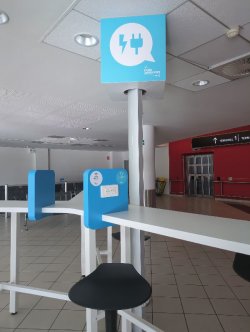 The public mobile phone charging solutions, these kiosks and stations that allow you to charge your smartphone in public places, have become essential: shopping centers, train stations, hospitals, restaurants, events. Secure code lockers, totems with integrated cables, portable battery dispensers, induction or solar charging, the offering is rich. More than just a charger, a mobile phone charging station is a connected device, subject to standards (starting with the universal USB-C) and whose availability is key to its value. In this guide, we cover everything: types and terminology, regulations and standards, main players and manufacturers, criteria for choosing a maintenance provider, and how an application like KARTES streamlines the tracking of interventions on a kiosk park. Let us clarify the scope right away: we are talking here about the recharging of smartphones and mobile devices in public places, not the recharging of electric vehicles, which falls under a completely different framework.
A reference point to understand the stakes. Since December 28, 2024, the USB-C port has become mandatory on all mobile phones sold in the European Union, a revolution that simplifies the lives of kiosks manufacturers and users alike. Behind each mobile phone charging kiosk lie cables to maintain, electronics to monitor, and a simple goal: that a user running out of battery finds a working solution. A faulty kiosk means a dead service, coupled with a damaged image. Hence the importance of its maintenance.
Presentation of Mobile Phone Charging Stations
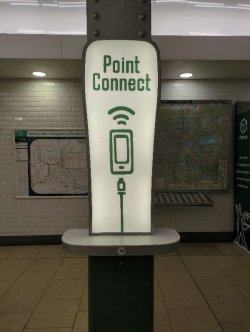 Let's start with the basics. In industry terminology, we refer to a phone charging station, charging station, charging kiosk, or charging locker. All of these terms describe an equipment allowing a user to recharge their smartphone, tablet, or another mobile device, freely accessible, in a public venue. The offering has considerably diversified in recent years.
What is a mobile phone charging station?
A mobile phone charging station is a device that provides the public with a means to recharge their mobile devices. Depending on the model, it offers integrated cables, secure compartments, or portable batteries to borrow. Its purpose: to address the anxiety of low battery, that well-known stress of the user whose phone is about to shut down.
Why offer this service? Because a dead smartphone disconnects a user from the world: no payments, no tickets, no navigation, no contact. Offering free recharge improves the experience in a retail environment, reassures in a hospital, and helps in a train station. Feedback shows that this service, which appears simple, builds loyalty and enhances a location. It has become a standard of welcome in many environments.
What are the different types of charging stations?
Where the family expands, and this is instructive. Depending on the location, visitor traffic, and the expected security level, several types of kiosks coexist. Each has its advantages and constraints.
| Type of post | Principle | Preferred usage |
|---|---|---|
| Integrated Cable Station | Cables attached, on-site recharging | Restaurants, waiting rooms, coworking |
| Secure cabinet rack | Lockable compartment, device enclosed | Stations, hospitals, shopping centers |
| Battery Distributor | Portable batteries for borrowing | Airports, events, high traffic |
| Inductive charging | Contactless wireless charging | Tables, counters, design spaces |
| Totem or solar post | Solar-powered recharge | Outdoor, public spaces, parks |
| Connected furniture with screen | Recharge and public display advertising | Shopping centers, events |
The integrated cable station is ideal where the user stays in place, such as in a restaurant. The secure locker kiosk, lockable with a keypad or key, provides reassurance in high-traffic areas where one wants to move away during charging. The portable battery dispenser allows users to keep moving, with a battery in hand. As for induction and solar, they meet specific needs related to design or outdoor use. A beautiful range, for a variety of uses.
How does a secure locker kiosk work?
The locker post is one of the most common solutions, and its operation is clear. The user finds an empty locker, connects their phone to the provided cable, closes the door, and then enters a four-digit code of their choice to lock it. Their device charges safely, and only they know the code. They return, enter their code, and retrieve their charged phone.
Several locking systems are available. The digicode, the most common one, requires neither a key nor an application, just a simple and intuitive four-digit code. The key lock offers a reliable alternative, with no risk of forgetting a code. The padlock, finally, requires little maintenance and remains economical. The lockers generally offer several cables, USB-C, Lightning, sometimes Micro-USB, to adapt to all devices. The charging intensity is controlled and adjusted according to the connected phone.
Where are phone charging stations installed?
These kiosks have spread across a multitude of locations. Everywhere the public spends time, or risks running out of battery power, the service finds its place.
- Restaurants and Cafés : recharge during meals, comfort and loyalty.
- Mall Services : visitor reception service.
- Railway Stations and Airports : assistance to traveling passengers.
- Hospitals and healthcare facilities : comfort of patients and visitors.
- Events and Festivals : sporadic high demand, battery dispensers.
- Co-working spaces and companies : employee productivity.
- Gymnasiums, cinemas, leisure venues : appreciated service by users.
The technical vocabulary of mobile recharge
A small survival glossary, to decode a specification document or an exchange with a supplier. This jargon keeps coming up constantly in the field of free access refilling.
- USB-C : universal connector now mandatory on phones.
- Lightning : old proprietary connector, still present on older devices.
- Power bank : portable battery to borrow or own.
- Induction : wireless charging by contact, cable-free.
- Secure compartment : lockable compartment for safe charging.
- Digicode : four-digit code locking.
- Self-service : autonomous usage, without dedicated staff.
- RFID or QR code : identification methods for battery dispensers.
- Totem : vertical kiosk, often with screen or refined design.
- Fast charging : fast charging, high power.
Regulations and Standards for Mobile Phone Charging Stations
Set aside the regulatory framework, and it has recently undergone a major upheaval. Mobile phone charging crosses several regulations: universal connector, electrical safety, batteries, accessibility, data. Understanding this set of rules helps avoid pitfalls, whether you are a kiosk operator, manufacturer, or public place manager. Let's unravel the thread, starting with the big new development.
Is the USB-C port mandatory?
Yes, and this is the revolution of the sector. Since December 28, 2024, all mobile phones sold in the European Union must be equipped with a USB-C charging port, in accordance with the European Union's universal charger regulation. No more proliferation of proprietary connectors: a single standard, USB-C, to charge the majority of mobile devices.
This obligation applies broadly. It concerns phones, but also tablets, cameras, headsets, and many other small and medium-sized electronic devices. For laptops, the obligation comes into effect on April 26, 2026. Manufacturers must also offer the separate sale of the device and charger, indicated by a pictogram, to encourage reuse. According to the European Commission, this measure prevents approximately 11,000 tons of electronic waste per year. A significant ecological argument.
What impact does USB-C have on charging stations?
For open-access charging stations, the universal USB-C is a game-changer. Standardization simplifies equipment: a single USB-C cable is now sufficient for most devices, where previously users had to juggle between multiple connectors. Stations still often offer multiple cables, USB-C, Lightning, Micro-USB, until the old devices disappear. But the trend is clear: USB-C is becoming the standard everywhere.
This convergence also facilitates maintenance. Fewer types of cables mean fewer references to manage and replace. Operators can rationalize their equipment around the universal standard. In the long run, the ideal port will mainly offer USB-C, supplemented by a few cables for older devices. European regulation, by imposing a standard, benefits the entire open-access charging industry. It is a rare case where the standard simplifies everyone's lives.
Is a phone charging station subject to the standards for electric vehicle charging stations?
No, and this distinction is essential to avoid confusion. Charging stations for electric vehicles fall under a specific and very stringent framework: IRVE installer qualification, EV Ready reference, type 2 or Combo connectors, dedicated standards. None of this applies to charging stations for mobile phones, which are simply low-power electrical devices.
Confusion is common, but the two worlds have nothing in common. A smartphone charging station connects to a standard wall outlet and delivers low voltage through a USB cable. A car charging station handles a significant amount of power and requires a dedicated electrical installation. Clearly distinguishing these two categories avoids design and regulatory errors. When talking about charging for mobile phones, we remain within the realm of small, consumer electrical equipment.
What electrical safety standards apply to these sockets?
A phone charging station remains an electrical device, subject to general safety rules. It must bear the CE marking, attesting to its compliance with applicable European directives, notably regarding low voltage and electromagnetic compatibility. The electrical installation of the location, to which the charging station connects, must comply with the NF C 15-100 standard, the reference for low-voltage electrical installations.
User safety is at the core of these requirements. The kiosk delivers low voltage through its USB ports, posing no danger under normal use. However, the device itself, connected to the power grid, must be designed and installed properly to eliminate any electrical risk. A compliant kiosk, properly installed and maintained, presents no danger. Regular checks of the electrical condition, cables, and connections are part of maintaining a safe equipment.
What rules apply to the batteries of the dispensers?
Portable battery distributors add a regulatory dimension. These power banks are lithium-ion batteries, subject to European battery regulations and CE marking. Lithium battery safety is a sensitive issue, as these batteries, in case of failure, may present a risk of thermal runaway. Their quality and condition must therefore be monitored.
Storing numerous batteries in a dispenser requires particular vigilance. In a public establishment, storing lithium batteries may involve fire safety precautions. Monitoring the condition of batteries, removing those that are swollen or faulty, is part of managing a dispenser fleet. Maintenance is not limited to the dispenser itself: it includes monitoring the batteries themselves, which are a security element in their own right.
Should these markers be accessible to everyone?
Accessibility applies, as it does for any equipment in public places. In a public establishment, a charging station must be usable by everyone, including people with reduced mobility. This requires an appropriately sized access height, compartments or cables reachable from a wheelchair, and readable signage. The February 11, 2005 accessibility law governs this requirement.
Beyond the obligation, it is a matter of common sense and inclusion. A kiosk placed too high or difficult to access excludes part of the users, which goes against its purpose as a service. Thinking about the placement and ergonomics for everyone expands the usefulness of the equipment. On site, well-placed and accessible kiosks are also the most used. Accessibility therefore serves both inclusion and the efficiency of the service.
What rules regarding data and hygiene?
Some connected kiosks raise questions about data. A kiosk with an advertising screen, application, or payment function can collect data, subjecting it to the GDPR and the scrutiny of the CNIL. Transparency regarding collected data, clear purpose, and consent when required: data protection rules apply. It is better to ensure this from the service's design.
Hygiene is another point, often overlooked. A shared kiosk, whose cables and keyboards are touched by many users, can become a vector for contamination. Regular cleaning and maintenance of contact surfaces contribute to comfort and sanitary safety. This aspect, emphasized since recent health episodes, is now part of good practices. A clean kiosk is more pleasant and reassuring to use. Sanitary maintenance complements technical maintenance.
Key Actors and Providers of Phone Charging Stations: The Top 10
Who conceives, manufactures, deploys, and operates mobile phone charging stations in France? The sector involves several categories of stakeholders: the manufacturers of charging stations and furniture, the operators of self-service networks, the distributors and installers, and the reference organizations. Here is an overview of the recognized actors and categories, without a fixed hierarchy, as the right interlocutor depends on the need and context.
Who manufactures and operates the phone charging stations?
Several companies have specialized in mobile device charging solutions for public places. They design cabinet kiosks, totems, stations, and battery dispensers, available for sale or rent.
- The Charging Place, a recognized actor in lockers and battery dispensers, present at major events.
- Connected recharge furniture manufacturers, who offer totems and screen-equipped stations.
- Multi-device charging station specialists, for smartphones, tablets and computers.
Who proposes the self-service battery dispensers?
The self-service portable battery rental market has seen the emergence of dedicated operators. These players deploy kiosks distributing power banks, often with QR code or card identification.
- Free-to-use battery network operators, who equip public places and events.
- Power bank dispenser manufacturers, offering stations with 8 to 48 batteries.
- Solar solution providers, for outdoor recharging via solar kiosks.
Who distributes and installs these equipment?
Between the manufacturer and the host site, distributors and installers play a key role. They advise, supply, and deploy the kiosks on site.
- Urban furniture and community equipment distributors, who reference charging stations.
- Installers and integrators, who are responsible for the installation and electrical connection.
- Electricians and equipment companies, for the installation compliant with electrical standards.
Which organizations oversee the sector?
Several institutions have authority over regulatory aspects. The European Commission has set the regulation for the universal USB-C charger. The AFNOR publishes applicable electrical standards, such as NF C 15-100. The DGCCRF ensures product compliance and safety. And the CNIL oversees personal data for connected kiosks.
- European Commission, AFNOR, DGCCRF and CNIL, reference organisations for standardisation, safety and compliance.
This panorama reveals a young and dynamic sector driven by the omnipresence of the smartphone and the widespread adoption of USB-C. For a kiosk operator or a site manager, this diversity means a wide range of choices, but also a chain of stakeholders to coordinate, from procurement to maintenance. And it is precisely over time, in terms of maintenance, that the value of a kiosk park is determined. Installation alone is not enough; it is also necessary to ensure the service remains available.
How to choose a maintenance provider for charging stations?
Selecting the right maintenance provider ensures long-term service availability. An operator, a brand, or a local authority does not choose a charging station maintainer at random: a faulty station means a non-operational service and a damaged image. Step-by-step method.
Which technical criteria should be checked first?
First requirement: responsiveness and technical expertise. A charging station consists of cables that wear out, compartments that need maintenance, electronics, sometimes batteries, and a screen. The service provider must be familiar with these components, know how to replace a cable, troubleshoot a compartment, and check the power supply. Ask to see a sample service report: its accuracy speaks volumes about the company's seriousness.
- Responsiveness : intervention time on a faulty kiosk, a key criterion of the service.
- Cable Management : quick replacement of worn or pulled-out cables.
- Electronics Competence : cabinets, digital codes, power supply, screens.
- Battery Management : tracking and replacement for dispensers.
- Sanitary Maintenance : cleaning of contact surfaces.
- Traceability : geolocated reports, photos, history per post.
Why is cable management crucial?
Here is the key point that distinguishes the maintenance of a charging station: the cables are its Achilles' heel. Continuously handled, pulled, sometimes torn out or stolen, the cables wear out quickly and constitute the number one cause of failure. A station where all the cables are out of service is useless, even if the electronics function perfectly. Therefore, availability largely depends on cable maintenance.
This reality requires both reactive and preventive maintenance. A serious service provider regularly checks the condition of cables, replaces them as soon as they show signs of deterioration, and anticipates wear and tear. On site, cable replacement is the most frequent operation for this type of equipment. A maintainer who neglects this point allows the fleet to degrade subtly, station by station. Choosing a service provider who is aware of this challenge and organized to address it is essential.
What questions to ask before signing?
A few concrete questions, to bring up in the selection meeting. They quickly separate the serious candidates from the opportunists.
- What is your guaranteed response time for a faulty kiosk?
- How frequently do you inspect and replace cables?
- How do you manage the tracking and replacement of dispenser batteries?
- Are your intervention reports geolocated, timestamped, and photographed?
- Are you ensuring the sanitary maintenance of contact surfaces?
- Can I view the history of each kiosk and its availability rate?
What warning signals should cause retreat?
Skepticism toward a provider vague about their ability to quickly replace cables, unable to produce a standard report, or offering abnormally low prices. For a service whose value lies in availability, low cost often translates into terminals with dead cables and prolonged outages. Another red flag: the absence of digital traceability. A company that intervenes on an ad-hoc basis, without exploitable data or an overall view of the fleet, leaves you blind to the actual condition of your terminals and their availability rate.
The best-organized operators now impose a standard for geolocated digital reporting. Each controlled or repaired post is recorded, photographed, and positioned on a map, along with the condition of the cables, electronics, and availability. This level of requirement changes the game, especially for a dispersed fleet across many sites. And that's exactly where an intervention management application comes into play.
Comment KARTES improve the maintenance of phone charging stations?
We've discussed types, standards, and service providers. What remains is the question that occupies operators on a daily basis: how to pilot a fleet of mobile phone charging stations, sometimes dozens or even hundreds spread across numerous sites, while ensuring that each one functions properly, including the cables? This is precisely the domain of KARTES, a mobile application for managing and tracking field interventions, perfectly suited for the maintenance of charging stations.
What is KARTES concretely?
KARTES is a field service management solution. The principle: each charging station becomes a geolocated object on a map, equipped with its identifier, its characteristics (model, number of compartments, type of cables, site) and its entire history. When a service intervention occurs (cable replacement, compartment troubleshooting, cleaning, battery replacement, inspection), it is recorded on a smartphone, timestamped, photographed, and linked to the relevant charging station. The memory of the fleet builds itself automatically.
Where a site operator juggled yesterday between a spreadsheet, site maps, and scattered reports, KARTES centralizes on an interactive map. This map becomes the live dashboard of the kiosk park. And this data is worth its weight in gold to manage availability, ensure service quality, and allocate budgets. Let's look at the contribution for each stakeholder.
From the perspective of the community and the operator: availability and image
For a network operator, a franchise, or a local authority, the benefit is summed up in three words: availability, service quality, image. On a single map, the status of the network is visible: which kiosks are operational, which have dead cables, and which are waiting for intervention. Availability, which defines the entire value of the service, becomes measurable rather than expected.
The image dimension is crucial here. A charging station is a visible service, often associated with a brand or a location. A broken station, pulled-out cables, or blocked compartments convey an image of neglect that reflects back on the brand or the community. Conversely, a well-maintained charging station enhances the location and the service. Monitoring the condition of charging stations therefore protects an image as much as it ensures a function. The data allows for action before degradation becomes visible.
Finally, budgetary arbitration. By aggregating data, the operator identifies the kiosks that frequently break down, pinpoints problematic sites, measures cable consumption, and plans based on facts. Rather than endlessly repairing a capricious kiosk, the decision is made to replace it at the right time. Feedback shows that well-maintained data transforms a passive management into an informed steering.
From the maintainer's perspective: less paperwork, more fieldwork
For the technician maintaining the kiosks, daily life changes radically. Before: noting the intervention on a form, taking a photo with his personal phone, re-entering the data at the office, and then trying to figure out which kiosk was on which site. A tedious process, prone to forgetfulness and duplicates, especially when the kiosks are spread across many locations.
With KARTES, the technician opens the application on site, selects the kiosk on the map, logs the cable replacement or repair, takes photos directly in the app, and validates. Geolocation and timestamping are automatic. Double data entry disappears, the report is ready. Every minute saved on administrative tasks becomes another kiosk processed in the route. And the viewable history prevents rediscovering a problem that has already been addressed.
- On-site entry : nature of the intervention recorded directly, without re-entry.
- Embedded Photos : condition of cables, trays, terminal, attached to the object.
- Automatic geolocation : no more unfindable beacons on a multi-site network.
- Per Device History : the technician sees previous interventions.
- Reporting ready : reports generated, availability rate fed.
From the user's and neighbor's perspective: a service that works
And the user? They are the ultimate beneficiary. A station with all cables broken, a locked compartment, is a disappointment precisely when you need to recharge. An efficient intervention management system shortens the time needed to restore functionality, ensuring that a requested station will work. User satisfaction directly depends on this availability.
For the visitor of a shopping center, the traveler at a train station, the patient at a hospital, the challenge is that of service provided. Finding a working kiosk, charging one's phone, and leaving with peace of mind: this is the expected experience. On the contrary, a broken kiosk generates frustration and a bad image. A well-maintained park, where kiosks are operational, offers a reliable service that builds loyalty and enhances the place. Careful maintenance is directly felt in the user experience.
In what KARTES does it reduce maintenance costs?
Cost reduction results from the addition of concrete gains. Let's recap the levers, because this is often the first question a decision-maker asks.
| Lever | Effect on Costs |
|---|---|
| Elimination of double entry | Reduced administrative time, technicians focused back on the field |
| Geolocation of beacons | Optimized routes on multi-site networks |
| History by Identifier | Detection of problematic terminals, repair/replace decision making |
| Cable Consumption Tracking | Stock anticipation, optimized purchases |
| Reduction of downtime | Service available, image and satisfaction preserved |
| Data-Driven Prioritization | Targeted investments on the most frequently used sites |
A telling example. Imagine a terminal whose cables gradually wear out without structured tracking, until all are out of service. For days, maybe even weeks, the terminal occupies space without providing any service, and no one notices on the management side. With tracked monitoring, wear is detected, cables are replaced in time, and the terminal remains available. KARTES make visible what is deteriorating in silence. Transforming scattered interventions into usable data, that is the real gain.
Let's be honest: no software can replace a cable or clean a terminal in place of the technician. KARTES does not replace professional expertise or on-site visits. The application is an organizational enhancer, not a magic wand. But when used properly, this enhancer changes the scale of what a team can manage, shifting maintenance from reactive and endured to proactive and controlled.
Failures, lifespan, and reliability of charging stations
A charging station appears sturdy, firmly planted there to serve day after day. Yet, it wears out, becomes misaligned, and breaks down, especially at its most frequently used contact points. Knowing common failures helps anticipate rather than endure. An overview of the ailments that threaten these equipment.
What is the lifespan of a charging station?
A well-designed and maintained kiosk typically lasts several years, often five to ten years, or even more. However, its components age at very different rates. The housing and electronics last a long time; the cables, on the other hand, wear out within a few months depending on usage. The limiting factor is therefore not the kiosk itself, but its contact elements, which need to be regularly replaced. A kiosk lasts if its consumables are properly maintained.
What are the most frequent breakdowns?
The failure record, observed on-site, looks like this. The particularity here is the overwhelming dominance of one type of failure.
- Worn or broken cable : the main failure, caused by intensive handling.
- Stolen or pulled cable : frequent in highly frequented public places.
- Malfunctioning drawer or lock : numeric keypad locked, jammed latch.
- Power Supply Issue : The terminal no longer powers up.
- Broken Screen : for connected kiosks with display.
- Failing battery : in power bank dispensers.
- Staining and aesthetic wear : dirty post, not very appealing.
The cable deserves attention, as it concentrates the majority of failures. Pulled, bent, plugged, and unplugged dozens of times a day, sometimes mishandled, the cable wears out quickly. A port with dead cables can no longer charge anything, even if otherwise intact. This is the most frequent and most invisible cause of failure from a management perspective, as no one spontaneously reports a worn-out cable. Only regular inspection allows timely detection and replacement of cables. Better a cable changed too early than a port out of service.
Why is preventive maintenance cost-effective?
Corrective maintenance discovers failures at the worst possible moment, often through a complaint or an already non-operational terminal. Preventive maintenance, on the other hand, anticipates: regular cable checks, cabinet verification, cleaning, and battery monitoring. For a charging terminal park, a reasoned approach combines regular rounds, geolocated inventory, and consumables tracking. An intervention management tool precisely structures this approach, turning isolated repairs into a coherent program. Particularly with cables, prevention makes all the difference.
How to perform an audit of a charging station park?
Before optimizing maintenance, it is first necessary to know the actual condition of your equipment. Many operators are unaware of how many of their terminals are fully functional, due to the lack of systematic checks. The audit addresses this blind spot. Here is a method applicable from small equipment parks to large multi-site networks.
Where to start the survey of the beacons?
The starting point is the geolocated inventory. We visit the sites, locate each post, note its model, identifier, condition, and characteristics. In the paper era, this work was lost in scattered files. Today, it is directly entered on a digital map, with each post becoming a localized and durable object. Without a reliable inventory, no management is possible.
For a small site, the inventory is done quickly. For a large network spread across many locations, the process is carried out by sectors, prioritizing the most frequented sites. The essential thing: a homogeneous grid, so that the evaluation can be reproduced consistently by one technician to another. This solid foundation conditions the entire maintenance strategy that will follow.
What points to check on each post?
An effective audit covers several aspects, quickly verified on site. The goal is not perfection, but a reliable and reproducible snapshot of the actual condition.
- Cable Status : wear, integrity, presence, by connector type.
- Lockers and Locks : operation of keypads and locks.
- Power Supply : powered on, general proper functioning.
- Screen and Electronics : for connected kiosks.
- Batteries : status and availability for dispensers.
- Cleanliness and accessibility : sanitary condition and usability for all.
How to leverage audit data?
Once the checks are completed, the real work begins: turning the results into an action plan. Urgencies (out-of-service terminal) are distinguished from minor anomalies, cable and terminal replacements are planned, and everything is documented. Audit data directly feeds into the strategy for improving the park's reliability.
The value of a digital tool becomes evident here. The audit map is not a static image: it lives, updates with each intervention, and keeps a history. It is precisely known when each post was inspected and with what result. The actual availability rate of the fleet, a key service indicator, can be measured. The audit stops being a forgotten report and becomes a permanent dashboard of availability.
Common mistakes to avoid with charging stations
Field experience leaves a rich collection of recurring errors. Knowing them is already avoiding them. Here are the most common ones, from equipment selection to daily management.
What choice errors compromise the service?
Header: choosing an unsuitable station for the location. A cable station in a fast-moving area, where users don't stay long, misses its target; a secure locker where a simple induction table would suffice, overinvests. Next comes underdimensioning, too few charging points for the traffic, which creates queues and frustration. Adapting the type and number of stations to the location and traffic flow is the first rule.
What management errors burden a fleet?
On the management side, the main mistake is neglecting cables. Failing to inspect or replace them regularly allows the network to become unusable, one node at a time, without realizing it. Another common pitfall is managing maintenance in a purely reactive manner, waiting for complaints to arise. Finally, neglecting traceability deprives you of any visibility into the actual availability rate. Reliable data and regular monitoring are, once again, the solution.
What errors harm the user experience?
A dirty kiosk, mismatched or missing cables, a jammed compartment, missing usage signage: all these small failures degrade the experience. Worse, a broken kiosk that is not signaled disappoints the user at the worst moment and sends a bad image. Taking care of cleanliness, proper functionality, and clarity of use is taking care of the relationship with the user. On an接待 service, these details make the difference between satisfaction and frustration.
Innovations and Trends in Phone Charging Stations
Does the phone charging station still innovate? Much more than one might imagine. Between wireless charging, solar energy, self-service batteries, and connected monitoring, the sector is modernizing quickly, driven by the omnipresence of the smartphone. A look at the innovations shaping tomorrow's mobile charging.
What does wireless induction charging bring?
Inductive charging is gaining ground. No more cables: the user simply places their phone on a surface, and charging occurs through contact. This technology is appealing for restaurant tables, countertops, and design spaces, where a discreet and elegant service is desired. Today, a large majority of recent smartphones include wireless charging, which expands the use of induction.
Induction solves a major maintenance issue: the absence of cable eliminates the number one failure. No more cables to wear out, tear out, or steal. However, it requires the user to have a compatible device and to accept leaving their phone in place, without a case. Induction therefore does not replace all solutions, but usefully complements the range. For certain locations, it offers a smooth service and reduced maintenance. It is a fundamental trend in the industry.
Is solar recharge a future solution?
For outdoor use, solar power opens up new possibilities. A solar charging totem can be installed almost anywhere, without electrical wiring, in a park, on a plaza, during an event. Powered by the sun, it offers autonomous and eco-friendly charging. This solution meets both the need for outdoor charging and the growing demand for sustainability.
Solar has its constraints, that said. Its power depends on sunlight, and a buffer battery is necessary to smooth out availability. Maintenance then focuses on the panels, the storage battery, and the cables. However, energy autonomy remains a major advantage, especially for non-connected areas. On site, the solar totem finds its place in parks, leisure areas, and outdoor events. It is an elegant response to the need for nomadic charging.
How do self-service batteries work?
The portable battery distributor is experiencing significant growth. The principle: the user borrows a charged power bank, identified by a QR code or card, uses it on the go, and then returns it to any station in the network. This way, they can continue moving, with a battery in hand, without being stuck in front of a station. A particularly suitable model for events and high-traffic locations.
This system, inspired by free-service bicycles, is based on a network of interconnected stations. Its management requires specific monitoring: restocking with charged batteries, removing faulty batteries, and maintaining distribution stations. The availability of batteries in good condition is key to the service. On an extended network, this logistical monitoring becomes a major challenge, where an intervention management tool takes on significant importance. The free-service battery is a promising innovation, demanding in terms of operations.
What does connected supervision of the kiosks bring?
Digital technology is taking over the management of kiosks. A connected kiosk can report its status, signal a malfunction, indicate battery levels, and measure its usage. This remote monitoring allows certain issues to be detected before the on-site visit and provides a better understanding of usage patterns. Data transforms intuitive management into controlled management.
It is precisely the ground for a solution like KARTES, which acts as a bridge between the charging station, the technician, and the operator's dashboard. The charging station thus enters the era of data, where availability is measured and optimized. Combined with supervision, the intervention tracking application closes the loop: detect, intervene, trace. This collective intelligence marks a significant step forward in the reliability of a fleet. Connected management is a concrete advantage, not a gadget.
Service model and user experience of charging stations
A charging station is not just a technical object: it is a service, with a model, an experience, and expectations. Understanding these dimensions helps in designing a relevant offering. Decoding a topic often overlooked, yet central to success.
Free or paid recharge: which model to choose?
The issue of the model arises for every operator. The recharge can be free, offered as a welcoming service to encourage loyalty and enhance a location. It can be paid, generating revenue, particularly for battery distributors. Finally, it can be funded by advertising, via an integrated screen, or through sponsorship and the customization of the kiosk in the colors of a brand.
Each model has its own logic. The free model prioritizes experience and image in a commercial or public service setting. The paid model highlights a high-value service, such as a mobile battery at a train station or festival. The advertising model monetizes the visibility of the kiosk. The choice depends on the location, the audience, and the objectives. Whatever the model, availability remains the condition for success: a broken kiosk generates no revenue, no image, and no satisfaction.
What does a user of a charging station expect?
The user has simple but demanding expectations. First, that the kiosk works: nothing is more frustrating than a broken kiosk when the battery is at its lowest. Next, compatibility: finding the right cable for their device, which the universal USB-C greatly facilitates. Finally, security: being able to leave their phone in trust, which is why lockable compartments are so successful.
User-friendliness is also extremely important. An intuitive kiosk, without the need to download an app or perform complex manipulations, will be used; a complicated kiosk will be rejected. The four-digit keypad owes its success to this simplicity. On the ground, the most appreciated kiosks are the simplest and most reliable ones. Meeting these basic expectations—operation, compatibility, security, simplicity—is what defines the quality of a recharge service.
Why does availability determine the value of the service?
Everything points to one thing: availability. A charging station is only valuable if it works when the user needs it. A park where half of the stations have dead cables offers a superficial service that disappoints more than it serves. The real value of a park is measured by its availability rate, not by the number of installed stations. Maintaining a high availability rate, through rigorous cable maintenance and quick response to outages, is the very essence of the job. A functional station keeps its promise; a broken one betrays it. The entire challenge of maintenance lies in this difference.
History and Growth of Phone Charging Stations
To understand today's boundaries, a detour through their history sheds much light. The service emerged with the smartphone and its appetite for energy, then diversified in line with usage patterns. A small journey through time, instructive for those who want to grasp current dynamics.
Where do phone charging stations come from?
Open-access charging stations were born from a simple need: the smartphone, now indispensable, drains its battery quickly. As the phone has become central to our lives - payment, transportation, communication, ticketing - a dead battery has become a real problem. The first places to offer charging, such as train stations, airports, and events, responded to this modern anxiety. The service naturally became essential.
The first solutions were basic: a few sockets, sometimes cables. Then came secure cabinets, addressing the fear of theft, and stylish totems, taking care of aesthetics. The battery dispenser then allowed for mobile recharging. What started as an improvised breakdown, recharge on free access has become a structured and diversified service. This evolution accompanies the ever-growing role of the smartphone in everyday life.
How has USB-C transformed the industry?
The arrival of the universal USB-C has marked a turning point. For years, the diversity of connectors, such as Lightning, Micro-USB, and USB-C, complicated the lives of charging stations, which were forced to offer multiple cables. The European mandate for USB-C, effective by the end of 2024, has clarified the situation: a single standard for the majority of devices. A welcome simplification for the entire industry.
This convergence has lasting effects. It simplifies the equipping of stations, reduces maintenance efforts, and minimizes charger waste. The industry, long hindered by the fragmentation of connectors, is becoming more coherent. Moving from a jungle of cables to a shared standard. This regulatory evolution, rare in its concrete impact, now shapes the design of charging stations. USB-C has become the common foundation of mobile charging.
What future for charging stations?
The future is written around three words: wireless, durable, connected. Wireless, with induction that eliminates cables. Durable, with solar energy and the fight against waste. Connected, with supervision and data-driven control. Three dynamics that transform the humble charging station into an evolving piece of equipment, serving a usage that has become universal. As long as the smartphone reigns, free-access charging will have a future.
Hygiene, Safety, and Data Protection for Charging Stations
A shared charging station raises questions beyond the technical: surface hygiene, device security, data protection. These dimensions, sometimes overlooked, matter for user trust. Decoding these concrete challenges.
How to ensure the hygiene of a shared kiosk?
A kiosk touched by hundreds of hands poses a hygiene challenge. Cables, keyboards, and contact surfaces get dirty and can transmit germs. Regular cleaning of contact points is therefore necessary, especially since awareness of hygiene has increased. A clean kiosk is more pleasant and reassuring, and encourages people to use it.
This sanitary dimension is now part of maintenance. Beyond technical repair, the upkeep of surfaces contributes to the quality of service. Careful operators include cleaning in their rounds and record it as a separate intervention. On site, a well-maintained, clean, and functional kiosk inspires confidence, whereas a dirty one is off-putting. Hygiene is a factor in usage, not an accessory detail.
How to secure devices during charging?
Device security is a major concern for users. Leaving your phone charging in a public place exposes it to theft, which is why lockable compartments are so successful. The keypad-secured compartment precisely addresses this concern: the user locks up their device, only they know the code, and they can leave calmly. This sense of peace of mind is a significant part of the service's value.
The choice of security system depends on the location. In a high-traffic environment where people want to move away, a lockable locker is essential. In a place where the user stays, such as a restaurant or an open cable station, an unlocked locker is sufficient. Adapting the level of security to the context is the rule. Maintenance of locks and keypads is then essential: a locker that no longer locks loses all its purpose. Security, like everything else, depends on maintenance.
What precautions regarding personal data?
Connected kiosks can collect data, which calls for precautions. A kiosk with a screen, application, or payment may potentially handle personal data subject to the GDPR. Transparency, legitimate purpose, data security: the rules apply. The user must know what is collected and why. Designing the service in accordance with these rules is both an obligation and a sign of trust. A data-respectful kiosk reassures, whereas opaque data collection causes concern. Data protection is part of the quality of a modern recharge service.
Glossary of Charging Ports for Mobile Phones
To close this guide, here is a glossary of the cross-referenced terms throughout the article. Handy to have on hand when facing a specification sheet or a maintenance contract.
- Phone charging station : equipment allowing to charge a mobile device in a public place.
- USB-C : universal connector mandatory on phones since the end of 2024.
- Lightning : old proprietary connector, being phased out.
- Power bank : portable battery, to borrow or own.
- Induction : wireless charging by contact.
- Secure compartment : lockable compartment for safe charging.
- Digicode : four-digit code locking.
- Battery Distributor : station where power banks can be freely accessed.
- Totem : vertical kiosk, often with screen or refined design.
- Fast charging : fast charging at high power.
- Availability Rate : proportion of actually functional terminals.
- NF C 15-100 : low voltage electrical installations standard.
- CE marking : compliance with European directives.
- Self-service : autonomous usage, without dedicated staff.
- Connected supervision : remote monitoring of the terminal status.
How to properly choose and install a phone charging station?
Choosing and placing a charging station is not something that can be done on the spot. The right equipment, in the right location, makes all the difference between a service that is used and a station that is ignored. A few simple principles guide this choice, often determining the success. Decoding.
How to choose the right type of kiosk based on the location?
The choice depends above all on the location and the users' behavior. In a restaurant or waiting room, where people stay in place, a cable station or induction table is perfectly suitable. In a train station or shopping mall, where people want to move away, a secure locker is essential. At an event, where people are constantly moving, a portable battery dispenser is the right solution.
The traffic flow also influences the sizing. A highly frequented location requires numerous charging points, otherwise queues and frustration will result. A more quiet space can be satisfied with a compact station. Poorly calibrated systems lead to either waste or disappointment. On site, the match between the type of station, its capacity, and the actual use of the location is the first factor of success. A well-chosen station is better than a sophisticated but unsuitable equipment.
Where to place a charging station so that it is used?
Location is crucial. A kiosk must be visible, easily accessible, located in a passageway or waiting area. Hidden in a corner, it will be ignored; well placed, it will be widely appreciated. Proximity to an electrical outlet, visibility from traffic areas, and accessibility for all users must be considered. Clear signage complements the placement.
The immediate environment also matters. A charging station placed near seats, in a waiting area, invites people to wait while charging. An isolated station, far from everything, struggles to find its audience. Thinking about the user's journey and anticipating where they will need to recharge guides the optimal placement. On site, the most used stations are those that are visible and easily accessible. Location is just as important as the equipment itself.
Which technical criteria to prioritize?
Beyond type and location, some technical criteria deserve attention. Compatibility first: prioritize USB-C, now universal, while keeping a few cables for older devices. Durability next, since the kiosk undergoes intensive use. Finally, ease of maintenance, particularly access to cables for easy replacement.
Reliability takes precedence over gadget features. A simple, sturdy, and reliable terminal serves better than an equipment loaded with functions but fragile. Choosing easily replaceable cables, in particular, eases future maintenance. On site, terminals designed for easy maintenance last longer and are cheaper to operate. Anticipating maintenance from the equipment selection is a cost-effective reflex. Reliability over time is better than initial sophistication.
How to control the operating cost of a kiosk park?
A charging station park represents an investment, but also an operating cost over time. Cables, repairs, cleaning, replacements: these expenses can be managed. Well managed, they ensure availability at the best cost. Decoding the levers that prevent waste.
Which positions contribute to the cost of a kiosk park?
The cost of a park consists of several components. First, the acquisition or leasing of the kiosks. Then, the installation and connection. Next, the operation, with the major item being the cables, the most consumable of all, along with cleaning and maintenance. Finally, renewal, when the kiosks age. Over time, the maintenance of the cables often weighs more heavily than one might imagine.
Preventive maintenance, paradoxically, reduces the overall cost. By replacing cables before they all fail, you avoid out-of-service terminals and emergency interventions. A well-maintained fleet is cheaper than a neglected one that multiplies breakdowns and complaints. The rigor of tracking is a profitable investment, not a burden. On an extensive fleet, this discipline makes a real budgetary difference.
How to optimize maintenance routes?
Movements represent a major factor, especially for terminals spread across many sites. Optimizing routes reduces mileage and lost time. Geolocation of terminals and planning interventions allow for grouping visits, avoiding unnecessary back-and-forth trips, and effectively covering the fleet. Each optimized route saves time and fuel.
An intervention tracking tool helps precisely with this. By consolidating the status and history of each terminal, it allows for intelligent scheduling of visits, grouping of cable replacements, and prioritizing high-risk terminals. Data turns reactive maintenance into organized maintenance, thus reducing costs. On a dispersed network, this logistical gain is far from trivial. It is often there that the greatest savings are achieved.
When to replace rather than repair a kiosk?
The issue of renewal arises when a kiosk accumulates failures or ages. The right decision is based on data: a kiosk that has been tracked, with a known history of failures and cumulative maintenance costs, is replaced at the right time. Rather than persisting with a capricious piece of equipment, its replacement is decided when the calculation justifies it. Data illuminates this decision, transforming intuition into a rational choice. In a well-managed fleet, these decisions are made calmly, at the best cost for a maintained service.
One last lever deserves to be highlighted: the pooling of consumables stock. On a network of kiosks, anticipating cable consumption through usage data allows purchasing in the right quantity at the right time, avoiding stockouts and overstocking. The technician goes on rounds with the correct references and quantities, which prevents back-and-forth trips and kiosks left out of service due to missing parts. This fine management of consumables, supported by the history of interventions, significantly reduces overall costs. On the field, operators who manage their stocks through data much better control their budget than those who restock blindly, one by one, discovering shortages on site.
How to encourage proper use of charging stations?
A well-designed and well-maintained kiosk is not always enough: users also need to take care of it. Raising awareness about proper usage extends the life of the equipment and preserves the service for everyone. A few concrete approaches to achieve this.
How to limit cable degradation?
Cables often suffer from rough handling: yanked suddenly, improperly disconnected, sometimes forced. Clear labeling, encouraging careful handling of cables, already reduces damage. Choosing reinforced cables, designed for heavy use, extends their lifespan. And a design that protects connection points reduces wear. On site, these small considerations, when accumulated, clearly extend the time between cable replacements. Preserving cables is preserving service availability at lower cost, in the interest of all future users.
10 Frequently Asked Questions About Phone Charging Stations
What is a mobile phone charging station?
It is a piece of equipment providing the public with a means to recharge smartphones and mobile devices, freely accessible. Depending on the model, it offers integrated cables, lockable secure compartments, or portable batteries to borrow, in places such as train stations, shopping centers, or restaurants.
How does a charging locker kiosk work?
The user finds an empty locker, connects his phone to the provided cable, closes the door, and enters a four-digit code to lock it. His device charges safely. He returns, enters his code, and retrieves his fully charged phone securely.
Is the USB-C port mandatory in France?
Yes. Since December 28, 2024, all mobile phones sold in the European Union must be equipped with a USB-C port, in accordance with the universal charger regulation. For laptops, this requirement comes into effect on April 26, 2026.
Does a phone charging station follow the same rules as an electric car charging station?
No. Electric vehicle charging stations are subject to a specific and stringent framework, requiring IRVE certification and dedicated connectors. A phone charging station is a simple low-power electrical device plugged into a standard outlet, with no relation to automotive charging.
Where are phone charging stations installed?
You can find them in restaurants, shopping centers, train stations, airports, hospitals, gyms, cinemas, co-working spaces, and at events. Everywhere the public spends time or risks running out of battery, the charging service finds its place.
Is the free-access phone charging secure?
Yes, with lockable lockers. The user places their device in a secure locker accessed by a numeric code known only to them and can leave peacefully. For locations where people remain on-site, an open cable station is sufficient. The security level adapts to the context.
What devices can be charged on these stations?
Most docks offer several cables, USB-C, Lightning, and sometimes Micro-USB, to accommodate all smartphones and tablets on the market. With the widespread adoption of USB-C, a single cable is now sufficient for the majority of recent devices.
What is a self-service battery dispenser?
It is a kiosk lending charged portable batteries, identified by QR code or card. The user borrows a power bank, uses it on the go, and then returns it to any kiosk in the network. Ideal for events and high-traffic locations where people continue to move around.
Why do terminal cables often fail?
Cables are handled dozens of times a day, pulled, bent, sometimes even torn out. This intense usage quickly wears them down, making it the most frequent failure. Only regular inspection and replacement ensure that a port remains truly available.
How to maintain a phone charging station?
The maintenance combines cable inspection and replacement, checking of drawers and locks, power supply monitoring, surface cleaning, and, for dispensers, battery management. A preventive approach, based on a tracked record of interventions, ensures a reliable and available service.
Conclusion: the charging station, a service whose value lies in its availability
We've seen throughout this guide that mobile phone charging stations are far from being inconsequential equipment. Behind a locker-style station or a kiosk lies an evolving regulation (starting with the universal USB-C), electronics that need monitoring, cables that wear out quickly, and a simple goal: that a user with a dead battery finds a working service. It is an on-site service whose value depends entirely on its availability.
Maintenance, and particularly cable maintenance, makes all the difference between a reliable park that serves its purpose and enhances a location, and a set of terminals with dead cables that disappoint and damage the image. Inventory, inspect, quickly repair, clean, and trace: these are the keys. And to manage all this without getting overwhelmed, an intervention tracking application like KARTES transforms the management of a kiosk park into data-driven operations, benefiting operators, local authorities, maintainers, users, and nearby residents.
You manage a charging station park, are you an operator, maintainer, or responsible for a welcoming place? Take a few minutes to assess how the condition and availability of your stations, starting with their cables, are currently being monitored. If the answer lies in scattered reports, there is certainly a better way to go about it. Share this guide with others; it could illuminate your next charging service project.
At the end of the day, a charging station can only be judged at one moment: when a user, with a battery at its lowest, plugs in their phone. Everything else—design, technology, the number of compartments—only matters if, at that very moment, the charging starts. Ensuring this moment, through rigorous and traceable maintenance, is the very essence of the job. Keeping these stations well-maintained is simply keeping a promise: that of a service always ready to assist, day after day.
Finally, keep in mind a simple idea: on a mobile phone charging station, the real difference isn't in the equipment purchased, but in the rigor with which consumables are maintained, starting with the cables. Two operators equipped with the same stations can offer opposing service levels, depending on whether they monitor and track issues or wait for complaints. Geolocated inventory, preventive cable replacement, prompt response to outages, regular cleaning, and tracking of availability rates: these fundamentals, modest yet decisive, determine the value of a fleet. The rest—design, screen, technology—are merely the foundation of a service that is only valuable through the consistency of its maintenance.
And let us never forget the fundamental issue at stake: behind every available charging station, there is a user who has been helped, reassured, and reconnected to the world exactly when they needed it. Free access charging, long seen as a gimmick, has become an expected service, a quality marker for a place. Investing in reliable charging stations, and especially in their rigorous maintenance, is investing in user satisfaction and the image of a place or a brand. A charging station that is available when needed is a small but meaningful consideration, built day by day through the quality of maintenance.