Interventions on Bus stops
Bus stops: comprehensive guide, accessibility standards, stakeholders and maintenance
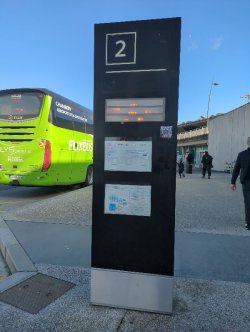 The bus stops, also called stop points in transport jargon, are the designated places where passengers board and alight from buses and coaches. Much more than a simple pole planted on a sidewalk, a bus stop is a real link in the mobility chain: platform, docking edge, signage, wake-up strip, all designed for the safety and accessibility of all. In this guide, we take a close look at everything: components and types of stops, technical vocabulary, accessibility standards (2005 law, 2007 decree, accessibility agendas), main stakeholders and operators, criteria for choosing a maintenance provider, and how an application like KARTES streamlines the tracking of interventions on a network of stop points.
A figure to put the issue into perspective. France has hundreds of thousands of bus and coach stops, spread across thousands of urban, interurban, and school networks. Behind each bus stop lies a demanding accessibility regulation, a heritage of furnishings and road infrastructure to maintain, and a simple promise made to the traveler: to be able to wait, identify, and board the bus safely. A degraded or inaccessible stop, and the entire mobility chain is disrupted.
Presentation of bus stops: everything you need to know
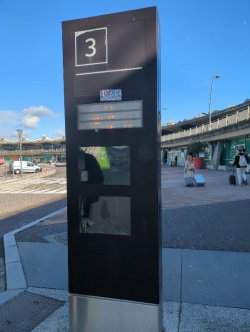 Let's start by laying the foundations. In public transport terminology, the term stop is often used rather than "bus stop," a more precise term that encompasses both urban bus stops and intercity coach stops. You may also encounter the words station, bus platform, or halt. Be careful, a bus stop is not limited to the bus shelter: the latter is merely waiting furniture, whereas the stop refers to the entire infrastructure, from the platform to the signage.
What exactly is a bus stop?
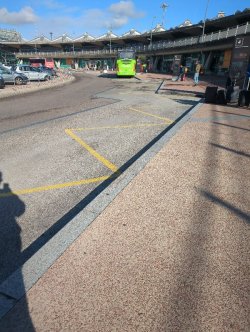 A bus stop is a designated location on the road where a public transport vehicle stops to allow passengers to board and alight. According to CEREMA, it is the interface between the public space where pedestrians move and the stopping area for rolling stock. This pivotal position explains its importance: it is where two worlds must be connected, that of the sidewalk and that of the bus.
Stop for a moment in front of a bus stop. You will see an elevated platform, a special edge along the road, a post bearing the name of the line, sometimes a row of posts on the ground, often a shelter. Each element has its function, defined by the standards. Nothing is left to chance, because this layout determines access to transportation for travelers with very diverse profiles.
What is the purpose of a bus stop in the movement chain?
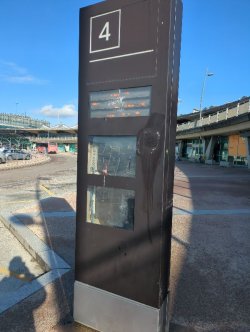 A bus stop serves several functions, and all are important. It first allows the boarding of the vehicle as close to the platform as possible, for level boarding. It then ensures identification: the traveler must find their stop, identify their line, and know the schedules. It also guarantees safe waiting, away from traffic. Finally, it contributes to universal accessibility, for people with reduced mobility as well as for parents with strollers.
It is often forgotten, but the stop is the first contact the traveler has with the network. A comfortable, readable, and accessible stop encourages people to take the bus. A dirty, deteriorated, or illegible stop discourages them. Feedback shows that the quality of the stops directly affects the attractiveness of a public transport network. It is a gateway, and a gateway must inspire the desire to enter.
What are the different types of bus stops?
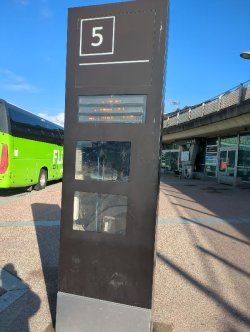 Where it gets technical, and instructive. Depending on how the vehicle stops in relation to traffic, several layout configurations can be distinguished. Each has its own advantages and constraints, and the choice depends on the road infrastructure, traffic conditions, and available space.
| Type of stop | Principle | Main Advantage |
|---|---|---|
| Online stop | The bus stops along the sidewalk, in its lane | Simple docking, quick insertion |
| Stop at the curb extension | The platform extends onto the road, the bus stays in its lane | Good docking, no difficult reintegration |
| Stop in cell | The bus exits its lane into a dedicated notch | Does not interfere with traffic, but docking is more delicate |
| Avoidance endpoint | Dedicated area out of traffic for parking | Adapted for line ends and breaks |
The curb-side stop is favored by accessibility specialists. By keeping the bus in its lane, it facilitates a perfect parallel docking, a condition for level boarding. The bay stop, on the contrary, forces the bus to pull out and re-enter, which complicates docking and exposes the bay to illegal parking. Stops in line along a curved sidewalk, on the other hand, should be avoided, as the bus docks poorly.
What makes up an accessible bus stop?
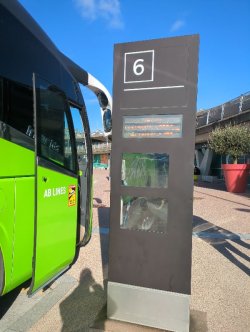 A norm-compliant stop point is a combination of complementary elements, each playing its role in accessibility and safety. Let's break down this set, as we will discuss it throughout the article.
- The platform : the raised platform where the traveler waits and boards.
- The docking aid border : special profile guiding the bus wheels as close as possible.
- Stop post : support for signage and reference point.
- Signage and passenger information : stop name, lines, schedules.
- The Wake-up Alert Strip : raised surface warning of the platform edge.
- The identification panel : tactile marker near the front door, useful for the traveler and the driver.
- Ground marking : yellow zigzag line prohibiting stopping for other vehicles.
- Lighting : for waiting safety, especially in the evening.
What is a docking aid border?
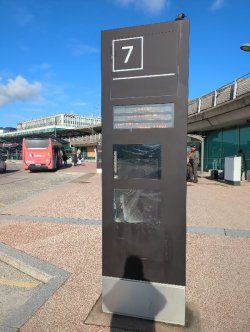 Here is a key element, little known to the general public but central to accessibility. A helping docking edge, sometimes called a wheel guide edge, is a special-profile platform edge designed to allow the driver to bring the bus as close as possible to the platform without fearing damage to the tires. Its smooth surface guides the side of the tire and reduces the gap between the bus and the platform.
Why is this crucial? Because with a conventional curb, drivers often leave a horizontal gap of about 50 cm, out of fear for their tires. However, this gap makes it difficult, if not impossible, for a wheelchair to ascend. The docking curb reduces this gap to less than 5 cm, allowing level access. Some models, made of U-class concrete according to the NF EN 1340 standard, optimize docking while preserving tires. A small concrete profile, but a major step forward for accessibility.
The technical vocabulary of bus stops
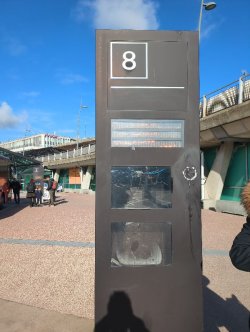 A small survival glossary, to decode a specification document or a development reference. This jargon keeps coming up constantly in the transportation industry.
- Stop point : technical term referring to a bus or coach stop.
- Quay : elevated platform for waiting and boarding.
- Accostage : maneuver to bring the bus as close as possible to the platform.
- Horizontal gap : distance between the bus and the platform edge.
- Vertical gap : difference in height between the platform and the bus floor.
- Kneeling : lowering the bus at the stop to facilitate boarding.
- Retractable Palette : ramp deployed for wheelchair access.
- BEV : warning alert band, a surface with raised elements indicating a danger.
- UFR : wheelchair user.
- AOM : mobility organizing authority, which manages the network.
How does one set up a bus stop?
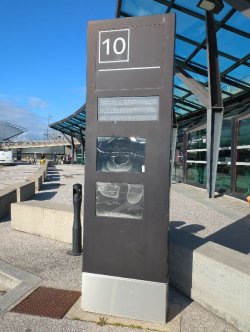 The setup of a stop point follows a precise method, guided by CEREMA's reference frameworks and local charters. Far from being a simple pole embedding, it commits to the quality of the service and accessibility for years. Here are the main steps.
- Diagnostic and localization : the location is chosen, the road infrastructure, traffic, and constraints are analyzed.
- Type of deployment : a line, advanced, or honeycomb configuration is retained depending on the context.
- Quay construction: the platform is built at the correct height, with controlled slope and cross slope.
- Install edge guides : the wheel guide profile is installed for optimal docking.
- Pedotactile Devices : the warning strip and the identification tile are placed.
- Signage and Information : the pole, the stop name, the lines and schedules are installed.
- Marking and finishes : the zigzag line is drawn, the lighting and coating are carefully done.
One point that seasoned technicians never overlook: overall consistency. A perfectly designed platform with an impeccable docking edge is useless if the pedestrian pathway leading to it is inaccessible. The stop is just one link, and the movement chain is only strong if every link is solid. On site, many stops that meet the standards remain unusable due to the lack of a proper access sidewalk upstream.
Regulations and standards for bus stops
Set aside the regulatory framework, and it is dense, dominated by a single imperative: accessibility. Since 2005, the law has required that bus stops be accessible to all, and this project has shaped the entire sector. Understanding this stack of texts, from major laws to the technical dimensions of the platform, is to grasp what is at stake behind each improvement. Let's unravel the thread.
What does the law on the accessibility of bus stops say?
It all starts with the Act No. 2005-102 of February 11, 2005 for the equality of rights and opportunities, the participation and citizenship of people with disabilities. It sets an ambitious principle: making all transportation networks accessible. Bus stops, essential links, are at the forefront. The initial objective aimed for full accessibility by 2015.
This law is set out in several technical documents. The decrees of December 21, 2006 (n° 2006-1657 and 2006-1658) and the order of January 15, 2007 establish the technical requirements for the accessibility of roads and public spaces, including bus stops. Faced with the extent of the delay, the ordinance of September 26, 2014 reorganized the process and introduced programmed accessibility agendas. The obligations still apply.
What is a priority stop point?
Faced with the impossibility of addressing everything at once, the legislator introduced a prioritization logic. The decree n° 2014-1323 of November 4, 2014 defines the stopping points to be made accessible with priority. A stop is considered a priority according to several criteria: its usage, its service to a key establishment (school, hospital, town hall), its position on a network structure, its intermodality.
This prioritization makes sense: the most useful stops for the largest number of people are addressed first. The framework also includes the concept of proven technical impossibility, the ITA, which can exempt a stop from the obligation when the infrastructure encounters a real obstacle, such as a road that is too narrow. Articles L1112-1 and D1112-8 and following of the transportation code specify these obligations, deadlines, and criteria. The logic: pragmatism, without renouncing ambition.
What is SDA-Ad'AP?
Here is a term that keeps coming up in the field. The accessibility master plan, programmed accessibility agenda, or SDA-Ad'AP, is the planning document by which an organizing authority commits to a program for making its network accessible, with a schedule and a budget. The decree n° 2014-1321 of November 4, 2014, governs it.
In practice, the SDA-Ad'AP is based on a comprehensive assessment of stops, often entrusted to a specialized engineering firm. Stops are inventoried, evaluated, prioritized, and programmed over several years. This document is not just a formality: it commits the community and serves as an operational roadmap. And it requires, to be effective, rigorous monitoring of progress, which will bring us back to the question of management tools.
What platform height for an accessible bus stop?
Let's get down to the specifics of dimensions, as this is where the level access is determined. The height of the platform determines the vertical gap between the platform and the bus floor. For a low-floor bus that kneels down, we calculate the ideal platform height to minimize this gap, ideally below 5 cm.
| Configuration | Indicative border height | Justification |
|---|---|---|
| Urban stops only | Up to 21 cm | Minimize the vertical gap as much as possible |
| Mixed urban and interurban stops | 18 cm | Take into account the mechanism of bus doors |
| Horizontal gap targeted | Less than 5 cm | Enable wheelchair access |
| Quay slope | Less than 5 % | Comfort and waiting safety |
| Dump | Less than 2 % | Chair stability and water drainage |
The height of 18 cm is often required at mixed stops, because the opening mechanism of the doors of intercity coaches, which is located protruding under the floor, cannot support a platform that is too high. For a more refined calculation, one proceeds as follows: if the door threshold is at 34 cm, one subtracts the knee space (approximately 8 cm) and the maximum vertical gap (5 cm), which results in a 21 cm edge. Here, the precision of the edge installation is crucial for the quality of the result.
What tactile paving devices at bus stops?
For blind or visually impaired persons, specific tactile devices are mandatory. The warning strip, visually and tactilely contrasting, is installed along the entire length of the platform, with a width of 50 cm, to indicate the raised edge. Regulated by the NF P98-351 standard, it protects against the risk of falling and the sweeping of mirrors during docking.
In addition, there is the guiding strip, approximately 60 cm wide, placed near the front door, 70 cm from the platform edge. It serves a dual purpose: a tactile guide for visually impaired travelers, and a stopping point for the driver, who knows where to position the door. Guidance devices comply with the NF P98-352 standard. The contrast, both visual and tactile, must remain effective: a strip worn down by use or of the same color as the floor no longer fulfills its function. Maintenance ensures its preservation.
What rules for signage and passenger information?
Passing information to travelers also follows readability rules. According to the decree of January 15, 2007, the line identification, its name, letter, or number, must be displayed in characters of at least 12 cm in height. The name of the stop, on the other hand, is written in letters of at least 8 cm, with the first letter in uppercase followed by lowercase letters. These dimensions ensure readability from a distance, including for visually impaired people.
Contrast and positioning are as important as size. A UFR logo can be placed when the stop meets accessibility requirements for wheelchair users. The information must remain up to date, legible, and not obscured. Outdated, peeling, or illegible signage means a lost traveler and a degraded service. Once again, maintenance plays a direct role in the perceived quality of the network.
How do you signal a bus stop on the road?
On the road, the stop is marked by a specific marking. The yellow zigzag line, drawn along the docking platform, prohibits stopping and parking any other vehicle in the area. This marking reserves the space for the bus, a condition for proper docking. Without it, wild parking would prevent the bus from approaching the platform.
Stop signs are added, generally placed 10 meters before and 5 meters after the stopping point. For a terminal or a turnaround area, a "BUS" logo on the ground sometimes completes the setup. Unfortunately, enforcement of illegal parking remains necessary: a properly designed but occupied stopping area loses all its purpose. On site, compliance with these markings directly conditions actual accessibility.
Who is responsible for the maintenance of bus stops?
The division of roles needs to be clarified, as it affects maintenance. The mobility organizing authority manages the network and is responsible for the service's accessibility. The road manager (municipality, metropolitan area, department) is responsible for the road on which the stop is located. The operator of the network, on the other hand, often ensures routine maintenance and signage.
This shared responsibility requires careful coordination. A degraded stop, a worn tactile strip, a fallen post, a dangerous platform: who intervenes, and within what timeframe? Since road infrastructure is a public work, the manager is responsible for its normal maintenance, and their liability may be engaged in case of an accident caused by a defect. Hence the importance, as we will see, of rigorous traceability of inspections and interventions on the stop area.
Main actors and service providers of bus stops: the top 10
Who designs, develops, operates, and maintains bus stops in France? The sector involves several categories of stakeholders: the organizing authorities who make decisions, the operators who run the buses, the road managers who develop the infrastructure, the manufacturers of curbs and equipment, and the engineering firms who conduct assessments. Here is an overview of the recognized stakeholders, without a fixed hierarchy, since the appropriate interlocutor depends on the territory and type of network.
Who are the organizing authorities and the operators?
At the top of the chain, the mobility organizing authorities define the transport offer and implement the accessibility policy. They often entrust the operation to major operators. Three names dominate the French market for urban and interurban transport.
- Keolis : French leader in the operation of public transport networks, a subsidiary of the SNCF group, present in many urban areas.
- Transdev : major public transport operator, highly present in urban, interurban and school transport.
- RATP Dev : subsidiary of the RATP group operating networks in France and internationally.
- Transport authorities : many local authorities operate their network directly, managing their own stops.
Who designs and manufactures the shutdown equipment?
On the physical layout side, several stakeholders are involved. Road managers carry out the works, often through public works companies. And specialized manufacturers design the docking curbs and equipment dedicated to bus stops.
- Urbamat Accessibility : manufacturer of docking aid rails for bus platforms, compliant with accessibility requirements.
- Curbs and street furniture manufacturers : concrete and urban equipment industrialists offering curbs, tactile paving slabs and signage.
- Public works and infrastructure companies : they carry out the construction of quays, the installation of curbs and marking.
Which engineering firms and organizations oversee the sector?
The technical complexity of accessibility has given rise to specialists in diagnosis and standards. It is they who audit the stops, develop master plans, and set the reference frameworks.
- Accessibility Auditing : engineering office specialized in accessibility diagnostics, including bus stop audits.
- The CEREMA : public expertise center, author of the reference guide on universally accessible stopping points.
- The AFNOR and the GART : the AFNOR publishes the standards (NF P98-351, NF EN 1340), the GART brings together the authorities responsible for transport.
A word about waiting furniture, without making it the central subject. Urban furniture companies install and maintain passenger shelters on certain networks, often in exchange for advertising spaces. However, the bus stop is not limited to its shelter: the platform, the docking edge, the signage, and the tactile paving devices are the responsibility of other actors, namely road managers and operators. It is this entire ensemble that needs to be maintained, well beyond the shelter itself.
How to choose a maintenance provider for bus stops?
Selecting the right maintenance provider means combining regulatory requirements with on-the-ground common sense. An organizing authority, operator, or road manager does not choose a stop maintenance provider at random: it affects accessibility, safety, and the image of the network. Step-by-step method.
Which technical criteria should be checked first?
First requirement: knowledge of accessibility. A bus stop is not just a pole to be straightened. The service provider must master tactile paving standards, understand the importance of docking edges, and know how to check the compliance of a platform. Ask to see a sample inspection report: its accuracy speaks volumes about the company's seriousness.
- Accessibility Competence : mastery of podotactile norms, platform heights, contrasts.
- Multi-functionality : roadways, signage, furniture, marking, cleanliness.
- Responsiveness : response time for an intervention on a dangerous or inaccessible stop.
- Coverage of the park : ability to maintain a large number of dispersed stops.
- Coordination : ability to work with the AOM, the operator and the road manager.
- Traceability : geolocated reports, photos, history viewable by stop.
How does a maintenance shutdown market work?
For a local authority or an AOM, maintenance is carried out through a public procurement contract or is integrated into the network operation contract. The specification document outlines the scope (number of stops, types of equipment), response times, quality commitments, and reporting procedures. Preventive maintenance (scheduled inspection rounds) is often distinguished from corrective maintenance (repair work carried out upon report).
A particular aspect requires special attention: the monitoring of accessibility compliance. A feature brought up to standard can deteriorate over time, such as worn tactile strips, faded signage, or dislodged edges. A serious maintainer checks these points and updates the accessibility master plan tracking. Requiring this level of vigilance protects the investment in accessibility and the manager's responsibility. Maintenance is not just about cleanliness; it is also about ensuring long-term compliance.
What questions to ask before signing?
A few concrete questions, to bring up in the selection meeting. They quickly separate the serious candidates from the opportunists.
- What is your guaranteed response time for a dangerous or inaccessible breakdown?
- How do you control accessibility compliance, beyond mere cleanliness?
- Are your intervention reports geolocated, timestamped, and photographed?
- How do you coordinate your interventions with the AOM and the road manager?
- Do you have a tool allowing you to view the history of each stop?
- How do you ensure traceability, knowing that it legally protects the manager?
What warning signals should cause retreat?
Skepticism toward a provider vague about their accessibility skills, unable to produce a standard report, or offering abnormally low pricing (often synonymous with superficial interventions). Another red flag: the absence of digital traceability. A company that intervenes on an ad-hoc basis, without exploitable data or an overall view of the site, leaves you blind to the actual status of your stops and the progress of your accessibility implementation.
The best-organized managers now impose a standard for geolocated digital reporting. Each controlled stop is recorded, photographed, and plotted on a map, along with the condition of its equipment and its level of compliance. This level of requirement changes the game, and that's exactly where an intervention management application comes into play.
Comment KARTES improve bus stop maintenance?
We have discussed infrastructure, standards, and service providers. What remains is the question that occupies managers on a daily basis: how to manage a bus stop park, sometimes consisting of several thousand points scattered across an entire territory, without getting lost among scattered reports and spreadsheets? This is precisely the field of KARTES, a mobile application for managing and tracking field interventions, perfectly suited for the maintenance of stop points.
What is KARTES concretely?
KARTES is a field intervention management solution. The principle: each bus stop becomes a geolocated object on a map, with its own identifier, characteristics (served lines, type of installation, accessibility level, equipment) and its entire history. When an intervention occurs (inspection, repair, cleaning, signage replacement, accessibility check), it is recorded on a smartphone, timestamped, photographed, and linked to the relevant bus stop. The park's memory is built automatically.
Where a manager juggled yesterday between a paper plan, an Excel file, and a reporting email inbox, KARTES centralizes on an interactive map. This map becomes the live dashboard of the stop park. And this data is worth its weight in gold to manage quality, track accessibility implementation, and allocate budgets. Let's look at the contribution for each stakeholder.
From the perspective of the community and the AOM: steering and compliance
For an organizing authority or a local government, the benefit can be summed up in three words: visibility, compliance, controlled responsibility. The AOM sees, on a single map, the status of its stops: what is up to standard, what is degraded, and what is waiting for an intervention. The accessibility master plan finally has an operational monitoring tool, and not just a document gathering dust in a drawer.
Accessibility compliance, precisely, becomes manageable. It is known which priority stops have been addressed, which have deteriorated since, and where to focus efforts. In the event of an inspection or a complaint regarding accessibility, the AOM has a precise history. And the legal aspect matters: since the road is a public work, the community that can prove it has inspected and maintained its stops protects itself in case of an accident caused by a defect. Traceability becomes an insurance.
Finally, budgetary arbitration. By aggregating data, the community identifies the most degraded stops, recognizes problematic areas, and plans its investments based on facts. Instead of endlessly repairing the same vandalized stop, a redesign is decided at the right time. Feedback shows that well-maintained data transforms a passive management into an informed steering.
From the maintainer's perspective: less paperwork, more fieldwork
For the agent or company responsible for maintaining the stops, daily life changes radically. Before: noting the intervention in a notebook, taking a photo with a personal phone, re-entering the data at the office, and trying to recall the exact location of the stop from memory. A difficult and error-prone process, leading to forgetfulness and duplicates.
With KARTES, the technician opens the application on site, selects the stop on the map, describes the intervention, takes photos directly in the app, and validates. Geolocation and timestamping are automatic. Double data entry disappears, the report is ready. Every minute saved on administrative tasks becomes an additional stop controlled during the day. And the viewable history prevents rediscovering a problem already reported the previous week.
- On-site entry : nature of the intervention recorded directly, without re-entry.
- Embedded Photos : status of the stop and its equipment, attached to the object.
- Automatic geolocation : no more unfindable stops on a paper map.
- History by stop : the technician sees the history and checks before intervening.
- Reporting ready : reports generated for AOM, accessibility scheme tracking powered.
From the traveler's and resident's perspective: a service that works
And the bus user? They are the final beneficiary. A degraded stop, unreadable signage, a damaged tactile strip, this results in a lost or endangered traveler, especially if they have a disability. An effective intervention management system shortens the time between detecting a fault and its repair. Some local authorities even integrate citizen reports into the process, turning every user into a field sensor.
For the resident, the issue is also that of quality of life. A clean, well-lit, and well-maintained stop reassures and enhances the neighborhood. On the contrary, a tagged shelter, a fallen pole, or a platform littered with debris degrade the image of the place and discourage the use of the bus. A well-managed park, where anomalies are quickly detected and corrected, benefits everyone, from the hurried traveler to the resident attached to their neighborhood. Careful maintenance is a service provided to the community.
In what KARTES does it reduce maintenance costs?
Cost reduction results from the addition of concrete gains. Let's recap the levers, because this is often the first question a decision-maker asks.
| Lever | Effect on Costs |
|---|---|
| Elimination of double entry | Reduced administrative time, agents refocused on the field |
| Geolocation of stops | Optimized routes, less time spent locating stops |
| History by Identifier | Detection of problematic stops, repair/remodeling arbitration |
| Accessibility tracking | Preservation of the compliance investment |
| Legal traceability | Reduction of legal risk for the manager |
| Data-Driven Prioritization | Targeted investments on the most frequently used stops |
A telling example. Imagine a regularly vandalized stop sign, where the signage is replaced every three months without ever analyzing the cause. Over two years, the cumulative cost of replacements far exceeds the cost of a more durable installation that could have been decided upon earlier, had the pattern been recognized. KARTES make this pattern visible. Turning scattered interventions into usable data, that's the real gain.
Let's be honest: no software straightens a pole or installs a curb in place of the technician. KARTES does not replace professional expertise or accessibility requirements. The application is an organizational amplifier, not a magic wand. But when used properly, this amplifier changes the scale of what a team can manage, shifting maintenance from reactive and endured to proactive and controlled.
Pathologies, Degradations, and Lifespan of Bus Stops
A bus stop seems sturdy, firmly placed there to face the rain, traffic, and sometimes uncivil behavior. Yet, it deteriorates, ages, and loses accessibility over time. Knowing common failures helps anticipate rather than endure. An overview of the ailments that threaten bus stops.
What is the lifespan of a bus stop?
It depends on the elements. A well-constructed concrete pier lasts for several decades, just like the surrounding road infrastructure. The robust docking curbs withstand the years. On the other hand, signage, tactile paving, and furnishings age more quickly due to weather, wear, and vandalism. The limiting factor is almost never the structure itself, but rather the surface equipment and accessibility features, which erode subtly over time.
What are the most frequent damages?
The list of incidents, observed on site, looks like this. Each one tells a story of wear, weather, or incivility.
- Worn tactile paving : worn-down protrusions, faded contrast, device become ineffective.
- Deteriorated signage : peeled, illegible, tagged, or vandalized sign.
- Loose docking fender : impact, poor alignment, tilting.
- Zigzag marking faded : traffic wear, facilitated illegal parking.
- Degraded platform : sagging, potholes, slippery surface.
- Damaged Furniture : tagged shelter, broken windows, broken bench.
- Failing Lighting : waiting insecurity, especially in the evening.
The podotactile strip deserves attention, as its deterioration is subtle. Worn down by foot traffic, its raised elements become worn down, its contrast fades, and it ceases to fulfill its alert function without anyone noticing. This is precisely the device that protects blind travelers from the edge of the platform. Regular inspection is therefore vital, otherwise accessibility erodes silently, potentially leading to an accident.
Should we repair or reconfigure a degraded stop?
The real question for the manager. A sign, a tactile paving tile, a broken bench: these can be replaced quickly and at low cost. But when a stop accumulates multiple damages, or when its design no longer meets current accessibility standards, patching reaches its limits. The right reflex: document the interventions, and switch to a full redesign as soon as the cumulative repairs exceed common sense, or when compliance with standards requires it.
In practice, the managers who do best apply a simple rule: a repair stopped several times for the same cause triggers a root cause analysis. Often, the real problem is not the repaired symptom, but a poorly suited design or a poorly chosen location. Treating the symptom without the cause is to endlessly repeat the same solution.
Why is preventive maintenance decisive?
Corrective maintenance discovers defects at the worst possible moment, when a traveler stumbles or complains. Preventive maintenance, on the other hand, anticipates issues: inspection rounds, checking of tactile paving devices, verification of signage and lighting. For a stop area, a reasoned approach combines scheduled visits, geolocated inventory, and tracking of deterioration over time. An intervention management tool precisely structures this approach, turning isolated observations into a coherent program.
How to conduct an audit of a bus stop park?
Before optimizing maintenance or scheduling work, it is first necessary to know what you possess. Many managers are unaware of the exact condition of their parking facilities, especially on large networks. The audit addresses this blind spot and is in fact the foundation of any accessibility master plan. Here is a method applicable to both small networks and large urban areas.
Where to start the diagnosis of breakdowns?
The starting point is the geolocated inventory. We traverse the network, locate each stop, note its type, equipment, accessibility level, and condition. In the paper era, this work was lost in disparate folders. Today, it is directly entered on a digital map, with each stop becoming a durable and localized object. Without a reliable inventory, there can be no master plan or feasible management.
For a small network, the diagnosis is carried out in a few days. For a large conurbation, the process is done by sectors, prioritizing stops with high frequency and key points. Many local authorities entrust this task to a specialized engineering firm, which applies a multi-stage audit methodology. The essential thing: a homogeneous grid, so that the "average" status means the same thing to one evaluator as to another.
What criteria to evaluate for each stop?
An effective audit grid combines several dimensions, quickly checked on site. The goal is not perfection, but a reliable and reproducible snapshot of reality.
- Identification : name, identifier, served lines, type of installation.
- Accessibility : platform height, docking edge, foot tactile devices, contrasts.
- Equipment Status : signage, pole, furniture, lighting.
- Security : marking, visibility, waiting conditions.
- Access Path : continuity with the sidewalk and public space.
- Geotagged photo : a picture is worth a thousand words, especially to track progress.
How to leverage diagnostic data?
Once the data is collected, the real work begins: transforming it into an action plan. We cross-reference the status of stops with usage, regulatory priority, and budget. We distinguish between emergencies (dangerous or inaccessible stops) and programmable projects, spread over several fiscal years. The accessibility master plan is directly fed by this diagnosis.
The value of a digital tool becomes evident here. The audit map is not a static image: it lives, updates with each intervention, and keeps a history. Two years later, it is clear which stops have deteriorated, which ones still need to be addressed, and where to focus efforts. The audit stops being a forgotten report and becomes a permanent dashboard, a prerequisite for a real follow-up on accessibility implementation.
Common mistakes to avoid with bus stops
Field experience leaves a rich collection of recurring errors. Knowing them is already avoiding them. Here are the most common ones, from the engineering office to the site.
What design errors are the most expensive?
Header: choose a bay layout where a sidewalk extension would have allowed for better docking. Next comes the platform height error, too low to reduce the vertical gap, which ruins level access. And the omission of the access route, making a perfect stop unusable due to the lack of a proper sidewalk upstream. Anticipating these points from the design stage avoids costly rework.
What management errors hinder a network?
From a management perspective, the main error is the lack of structured follow-up: stops are implemented, then forgotten until a complaint or accident occurs. Another flaw is managing maintenance in a purely corrective manner, without any preventive measures, allowing tactile paving devices to wear out. Finally, neglecting the link between degradation and accessibility, which results in losing the benefits of a compliance investment. Reliable data and regular monitoring are, once again, the solution.
What errors harm the traveler's experience?
A dirty stop, unreadable signage, outdated schedules, and a failed lighting system: these are small failures that damage the image of the network and discourage bus usage. Worse, an inaccessible stop actually excludes a portion of travelers. Taking care of cleanliness, readability, and accessibility is taking care of the trust relationship with users. Public transport is also won through these everyday details, too often neglected.
Innovations and trends around bus stops
The bus stop, seemingly basic equipment, still innovates? More than you might think. With real-time information, modular platforms, and greener stops, the sector is evolving, driven by the challenges of accessibility and the attractiveness of public transport. A quick look at the changes shaping tomorrow's bus stop.
What does real-time passenger information bring?
The major recent revolution is dynamic information. Kiosks or screens now display the actual waiting time until the next bus, updated thanks to vehicle geolocation. Gone are the uncertainties: the traveler knows whether their bus is arriving in two minutes or in fifteen minutes. This information reassures, retains loyalty, and makes the network more readable.
The information is extended to the smartphone through network applications that display real-time schedules and disruptions. However, the physical stop remains essential, as not everyone has an application, and on-site display ensures equitable access to information. The trend is not toward the disappearance of the stop, but toward its digital enhancement. The object modernizes without renouncing its primary function.
What is a modular dock?
Here is an innovation born from accessibility constraints. The modular platform is a prefabricated device, sometimes quickly installable, which allows raising a stop to the correct height without major roadworks. Studied particularly for intercity stops, it offers a solution where a conventional layout would be too costly or complex. CEREMA has indeed tested and evaluated these devices to help communities make their choice.
The interest is twofold: controlled costs and rapid implementation, valuable for handling a large number of stops within the framework of a master plan. These modular solutions illustrate a pragmatic logic: making as many stops as possible accessible with the available resources, rather than aiming for perfection on just a few. Accessibility thus progresses through concrete, small steps.
Toward greener and more comfortable bus stops?
The trend toward comfort and greenery is also affecting bus stops. Green roofs on shelters, more seating, shade, phone charging, and sometimes solar panels: the bus stop is becoming a place of life, not just a waiting point. This improvement in quality aims to make the bus more attractive, in line with the goal of shifting travel modes toward public transport.
CEREMA, in its reference guide, actually encourages going beyond the simple standard to aim for the real comfort of all users. An accessible stop is good; an accessible, comfortable, and pleasant stop is better. This philosophy, which goes "from the standard to comfort," summarizes the evolution of the sector. And the more qualitative the stop is, the more it deserves careful maintenance to remain so, which brings us back to the challenge of maintenance.
What role for data in downtime management?
The real underlying revolution may be data. Digitizing the stop locations, through geolocation and intervention tracking, transforms management. Each stop becomes a mapped point, with a history, a status, and an accessibility level. Data can even be published on transport data access points, benefiting route calculators and travelers.
What is already very real is the ability to manage an entire fleet from an interactive map, to prioritize based on data, and to track the implementation of accessibility. This is the playing field for a solution like KARTES, which bridges the gap between the field agent, his smartphone, and the manager's dashboard. The bus stop, modestly equipped, thus enters seamlessly into the era of data.
Safety, comfort, and waiting quality at bus stops
A bus stop is not just a boarding location: it is also a waiting place, sometimes long, often outdoors. The quality of this waiting experience influences the traveler's experience and the network's image. These aspects, sometimes relegated to the background, deserve the full attention of the manager.
How to secure waiting at bus stops?
Waiting area safety starts first with lighting. A well-lit stop in the evening reassures and limits the feeling of insecurity, particularly for women and vulnerable people. The more the waiting area is lit and visible, the more assured the safety of users is. Location also plays a role: a clear stop, visible from the street, without corners, deters unwanted behavior.
Safety also involves protection from traffic. The passenger must wait away from the roadway, protected from the sweep of mirrors during docking, which is precisely what the warning strip along the platform is designed for. A too narrow platform, poorly placed furnishings, and the risk increases. The design of the stop therefore incorporates safety from the outset, and maintenance ensures its preservation over time.
How to improve passenger comfort?
Comfort depends on concrete elements: shelter to protect from rain and sun, seating for tired or elderly people, clear and up-to-date information, and impeccable cleanliness. These details, seemingly minor, make the difference between a endured wait and an acceptable wait. Feedback shows that a comfortable stop significantly improves the perception of the network.
Comfort particularly benefits vulnerable groups. An elderly person, a pregnant woman, a traveler with heavy luggage appreciate a seat and shelter. Accessibility and comfort converge here: designing for the most vulnerable improves the experience for everyone. This logic of universal design influences modern guidelines for the layout of stops.
What about the special case for school and intercity stops?
Not all stops are the same. School stops, often located in rural or suburban areas, pose specific safety challenges, as they welcome children along the roadside, sometimes without any improvements. Visibility, distance to the road, and enhanced signage are crucial there. Guidelines often dedicate a special section to them.
The interurban and bus stops along departmental roads also have their constraints: high vehicle speed, platform height adapted to buses, sometimes delicate docking. The curb height is often reduced to 18 cm to accommodate door mechanisms. These specificities remind us that a stop is never generic: it adapts to its context, urban, school, or road. Maintenance must take this into account.
History and evolution of bus stops
To fully understand today's bus stop, a detour through its history sheds light on many things. The facility has evolved significantly, in line with public transportation and, above all, the consideration of disability. A small journey through time, instructive for those who want to grasp today's challenges.
How has the bus stop evolved?
Originally, the stop was simply a pole placed at the side of the road, indicating where the bus stopped. No platform, no special edge, no tactile device. Boarding was done from the road or an ordinary sidewalk, sometimes requiring a high step. For a person in a wheelchair or elderly, access was often impossible.
The evolution has been gradual. The introduction of low-floor buses, followed by the requirement for accessibility, transformed the stop into a complex arrangement: raised platform, docking edge, foot-and-tactile devices, readable information. What was once a simple landmark, the stop has become a carefully designed structure aimed at universal access. This transformation illustrates a broader societal evolution, toward taking into account all users.
Why did the 2005 law change everything?
The law of February 11, 2005, marked a break. By setting the goal of full accessibility for transportation, it forced the organizing authorities to rethink their stops. Overnight, or almost, the post at the side of the road was no longer enough: it was necessary to have platforms meeting the standards, docking edges, and tactile strips. A colossal project, spread over several years.
The accumulated delay led to the 2014 reform, with the programmed accessibility agendas and the prioritization of stops. We moved from a theoretical obligation for 2015 to a pragmatic, spread-out, and prioritized approach. This trajectory, driven by ambition and adjustments, still structures today's management of stops. And the work is not finished: the obligations still apply.
What future for bus stops?
The future is written around three words: accessibility, digital, comfort. Accessibility, never fully achieved, remains a horizon to maintain. Digital enhances real-time information stops and management data. Comfort, finally, transforms the stop into a pleasant place, making the bus more desirable compared to the car. Three dynamics that turn the humble bus stop into a discreet but real field of innovation.
Bus Stop Glossary
To close this guide, here is a glossary of the cross-referenced terms throughout the article. Handy to have on hand when facing an infrastructure reference or a specification document.
- Stop point : technical term referring to a bus or coach stop.
- Quay : elevated platform for waiting and boarding.
- Accostage : maneuver to bring the bus as close as possible to the platform.
- Mooring Aid Border : wheel guide border reducing the gap.
- Horizontal gap : distance between the bus and the platform edge.
- Vertical gap : difference in height between the platform and the bus floor.
- Kneeling : lowering the bus at the stop to facilitate boarding.
- Retractable Palette : ramp deployed for wheelchair access.
- BEV : wake-up band, a raised surface with markers indicating the edge of the platform.
- Reference Tile : tactile marker near the front door.
- UFR : wheelchair user.
- AOM : mobility organizing authority.
- SDA-Ad'AP : accessibility master plan, programmed accessibility agenda.
- ITA : proven technical impossibility.
- Advance stop : configuration where the platform advances and the bus remains in its lane.
Intermodality and the role of the bus stop in the city
A bus stop does not exist in isolation. It is part of a mobility ecosystem, where pedestrians, cyclists, motorists, and other modes of transport intersect. Thinking about the bus stop means thinking about its connections. This dimension, often underestimated, nevertheless conditions the actual effectiveness of the network.
What is intermodality at bus stops?
Intermodality is the ability to easily switch from one mode of transport to another. A well-designed stop facilitates these transfers: to the tram, the train, the free bike, or simply to walking. A well-connected stop multiplies its usefulness, as it becomes a transfer point between several modes. On the contrary, a poorly connected stop remains underutilized, even if it is well-designed.
The exchange hubs take this logic to its maximum. They bring together several bus lines, sometimes a tramway, a train station, bike and car parking areas, all in one place. The stop becomes a real mobility hub. Designing these spaces requires an overall reflection on pathways, signage, and accessibility, because transfers should never become a battle.
How does the stop integrate with the other modes?
The complementarity with cycling and walking has become central. Installing a secure bike parking facility near a stop expands its catchment area: people come to the stop by bike and then continue by bus. Likewise, a high-quality, continuous, and accessible pedestrian route connects the stop to the neighborhood. The stop only attracts passengers if it is easy to reach.
This joint benefits the entire mobility chain. A traveler does not think in separate modes, but in an overall journey, from door to door. If one link fails, difficult access, missed connection, inaccessible stop, the entire journey is compromised. Hence the importance of considering the stop as a node, not as an isolated point. Maintenance, too, must ensure the continuity of these connections.
What does a high-level service bus bring?
The high-level service bus, or BHNS, has raised the standards for bus stops. On these structuring lines, the stations resemble more tramway stops: well-maintained platforms, dynamic information, optimized boarding, sometimes priority at traffic lights. The stop becomes a quality marker, a visible signal of the line's attractiveness. This upgrade raises the overall standards of infrastructure, to the benefit of all passengers.
How to optimize the location of a bus stop?
Where to place a bus stop? The question seems simple, but it is not. The location determines the usage, accessibility, and safety. A poorly placed stop remains unused or dangerous, regardless of its design. Decoding the principles that guide this strategic choice.
What is the distance between two bus stops?
The distance between stops results from a compromise. Too close together, stops slow down the line and harm commercial speed, a key criterion of attractiveness. Too far apart, they distance travelers and discourage usage. In dense urban areas, a spacing of a few hundred meters is often retained, adjusted according to density and topography. The challenge: serving as effectively as possible without compromising speed.
This fine-tuning is done at the scale of the entire line, not stop by stop. Removing a less frequently used stop can speed up the entire line, but deprives some residents of their access point. Each decision weighs conflicting interests. Feedback shows that these trade-offs, often politically sensitive, benefit from relying on reliable ridership data rather than impressions.
What criteria for placing a stop effectively?
Several factors guide the choice of location. Proximity to transportation generators, schools, shops, and facilities attracts travelers. Visibility and safety, for both travelers and drivers, are essential. The available space on the road determines the possible type of layout. And continuity with pedestrian pathways conditions actual access.
- Proximity to generator poles : schools, shops, services, dense housing.
- Visibility and safety : for the waiting traveler as well as for the driver.
- Available space : width of the road determining the type of stop.
- Continuous pedestrian access : accessible sidewalks leading to the stop.
- Intermodality : connection with other lines or modes.
On site, the ideal layout rarely comes from a perfect manual: it adapts to existing conditions, the built environment, parking, and local constraints. A theoretically perfect location may come up against a cart entrance, an underground network, or opposition from neighbors. The art of layout is finding the best possible compromise and then maintaining it over time. Because a well-placed stop that is poorly maintained eventually loses much of its quality.
Cleanliness, vandalism, and preservation of bus stops
The quality of a bus stop is not solely determined by its design: it is also shaped, and in a lasting way, by its daily maintenance. Cleanliness, fighting against vandalism, and quickly repairing acts of incivility: all these ongoing tasks make the difference between a well-maintained network and a neglected one. A less noble subject than standards, but just as decisive.
Why does the cleanliness of stops matter so much?
A clean stop sends a clear message: this network is respected, therefore respectable. A stop littered with debris, on the other hand, tarnishes the image of public transport and discourages its use. Cleanliness contributes to the sense of security and the comfort of waiting. It often falls to the operator or the road manager to ensure regular cleaning rounds, the frequency of which depends on the level of usage.
Beyond aesthetics, cleanliness has a functional dimension. Debris accumulated on a tactile strip makes it less detectable. A wild poster covering the signage obscures the information. A soiled platform becomes slippery. Cleanliness thus joins accessibility and safety, far beyond mere appearance. It is typically the kind of defect that a regular inspection detects and corrects.
How to combat vandalism at bus stops?
Vandalism is a recurring problem at bus stops: graffiti, broken windows, torn signage, and damaged furnishings. The responses are varied: resistant and anti-graffiti materials, robust design, deterrent lighting, and above all, quick repairs. Because leaving damage unrepaired invites further damage, as per the well-known broken window effect. The longer you wait, the more the location deteriorates.
Reactivity is therefore the key difference. A tag removed within forty-eight hours discourages the graffiter, whereas a tag left for weeks attracts imitators. This requires prompt reporting and effective follow-up of interventions. The best-organized managers rely on field reports, sometimes from citizens, integrated into a tracking tool that locates and prioritizes each degradation. Data, once again, serves reactivity.
How to preserve accessibility over time?
Preserving the accessibility of a stop is a task that requires constant attention. A tactile strip wears down, signage peels off, contrast fades, and edges come loose. Without monitoring, these deteriorations gradually erode the benefits of compliance with standards, often without anyone noticing. Regular checks of compliance, integrated into maintenance rounds, are the only defense. A stop that was compliant with standards yesterday may not be today, and it is precisely this that preventive maintenance allows to check and correct continuously.
10 Frequently Asked Questions About Bus Stops
What is the regulated height of a bus stop platform?
The height depends on the usage. For urban stops, up to 21 cm is aimed for to reduce the vertical gap with the bus floor. For mixed stops accommodating intercity coaches, 18 cm is rather retained, taking into account the door mechanism.
What is a docking aid border?
It is a special-profile quay edge, known as a wheel guide, which allows the bus to dock as close as possible without damaging its tires. It reduces the horizontal gap to less than 5 cm, a condition for level boarding, particularly for people using wheelchairs.
Why is there a bumpy strip on the bus platforms?
This contrasted and detectable underfoot warning strip alerts blind and visually impaired persons to the raised edge of the platform. Placed along the entire length of the platform and 50 cm wide, it prevents the risk of falling and the sweeping of mirrors.
Who is responsible for the maintenance of bus stops?
Responsibility is shared. The mobility organizing authority pilots service accessibility, the road manager is responsible for the road where the stop is located, and the operator often ensures routine maintenance and signage. Close coordination is necessary.
What is a curb extension stop?
It is a configuration where the platform extends onto the roadway, allowing the bus to remain in its lane of traffic to stop. This solution, appreciated by specialists, facilitates a perfect parallel docking and avoids the bus having to re-enter traffic difficultly.
What is the difference between a bus stop and a bus shelter?
The bus stop refers to the entire infrastructure: platform, docking edge, signage, and tactile paving devices. The bus shelter is merely the waiting furniture, the shelter that protects from rain. A bus stop can exist without a shelter, and the essential aspects of accessibility take place elsewhere, not within the shelter.
What does the law on the accessibility of bus stops say?
The law of February 11, 2005, requires making stops accessible to all. The decree of January 15, 2007, sets the technical requirements, and the 2014 reform introduced the prioritization of stops and programmed accessibility schedules. The obligations remain in force.
How do you report a faulty bus stop?
A traveler or a resident can report a defect, unreadable signage, a fallen pole, or worn tactile paving to the network operator or the local authority. The more precise the report is, with location and photo, the faster and more effective the response will be.
What is a priority stop point?
It is a stop to be made accessible with priority, according to criteria of usage, service to key establishments, or network structure. This logic, introduced in 2014, allows first to address the stops most useful to the largest number of people, given the impossibility of doing everything at once.
Why is there a yellow zigzag marking on the ground at the stops?
This yellow zigzag line prohibits stopping and parking any vehicle on the area reserved for buses. It ensures that the bus can dock properly at the platform. Without it, wild parking would prevent the vehicle from approaching and would compromise accessibility.
Conclusion: The bus stop, a discreet link in a mobility for all
We've seen throughout this guide that the bus stop is far from being a simple pole by the roadside. Behind this stop lies a precise technical setup, a demanding accessibility regulatory framework (2005 law, 2007 decree, accessibility agendas), a heritage to maintain, and a promise made to every traveler: to be able to wait, identify, and board their bus safely, regardless of their profile. A discreet but essential link.
Maintenance makes all the difference between an accessible and welcoming network, and a park of stops that deteriorates silently, gradually losing the benefits of compliance investments. Survey, inspect, repair quickly, track: there are the keys. And to orchestrate all this without getting lost in scattered reports, an intervention tracking application like KARTES transforms the management of a stop park into data-driven control, benefiting local authorities, operators, maintainers, passengers, and residents.
Do you manage a bus stop network, and are you a maintainer, operator, or elected official in charge of mobility? Take a few minutes to assess how the condition and accessibility of your stops are currently being monitored. If the answer lies in a flooded inbox, there is certainly a better way to go about it. Share this guide with others; it could help shape your next accessibility master plan.
At bottom, the quality of a transport network is also measured by its stops. A modern line with brand new buses loses its appeal if its stops are run down, unreadable, or inaccessible. The stop is the first and last impression of the journey, the entrance to the network. Designing it well and maintaining it properly is simply respecting the passenger and giving them the desire to take the bus again tomorrow.