Interventions on Bornes of emergency call
Emergency Call Stations: Complete Guide, Standards, Stakeholders, and Maintenance
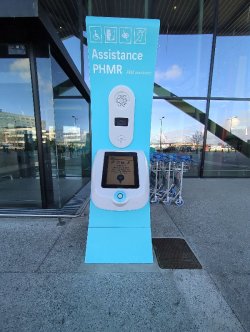 The emergency call stations, also known as SOS stations or emergency call points, are devices that allow for rapid alerting of emergency services in case of accidents, breakdowns, illness, or aggression. Recognizable by their orange color along highways, they now equip many other locations: underground parking lots, campuses, train stations, industrial sites, hospitals. More than just an alert button, an emergency call station is a critical safety equipment subject to strict accessibility standards and must function flawlessly when needed. In this guide, we cover everything: operation and uses, technical vocabulary, regulations and standards, main players and manufacturers, criteria for choosing a maintenance provider, and how an application like KARTES streamlines the tracking of interventions on a kiosk park.
A reference point to understand the stakes. On the French motorway network, emergency call boxes are installed on average every 2 kilometers, meaning several thousand posts marking the highways. Behind each emergency call box lies a connection to a command center, precise geolocation, and an absolute requirement for availability. A silent box at a critical moment could mean a life potentially at risk. Hence the vital importance of its maintenance.
Introduction to emergency call stations: everything you need to know
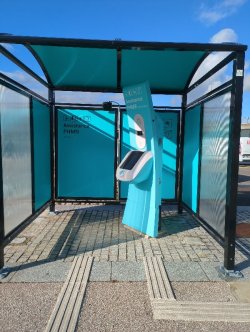 Let's start with the basics. In industry terminology, we refer to SOS button, emergency call point or ECP, sometimes as an emergency stop button. All of these terms refer to the same equipment: a communication station allowing direct contact with a service capable of sending assistance. On highways, these buttons form a structured network, connected to a management center that handles calls.
What is an emergency call box?
An emergency call box is a dedicated telephone booth that directly connects the user to a rescue service or operator. With a simple gesture, without having to dial a number, the person in distress triggers an alert. The box also transmits its location, allowing emergency services to intervene at the correct location quickly. In short, it is a fixed, reliable, and geolocated alert point.
Why a kiosk rather than a phone? Because in a crisis, the smartphone reflex is not always obvious. A panicked person may not necessarily think to dial 112. The kiosk, on the other hand, is there, visible, marked, and geolocated right away. Emergency services immediately know where the call is coming from, without the caller having to describe their location. This localization advantage is decisive when every minute counts.
How does an emergency call station work?
The system is designed for absolute simplicity. The user presses a button, and the kiosk establishes a connection with a command post or call center. Communication is hands-free, allowing the person to speak while remaining mobile. An operator answers, assesses the situation, and triggers the appropriate intervention: medical assistance, firefighters, technician, or site security.
On highways, each emergency telephone is identified by its location, thanks to the kilometric markers. The operator therefore knows instantly where the caller is located. Modern telephones add accessibility features: a light confirmation indicating that the call has been received for hearing-impaired individuals, braille signage, and enhanced contrast. In practice, the telephone is designed to function for everyone, in all situations, including the most stressful ones.
Where can one find emergency call boxes?
Historically linked to highways, SOS signs have spread widely. Today, they are encountered in a multitude of locations, each with its own specific constraints regarding visibility, durability, and connectivity.
| Location | Role of the kiosk | Main Challenge |
|---|---|---|
| Highways and expressways | Alert in case of accident or breakdown | Spacing of 2 km, geolocation |
| Tunnels, bridges, viaducts | Secure high-risk areas | Resistance and reliability |
| Underground and surface parking | Reassure the isolated user | Blind spot coverage |
| University campuses | Distributed appeal points | Nighttime Circulation |
| Industrial sites | Alert in case of incident | Extreme conditions, risk areas |
| Stations and Public Places | Secure users | Accessibility and visibility |
Each environment imposes its own requirements. On an industrial site such as a chemical plant, the kiosk must withstand extreme conditions and allow for quick alerting in case of an incident. In a parking lot, it reassures the user who is traveling alone in the evening. On a campus, it complements the security system with strategically placed call points. They are even now found on some beaches. The common point: reducing the time between the incident and the alert.
When to use an SOS station instead of a phone?
The question comes up often, and the answer is clear. On the highway, the emergency call box is recommended over a personal phone, as it is geolocated. Emergency services can instantly locate the incident, without relying on the caller's ability to describe their position, which can be difficult on a motorway. The call box also works for people who don't have a phone, or whose phone battery is dead.
That said, several solutions coexist. The 112, European emergency number, is reachable everywhere, 24 hours a day. The 114 allows alerting by SMS, for deaf or hard of hearing people. The SOS Autoroute application transmits the vehicle's geolocation and data. And the eCall device, present on new vehicles since 2018, automatically triggers a call in case of an accident, even if the driver is unconscious. The roadside unit remains, however, a precious, reliable, and independent link.
What are the components of an emergency call box?
A standard kiosk is an assembly of components designed for reliability and accessibility. Let's break down this ensemble, as each part plays its role in the efficiency of the system.
- The call button : alert trigger, placed at an accessible height.
- Speaker and microphone : for hands-free communication.
- Network connection : wired or wireless, to the control station.
- Power supply : sector, backup battery, sometimes solar.
- Signage : orange color, telephone pictogram, identifier.
- The Light Return : visual confirmation that the call has been received.
- Accessibility features : braille, contrast, adjustable height.
The technical vocabulary of emergency call stations
A small survival glossary, to decode a specification document or an exchange with a maintainer. This jargon keeps coming up constantly in the safety profession.
- PAU : emergency call post, motorway term.
- RAU : emergency call network, the set connected to a center.
- SOS Beacon : another name for the emergency call box.
- PR : reference point, kilometric reference for location.
- PC : command post receiving calls.
- 112 : unique European emergency number.
- 114 : emergency number by SMS for deaf or hard of hearing people.
- eCall : automatic emergency call embedded in new vehicles.
- Hands-free : communication without holding a headset.
- IP Index : protection index against water and dust.
Regulations and Standards for Emergency Call Stations
Set aside the regulatory framework, and it is demanding, because it concerns people's safety. The emergency call post crosses several regulations: accessibility, safety of public establishments, labor code, motorway rules, telecom standards. Understanding this stack is key to avoiding pitfalls, whether you are an operator, parking manager, or industrialist. Let's unravel the thread, from accessibility to technical aspects.
Should emergency call boxes be accessible to everyone?
Yes, and it is a strong obligation. The law of February 11, 2005 and its implementing decrees require that all emergency communication means be accessible to people with disabilities, whether they are motor, visual, or auditory. A SOS kiosk must therefore be usable by everyone, without exception. This requirement shapes the very design of the devices.
In practice, this translates into several adjustments. The call button must be located at a height compatible with wheelchair use, generally between 0.90 meter and 1.30 meter. The kiosk must remain accessible without obstacles, visually and tactilely identifiable. Many include Braille signage, enhanced contrast for the visually impaired, and a light feedback confirming the receipt of the call for the hearing impaired. Accessibility is not an extra, it is a basic requirement.
What standards govern the design of the kiosks?
Several technical standards apply. The NF P99-611 standard defines the design criteria for emergency communication equipment usable by all, including accessibility. On the motorway network, the NF P99-251 standard governs accessible emergency call stations, particularly for people with reduced mobility. These references guide manufacturers and operators toward compliant devices.
Highway concessionaires have indeed undertaken significant accessibility improvement works. On certain networks, shelters leading to emergency call stations have been widened, for example from 2.50 meters to 3.30 meters, and the signs replaced with models accessible to all: lower button, adaptation for hearing impaired individuals. These projects, substantial in scope, illustrate the regulatory requirement imposed on these safety equipment.
What do the rules say about establishments receiving the public?
Public establishments, or ERP, fall under the code of construction and housing. Depending on the situation, alert devices are required, particularly in parking lots exceeding certain capacity thresholds. The objective: allow a user in distress to raise the alarm, even in a large or poorly monitored area.
A particular case deserves attention: elevators. French regulations require a bidirectional communication device in every elevator serving an ERP, allowing to alert a permanent service in case of entrapment. This telealarm, connected to a continuously reachable center, is a form of integrated emergency call point. Its maintenance and regular testing are mandatory, because an elevator that is blocked with a silent telealarm becomes a trap.
What obligations in the parking areas?
Parking areas are among the places where users are most frequently isolated, requiring particular vigilance. Emergency call stations become essential whenever parking is operated without permanent human presence and users, particularly those with limited mobility, may find themselves in difficulty. A matter of common sense, elevated to an obligation.
The installation follows proven principles. At a minimum, one terminal is installed per level, near elevators and stairwells, at pedestrian entrances and exits, at the far end of parking lots, and in blind spots. Along the pathways connecting the parking lot to the buildings, call points complete the system. In terms of accessibility, the call system is placed at a height between 0.90 meter and 1.30 meter. The primary objective is to cover areas without direct line of sight.
What does labor law say about alert thresholds?
In the workplace, the employer has a safety obligation. The Labour Code, particularly its articles R4227-34 and following, requires the implementation of appropriate alerting means tailored to the risks specific to each establishment. On an isolated or extensive site, this may involve the installation of emergency call stations allowing for rapid alerting in case of accident, fire, or illness.
Professional risk analysis determines the location of devices. On an industrial site, the terminals are positioned as close as possible to hazardous areas, to ensure immediate alert capability. In explosive risk environments, additional constraints apply: equipment must comply with ATEX zone requirements, with appropriate marking. Workplace safety thus shapes the choice and placement of terminals.
How are the signs installed on the highway?
On the motorway network, the layout follows a structured logic. Emergency call boxes are spaced on average of 2 kilometers apart along the emergency stopping lane, to ensure that an alert point is always accessible on foot. This spacing aims to reduce the time between the incident and the alert, everywhere on the network. The signage, offset from the box, facilitates its identification.
Several technical rules govern this implementation. The poles are placed on the side of the emergency stopping lane, never on the central reservation. Their position is identified by kilometer markers, which allow for precise localization of the caller. This engineering, inherited from older technical guidelines, aims at a single objective: that no user in distress is too far from a reliable and geolocated alerting device.
What technical standards for the robustness of the terminals?
An emergency call box faces harsh weather conditions, sometimes vandalism, and must operate continuously. The protection rating IP measures its resistance to water and dust, an essential criterion for outdoor equipment. A high rating is aimed for exposed kiosks, ensuring the device's waterproofing. Mechanical robustness, against impacts and degradation, complements this requirement.
For explosive atmosphere risk sites, ATEX compliance becomes essential. The terminals installed in classified industrial zones must bear a marking certifying that they generate no risk of ignition. The reliability of the power supply, with backup battery, and network connection ensures that the terminal remains operational even in the event of a power outage. On a safety equipment, even the slightest failure can have serious consequences, which justifies these high technical requirements.
Key Actors and Providers of Emergency Call Stations: The Top 10
Who designs, installs, and operates emergency call stations in France? The sector involves several families of stakeholders: the operators of networks such as motorway concessionaires, the manufacturers of call stations and security intercom systems, the integrators who install them, and the organizations that standardize them. Here is an overview of recognized stakeholders, without a fixed hierarchy, because the right contact depends on the context and type of site.
Who operates the toll booths on the highways?
On the motorway network, emergency call boxes are operated by the concessionaires, who manage the call centers and the centers receiving the alerts. These large groups operate the emergency call networks on their sections of the network.
- Vinci Autoroutes, which operates a vast network through its companies ASF, Cofiroute and Escota.
- Groupe Sanef, operator concessionaire notably in the north and east of France.
- APRR and AREA, from the Eiffage group, operating a major motorway network.
- Other road concessionaires and managers, who operate their own call devices.
Who manufactures the intercom terminals and systems?
The manufacturing of emergency call boxes and communication systems is a market dominated by specialists in safety and security intercom systems. These manufacturers design the emergency call stations, SOS columns, and intercom solutions connected to management centers.
- Castel, French manufacturer of security intercom systems and emergency communication solutions.
- Commend and Zenitel, specialists in security intercom systems and emergency calling systems.
- Aiphone and other intercom manufacturers, present on calling devices for ERP and parking lots.
Who installs and integrates the devices?
Between the manufacturer and the operator, integrators and installers play a key role. It is they who deploy, connect, and commission the kiosks on site.
- System safety integrators, who install terminals, intercoms and supervision on sites.
- Specialized electronic security installers for parking lots, campuses and industrial sites.
- Safety engineering offices, which design the layout and draft the specifications.
Which organizations oversee the sector?
Several institutions hold authority. The AFNOR publishes applicable standards, such as NF P99-611 or NF P99-251. The CEREMA develops technical guidelines on implementation and accessibility. The SDIS, fire and rescue services, as well as the SAMU, are at the end of the chain, receiving alerts and intervening. And traffic management centers handle highway calls continuously.
This overview reveals a sector at the crossroads of several professions: network operations, safety equipment manufacturing, integration, and emergency response. For a parking terminal manager, this diversity also means a maintenance chain to coordinate. And on a safety device, this coordination allows no room for error. It is precisely here that the reliability of the system over time is determined.
How to choose a maintenance provider for emergency call stations?
Selecting the right maintenance provider is a decision with serious consequences, as we are talking about safety equipment. A community, operator, or industrial company does not choose an emergency call point maintainer lightly: it is a matter of the device's availability on the day when a life depends on it. Step-by-step method.
Which technical criteria should be checked first?
First requirement: expertise in emergency communication systems. A kiosk involves electronics, a network connection, a backup power supply, and sometimes centralized monitoring. The service provider must be proficient in these components, know how to test the audio, the button, the connection, and the light feedback. Ask to see a sample service report: its accuracy speaks volumes about the company's professionalism.
- Emergency Communication Competence : audio, network link, supervision.
- Accessibility Mastery : compliance with standards, heights, visual returns.
- Responsiveness : response time to a faulty kiosk, a vital criterion.
- Periodic testing capability : regular verification of proper functioning.
- Replacement Parts : availability and compatibility with the fleet.
- Traceability : geolocated reports, timestamped, per checkpoint history.
Why is periodic testing vital?
Here is the point that distinguishes the maintenance of an emergency call box from any other. A call box may appear intact but may no longer function: disconnected link, faulty audio, dead power supply. However, the failure is only discovered at the worst moment, when someone presses the button and nothing happens. Hence, the absolute necessity of periodic tests, which ensure that each call box actually works.
This regular check is the core of preventive maintenance for this type of equipment. Testing the call, audio, light feedback, and the link to the center: each function must be validated, and the validation recorded. A serious service provider schedules these tests, documents them, and alerts about any anomalies. Without this discipline, you manage a terminal park whose actual condition is unknown, which, on a safety equipment, is unacceptable.
What questions to ask before signing?
A few concrete questions, to bring up in the selection meeting. They quickly separate the serious candidates from the opportunists.
- What is your guaranteed response time for a faulty kiosk?
- How often do you test the proper functioning of each station?
- How do you validate the audio, network connection, and light feedback?
- Are your intervention and test reports geolocated and timestamped?
- How do you verify the accessibility compliance of the kiosks?
- Can I view the complete history of each kiosk in the park?
What warning signals should cause retreat?
Skepticism toward a provider vague about their periodic testing capabilities, unable to produce a standard report, or offering abnormally low pricing. On equipment that affects human safety, low cost can cost a life. Another red flag: the absence of digital traceability. A company that intervenes on an ad-hoc basis, without exploitable data or an overall view of the park, leaves you blind to the actual condition of your terminals and your compliance.
The best-organized managers now impose a standard for geolocated digital reporting. Each tested or repaired unit is recorded, photographed, and plotted on a map, along with test results and compliance status. This level of requirement changes the game, especially on equipment where maintenance proof provides legal protection. And that's exactly where an intervention management application comes into play.
Comment KARTES improve the maintenance of emergency call stations?
We have discussed technical aspects, standards, and service providers. What remains is the question that occupies managers on a daily basis: how to manage a fleet of emergency call stations, sometimes spread out over tens of kilometers of highway, multiple levels of parking, or a large campus, while ensuring that each one functions properly? This is precisely the field of KARTES, a mobile application for managing and tracking field interventions, perfectly suited for the maintenance of SOS kiosks.
What is KARTES concretely?
KARTES is a field service management solution. The principle: each emergency call box becomes a geolocated object on a map, equipped with its identifier, its characteristics (model, location, type of connection, installation date) and its entire history. When an intervention takes place (periodic test, troubleshooting, component replacement, accessibility check), it is recorded on a smartphone, timestamped, photographed, and linked to the relevant call box. The park's memory is built automatically.
Where a manager juggled yesterday between a plan, an Excel file, and paper forms, KARTES centralizes on an interactive map. This map becomes the live dashboard of the kiosk park. And this data is worth its weight in gold to manage availability, prove the tests carried out, and allocate budgets. On a security device, this traceability takes on a particular dimension. Let's look at the contribution for each stakeholder.
From the perspective of the community and the operator: availability and responsibility
For a community, a dealer, or a site operator, the benefit is summed up in three words: availability, compliance, controlled responsibility. On a single map, you can see the status of the fleet: which beacons have been tested, which are out of service, and which are waiting for intervention. The availability of the system, vital here, becomes measurable rather than expected.
The responsibility dimension is crucial here. We are talking about safety equipment whose ability to alert emergency services depends on it. In the event of an incident where a faulty post would have prevented a call, the manager's liability could be engaged. Having a precise history of tests and interventions constitutes a decisive proof of due diligence. Traceability becomes a legal protection as much as a management tool. Proving that you have tested and maintained your posts can change everything in the event of a dispute.
Finally, budgetary arbitration. By aggregating data, the manager identifies the kiosks that frequently break down, recognizes aging models, and plans replacements based on facts. Rather than endlessly repairing a capricious kiosk, a decision is made to replace it at the right time. Feedback shows that well-maintained data transforms a passive management into an informed steering.
From the maintainer's perspective: less paperwork, more fieldwork
For the technician maintaining the terminals, daily life changes radically. Before: noting the test on a form, taking a photo with his personal phone, re-entering the data at the office, and then finding the exact location of the memory terminal. A tedious process, prone to forgetfulness and duplicates, especially painful when the terminals are spread out along a long line.
With KARTES, the technician opens the application on site, selects the pole on the map, logs the test or repair, takes photos directly in the app, and validates. Geolocation and timestamping are automatic. Double data entry disappears, and the test report is ready. Every minute saved on administrative tasks becomes another pole controlled during the route. And the viewable history prevents rediscovering a problem that has already been addressed.
- On-site Entry : test result and nature of the intervention recorded in real time.
- Embedded Photos : status of the kiosk and its components, attached to the object.
- Automatic geolocation : essential for kiosks spread along a long linear route.
- Per Device History : the technician sees previous tests and interventions.
- Reporting ready : test evidence generated, availability indicators populated.
From the user's and neighbor's perspective: safety first
And the user? They are the ultimate beneficiary, sometimes without even realizing it. A faulty emergency call box means an alert that cannot be made at a critical moment, with potentially dramatic consequences. An effective intervention management system, based on regular testing, ensures that a requested call box will respond. It is literally a matter of safety, even of survival.
For the resident or user of a parking lot, a campus, or a train station, the issue is also that of the feeling of security. Knowing that a reliable call point is nearby is reassuring, especially during nighttime traffic or in isolated areas. A visible, clean, and clearly maintained kiosk inspires confidence. On the contrary, a degraded or suspicious device causes concern. A well-managed park, where the kiosks are tested and operational, concretely reinforces the security of everyone. Careful maintenance can save lives, sometimes without anyone realizing it.
In what KARTES does it reduce maintenance costs?
Cost reduction results from the addition of concrete gains. Let's recap the levers, because this is often the first question a decision-maker asks.
| Lever | Effect on Costs |
|---|---|
| Elimination of double entry | Reduced administrative time, technicians focused back on the field |
| Geolocation of beacons | Optimized routes on large linear networks and multi-site |
| History by Identifier | Detection of problematic terminals, repair/replace decision making |
| Periodic tests plotted | Proof of due diligence, legal protection in case of incident |
| Reduction of downtime | Available device when needed, safety preserved |
| Data-Driven Prioritization | Targeted investments on aging kiosks |
A telling example. Imagine a kiosk whose network connection degrades slowly, without any visible alarm, until it no longer transmits calls. Without regular testing, it goes unnoticed until the day a user presses in vain. With periodic testing in place, the failure is detected during the check, and intervention occurs before the incident. KARTES makes visible what is deteriorating in silence. Transforming scattered interventions into usable data, that is the real gain, and on a safety post, this gain can be measured in lives.
Let's be honest: no software repairs a connection or tests a terminal in place of the technician. KARTES does not replace professional expertise or safety obligations. The application is an organizational amplifier, not a magic wand. But when used properly, this amplifier changes the scale of what a team can manage, shifting maintenance from reactive and endured to rigorous preventive, which, on these equipment, is priceless.
Failures, lifespan, and reliability of emergency call points
An emergency call box seems indestructible, standing there waiting for the call that may come. Yet, it wears out, becomes misaligned, and can fail without warning, which, on a safety equipment, is a scenario that must be absolutely avoided. Knowing common failures helps anticipate rather than endure. An overview of the threats that lurk these posts.
What is the lifespan of an emergency call box?
A well-designed and maintained kiosk typically lasts between ten to fifteen years, sometimes even longer. The structure remains durable for a long time, but the electronics, power supply, and network connection age. The limiting factor is not the housing, but the reliability of the communication components and exposure to weather conditions. An externally mounted kiosk that is poorly protected degrades significantly faster than a well-sealed and sheltered model.
What are the most frequent breakdowns?
The record of failures, observed in the field, looks like this. The particularity here is that a failure often remains invisible until the test or until the failed call.
- Network connection lost : the device no longer connects to the management center.
- Audio failure : speaker or microphone out of service, communication impossible.
- Failed Call Button : wear, jamming, false contact.
- Dead power supply : disconnected sector, backup battery exhausted.
- Light return failure : visual confirmation absent for the hearing impaired.
- Loss of waterproofing : water infiltration damaging the electronics.
- Vandalism : damaged, pulled out, tagged pole.
The network connection is worth paying attention to, as its failure is the most elusive. The device appears intact, the button may even light up, but the call goes nowhere. No one notices until a real emergency occurs. This is the nightmare of any security equipment manager. Only a regular end-to-end test, ensuring that the call actually reaches the center, can detect this invisible failure. Better an extra test than a missed call.
Why is preventive maintenance indispensable?
On an emergency call station, reactive maintenance is always too late: it discovers the failure only after the call has already failed. Preventive maintenance, on the other hand, anticipates problems through regular testing and scheduled inspections. It is the only acceptable approach for equipment whose failure can cost a life. Test, check, trace: preventive discipline is not optional; it is inherent to this profession.
A well-maintained park combines periodic performance tests, accessibility checks, and physical inspections. Each kiosk is validated, each anomaly recorded and addressed. A maintenance intervention management tool precisely structures this approach, turning isolated checks into a rigorous and traceable program. On these equipment, the rigor of monitoring is not a luxury, it is a moral and legal obligation.
How to perform an audit and test of a kiosk park?
Before optimizing maintenance, it is first necessary to know the actual condition of your equipment. Many managers are unaware of how many of their devices are actually functioning, due to a lack of systematic testing. The audit addresses this blind spot, and on a security system, it becomes crucial. Here is a method applicable from small sites to large linear installations.
Where to start the survey of the beacons?
The starting point is the geolocated inventory. You walk through the site or the linear infrastructure, locate each marker, note its model, identifier, age, and condition. In the paper era, this work was lost in file cabinets. Today, it is directly entered onto a digital map, with each marker becoming a localized and durable object. Without a reliable inventory, no management is possible.
For a small site, the inventory is done quickly. For a large highway corridor or a multi-site park, the process is carried out by sectors, prioritizing the most sensitive areas. The essential thing: a homogeneous grid, to ensure that the evaluation is reproducible from one technician to another. This solid foundation conditions the entire testing and maintenance strategy that will follow.
How to test each terminal effectively?
The test is the core of the audit for this type of equipment. For each terminal, several functions are checked, ensuring that the call actually reaches the management center.
- Triggering : the call button responds correctly.
- Link : the call reaches the command post.
- Audio : speaker and microphone function in both directions.
- Bright Return : visual confirmation is activated.
- Accessibility : height, contrast, signage compliant.
- Physical Condition : waterproofing, cleanliness, absence of degradation.
How to leverage audit data?
Once the tests are completed, the real work begins: turning the results into an action plan. Urgent issues (such as a sensor no longer transmitting) are distinguished from minor anomalies, replacements are planned, and everything is documented. Audit data directly feeds into the strategy for improving the fleet's reliability.
The value of a digital tool becomes evident here. The audit map is not a static image: it lives, updates with each test, and keeps a history. It is precisely known when each point was last tested, and with what result. This history constitutes, on a security equipment, a precious proof of due diligence. The audit stops being a forgotten report and becomes a permanent dashboard of the park's reliability.
Common mistakes to avoid with emergency call boxes
Field experience leaves a rich collection of recurring errors. Knowing them is already avoiding them. Here are the most common ones, from installation to daily management.
What installation errors compromise security?
At the top: poorly planned deployment, leaving areas without coverage or placing kiosks where they are not visible. Then comes the neglect of accessibility, buttons too high, missing signage, which excludes a portion of users. Next is the neglect of backup power supply, making the kiosk inoperable in case of a power outage. These design errors are costly, as they affect the very ability to alert.
What management errors pose a risk?
On the management side, the main error, and the most serious one, is the lack of periodic testing. Installing stations and then forgetting about them means managing a fleet whose actual condition is unknown, with potentially silent stations. Another flaw is managing maintenance in a purely reactive mode, which makes no sense for equipment where failures remain invisible. Finally, neglecting traceability, which deprives you of any evidence in case of an incident. On these devices, these errors are not just management oversights; they involve responsibilities.
What errors undermine user confidence?
A degraded, dirty, tagged, or obviously abandoned kiosk sends a disastrous message: this security device is not reliable. The user, rightly so, doubts that it works. Worse, an out-of-service kiosk that is not clearly marked gives the impression of protection that does not exist. Maintaining the appearance as well as the functionality, clearly signaling any kiosk under repair, is preserving confidence in the device. When it comes to security, appearance counts almost as much as function.
Innovations and Trends in Emergency Call Kiosks
Does the emergency call box continue to innovate? Much more than one might imagine. Between 4G connectivity, video, enhanced accessibility, and built-in automatic calling, the sector is modernizing, driven by security and inclusion challenges. A look at the evolutions shaping tomorrow's call box.
What does modern connectivity bring to the kiosks?
The historical wired connection is giving way to wireless connectivity. New-generation kiosks communicate via 4G, or even beyond, simplifying deployment and enhancing link reliability. There's no longer a need to lay kilometers of cable: an autonomous kiosk, sometimes powered by solar panels, can be installed almost anywhere. This flexibility opens up new applications, on remote or temporary sites.
Connectivity also brings remote monitoring. A connected kiosk can signal an anomaly, a link failure, or a low battery level on its own. This remote monitoring complements on-site tests and allows certain failures to be detected before physical inspection. Combined with an intervention tracking tool like KARTES, which structures the work of technicians, it marks a milestone in the reliability of the fleet. The terminal becomes a communicating object, which monitors itself.
Toward more inclusive boundaries?
Accessibility is making significant progress. Beyond regulatory requirements, new-generation kiosks integrate advanced inclusive features. Some offer video conferencing, which is valuable for deaf people, sometimes including sign language translation. Enhanced contrast, braille signage, and light feedback are becoming more widespread. The goal: to ensure that absolutely no one is excluded from the alert system.
This inclusion meets both a legal and ethical requirement. An emergency call station must function for everyone, regardless of disability. Innovations in multimodal communication, voice, text, image, sign language, bring us closer to this ideal. On the ground, these advanced devices are gradually being deployed, driven by accessibility requirements and increasing sensitivity to inclusion. Safety for all is not a slogan, it is a concrete direction.
How do the beacons integrate with new alert technologies?
The device does not act alone within the alert ecosystem. The eCall system, mandatory on new vehicles since 2018, automatically triggers a call in the event of an accident, even if the driver is unconscious. The SOS Autoroute application transmits the vehicle's geolocation and data. The 112 and 114 numbers via SMS complete the range. These solutions do not replace the device: they complement it, forming a redundant network for alerts.
Complementarity is the key. The smartphone may run out of battery, lose network connection, or be inaccessible. The emergency call box, fixed, reliable, geolocated, and independent, remains a dependable option. On a closed site such as a parking lot or a campus, where eCall and road applications are not applicable, the emergency call box remains the reference solution. Far from being outdated by digital technology, the emergency call box integrates into it as an irreplaceable link in the safety net.
Installation and legal responsibility of emergency call points
Installing emergency call points engages the manager's responsibility, both in terms of safety and service continuity. Properly implementing and documenting these systems are not just good practices; they are legal protections. Decoding a sensitive topic often underestimated.
How to properly implement a kiosk park?
A kiosk is only effective if it is well placed. Positioning must combine visibility, ease of access, and consistency with emergency scenarios. On a large site, risk areas, traffic flows, and walking travel times are mapped out. The objective: that every user can reach a kiosk within a few minutes at most, even in a panic situation. Mapping is the starting point of any successful installation.
The principles vary according to the site. In a multi-level parking garage, at least one kiosk is installed per floor, near elevators and staircases. On a campus, coverage includes passageways, residences, isolated areas, and nighttime traffic zones. On an industrial site, risk analysis guides the placement, as close as possible to hazardous areas. A well-thought-out installation is far better than a haphazard scattering of poorly placed kiosks.
What responsibility falls on the manager?
Installing a kiosk engages the responsibility in terms of security and service continuity. The manager who deploys an alert device creates, in fact, a legitimate expectation: that this device functions. A faulty kiosk, which would have prevented a call during an incident, may expose the manager to having his responsibility questioned. The displayed security creates an obligation to ensure it.
That is why the proof of maintenance is vital. Being able to demonstrate that the terminals have been regularly tested, maintained, and that anomalies have been addressed constitutes a major legal protection. On the contrary, the absence of traceability leaves the manager defenseless in case of a dispute. Recording tests and interventions is therefore not just a good management practice: it is a legal necessity. A terminal park without a documented history is a sleeping risk.
Why is documentation so important?
Documentation is an essential counterpart to the physical setup. A record of tests, interventions, and accessibility checks proves the manager's due diligence. On equipment related to accessibility, an up-to-date register is often expected, documenting maintenance and inspection actions. This traceability, cumbersome to maintain on paper, becomes simple and reliable with a digital tool. Data, once again, protects as much as it optimizes.
History and Evolution of Emergency Call Stations
To understand today's boundaries, a detour through their history sheds much light. The system has evolved significantly, in step with highways, telecommunications, and the consideration of accessibility. A small journey through time, instructive for those who want to grasp today's challenges.
Where do emergency call boxes come from?
SOS beacons were born with the development of the motorway network. In an era when mobile phones did not exist, a stranded or accidented motorist had no way to alert emergency services, except to walk for kilometers. The emergency call post filled this gap: a fixed station, regularly installed, connected to a center capable of sending help. A small revolution for road safety.
The principle quickly became established: orange markers, spaced 2 kilometers apart, on the emergency stopping lane, connected to a structured emergency call network. The technical guidelines of the time codified their installation, their signage, and their spacing. This network, designed so that no user is too far from an alert point, remains the backbone of the motorway system. A technical legacy still relevant today.
How has the mobile phone changed the game?
The arrival of the mobile phone has changed the way people use emergency services. Suddenly, anyone could call for help from anywhere. This led to predictions of the end of emergency call boxes. However, they have resisted, and for good reasons. A mobile phone can run out of battery, lose network connection, or its user may not know their exact location on a highway. The call box, on the other hand, is already geolocated and always operational.
The sector has therefore reinvented itself rather than disappearing. The kiosks have gained in accessibility, connectivity, and inclusive functions. They have spread beyond highways, to parking lots, campuses, and industrial sites, where a phone is not always sufficient. Far from being made obsolete by mobile devices, the kiosk has positioned itself as a reliable and complementary solution. Its longevity testifies to its lasting relevance.
What future for emergency call boxes?
The future is written around three words: connectivity, inclusion, reliability. Wireless connectivity simplifies deployment and enables self-monitoring. Inclusion, through video and sign language, makes the kiosk accessible to all. Reliability, finally, remains the cardinal requirement, since these devices must function without fail. Three dynamics that make the humble orange kiosk a device that is always relevant, modernized yet faithful to its original mission: to alert, quickly and for everyone.
What uses according to sectors and sites?
The emergency call box has a different role depending on its location. Highway, parking lot, campus, industry: each sector has its own challenges, constraints, and specific uses. Understanding these specifics helps in designing a relevant system. An overview by type of site.
What is the purpose of the signs on the highway?
On highways, the emergency call box addresses a specific risk: breakdowns or accidents on a motorway, where the user is exposed and often disoriented. Immediate geolocation is crucial here, because describing one's location on a highway is not obvious. The call box connects to the concessionaire's management center, which dispatches a breakdown service or emergency assistance. This is the historical use, still central, of the device.
What role in parking lots and public places?
In parking lots, the challenge changes: it is about reassuring and protecting the isolated user, especially in the evening. An underground parking lot, with its blind spots and lack of direct surveillance, can be anxiety-inducing. The kiosk provides a reassuring point of contact, allowing users to alert in case of discomfort, aggression, or difficulty. In train stations and public places, it performs a similar function of securing users, accessible to all.
What specific features for campuses and industrial sites?
On a university campus, kiosks complete the security system with call points strategically placed throughout the campus: entrances, residences, isolated areas, and nighttime traffic zones. They meet the security needs of a population that is often young and moving around at all hours. Coverage of less frequented areas at night is a priority.
On an industrial site, the logic is still different. The beacon is part of the prevention of occupational risks, as close as possible to hazardous areas. It must withstand sometimes extreme conditions and, in explosive risk environments, meet ATEX requirements. Risk analysis determines its placement, to ensure a quick alert in case of accident, fire, or injury. Each sector, as we can see, shapes a specific use of the beacon, which must be clearly understood before any deployment.
Glossary of Emergency Call Points
To close this guide, here is a glossary of the cross-referenced terms throughout the article. Handy to have on hand when facing a specification sheet or a maintenance contract.
- Emergency Call Box : station allowing to alert emergency services, also known as SOS box.
- PAU : emergency call post, motorway term.
- RAU : emergency call network connected to a management center.
- PR : reference point, kilometric reference for location.
- PC : command post receiving calls.
- 112 : unique European emergency number.
- 114 : emergency number by SMS for deaf or hard of hearing people.
- eCall : automatic emergency call system, mandatory on new vehicles since 2018.
- Hands-free : communication without holding a headset.
- Bright Return : visual confirmation that the call has been received.
- IP Index : protection index against water and dust.
- ATEX : regulation of explosive atmospheres, for industrial sites at risk.
- NF P99-611 : design standard for accessible emergency communication equipment.
- NF P99-251 : standard for emergency call stations accessible on motorways.
- Periodic Test : regular check of the kiosk's proper functioning.
How does the installation of an emergency call station park proceed?
Deploying emergency call boxes is a project in its own right, involving technology, operations, and communication. Far from simply being about "installing boxes," it requires method and foresight. Here's how to structure a deployment to achieve concrete results on the ground.
Where to start with a kiosk project?
It all starts with defining the usage context. Industrial site, parking, campus: each environment implies different constraints regarding visibility, robustness, and connectivity. Clearly understanding your needs is the first step in drafting a relevant specification document. This overall vision prevents inconsistent choices and the need for rework. We start from the risk, not from the machine.
Next comes risk mapping. Sensitive areas, traffic flows, walking times, and isolated spots are identified. This analysis determines where to place the kiosks so that they are truly useful. A successful deployment relies more on this preliminary study than on the number of kiosks installed. Better to have a few well-placed kiosks than a multitude poorly positioned.
What are the steps for deployment?
Once the need and implementation are defined, deployment follows several phases. Each contributes to the success of the project.
- Specification document : definition of needs, applicable standards and site constraints.
- Equipment Selection : selection of suitable terminals conforming to the context.
- Site feasibility study : optimized positioning according to risks and flows.
- Installation and Connection : installation, power supply, connection to the management center.
- Commissioning and Testing : validation of each station's operation.
- Training and Communication : informing users about the system.
- Maintenance Plan : organization of periodic tests and monitoring.
The final step, the maintenance plan, is often neglected. However, a kiosk is only effective if it is monitored and maintained over time. Planning, from the outset, the organization of periodic tests and the follow-up of interventions prevents ending up, a few months later, with a fleet whose condition is unknown. The project does not end with installation; it truly begins with operation.
Security, vandalism, and power supply reliability
An emergency call box must function under all circumstances, including when everything goes wrong. Vandalism, power outages, and severe weather: all threats to its availability. A few good practices ensure that the box will be there, operational, on the day it is needed.
How to protect the terminals against vandalism?
The kiosks, especially in public places, suffer from damage and vandalism: forced buttons, tagged housings, cables torn out. Protection starts with a robust design, using resistant materials and a solid housing. Location also plays a role: a kiosk that is visible, well-lit, and located in a frequently visited area is less targeted than an isolated device. Deterrence through visibility works quite well.
Responsiveness remains the best solution. A vandalized post must be repaired quickly, because beyond the appearance, its security function is compromised. A degradation left unattended invites further damage and gives the impression of an abandoned system. An effective reporting system and a structured follow-up of interventions allow for rapid resolution of each incident. On a security equipment, a non-operational post is not left lying around.
Why is backup power crucial?
An emergency call box must function even in the event of a power outage. This is precisely the value of backup power supply, whether through batteries or other sources. Imagine a general power failure during a major incident, exactly the moment when an alert is critical: a call box without electrical backup becomes useless at the worst possible time. Power supply redundancy is therefore a requirement for reliability, not a luxury.
The reliability of the connection follows the same logic. A wireless base station must maintain its connection even under degraded conditions. Periodic tests ensure that the backup power supply and the connection remain operational. A backup battery nearing the end of its life, if undetected, will cause the base station to fail at the first electrical incident. Checking these elements is an integral part of maintaining a worthy device.
Best Practices for Using Emergency Call Stations
An emergency call box is only useful if you know how to use it at the right time and in the correct way. A few simple reflexes maximize the effectiveness of the device. A quick reminder of good practices, useful to share with users.
How to use a roadside emergency post on the highway?
On motorway, in case of breakdown or accident, the reflex is clear: ensure safety first. Move to the emergency lane, exit the vehicle from the side opposite to the traffic flow, and go behind the safety barrier. Only then, walk to the nearest service point, never far away thanks to the 2 kilometer spacing. Personal safety always takes precedence over everything else.
At the kiosk, you press the button and wait for the connection to the management center. Calmly describe the situation: nature of the problem, presence of injured people, direction of traffic. Since the kiosk is geolocated, the operator already knows where you are. You then follow his instructions. This simple device, when properly used, significantly speeds up the arrival of emergency services or the technician.
When should you use a kiosk in a public place?
In a parking lot, at a train station, or on a campus, the kiosk can be used as soon as you feel in difficulty or in danger: discomfort, aggression, suspicious situation, someone in distress. The action is the same: press, speak, follow the instructions. The kiosk connects you with a service able to intervene or call for help. Not hesitating to use it is part of the good safety reflex.
One point deserves to be emphasized: the emergency call box is not a toy. Its use should be limited to situations that justify it, as an abusive call unnecessarily mobilizes resources. That said, in case of genuine doubt about a situation, it is better to alert than to refrain. Operators are there to assess and guide. Well understood, the call box is a valuable safety tool, accessible to all, and should not be feared to use appropriately.
How to control the operating cost of a kiosk park?
An emergency call box park represents an investment, but also an operating cost over time. Tests, repairs, renewals: these expenses can be managed. Well managed, they guarantee reliability at the best cost. Analysis of the levers that avoid waste without compromising safety.
Which positions contribute to the cost of a kiosk park?
The cost of a park consists of several components. First, the initial installation, which includes equipment, site study, and connection. Then, operation, with periodic tests, troubleshooting, and energy consumption. Finally, renewal, when the terminals reach the end of their life. Over time, operation and maintenance often weigh more heavily than the initial purchase, a point that many underestimate.
Preventive maintenance, paradoxically, reduces the overall cost. By detecting failures early, it avoids major breakdowns and emergency interventions, which are always more expensive. A well-maintained fleet is cheaper than a neglected one that multiplies catastrophic repairs. Therefore, the rigor of monitoring is a profitable investment, not a burden. Saving on prevention means paying more for repairs.
How to optimize maintenance routes?
Movements represent a major factor, especially for stations spread out over a long linear route or multiple sites. Optimizing routes reduces the kilometers traveled and the time wasted. Geolocation of stations and planning tests allow for grouping interventions, avoiding unnecessary back-and-forth trips, and effectively covering the fleet. Each optimized route saves time and fuel.
An intervention tracking tool helps precisely with this. By consolidating the status and history of each kiosk, it allows for intelligent scheduling of visits, prioritizing at-risk kiosks, and avoiding retesting what has already been tested. Data transforms reactive maintenance into organized maintenance, thus reducing costs. On a large-scale deployment, this logistical gain is far from negligible.
When to replace rather than repair?
The issue of renewal arises as soon as a terminal accumulates failures or its technology becomes obsolete. The sound decision is based on data: a terminal that is mapped, with a known history of failures and the cumulative cost of repairs, is replaced at the right time. Rather than persisting with a capricious piece of equipment, its replacement is decided when the calculation justifies it, taking into account the reliability challenge. On a safety-related equipment, a terminal with low reliability must be replaced without hesitation, as its real cost includes the risk it poses. Data illuminates this decision, transforming intuition into a rational choice.
10 Frequently Asked Questions About Emergency Call Stations
What is an emergency call box used for?
An emergency call box allows for quick notification of emergency services or an operator in case of an accident, breakdown, illness, or attack. It directly connects the user to a control center and transmits their location, which speeds up the response.
How often are SOS signs placed along the highway?
On the French motorway network and expressways, emergency call boxes are installed on average every 2 kilometers along the hard shoulder. This spacing ensures that an alert point remains always accessible on foot in case of need.
Why use a kiosk instead of a smartphone?
The device is geolocated from the start: emergency services instantly locate the call site, without depending on your ability to describe your position. It also works without a phone or battery. On highways, it is therefore often preferable to a personal mobile phone.
Are emergency call boxes accessible to people with disabilities?
Yes, it is a requirement. The law of February 11, 2005 mandates that all emergency communication means be accessible. The button is located between 0.90 and 1.30 meters, and the kiosks often include braille, enhanced contrast, and light feedback for the hearing impaired.
Where can one find emergency call boxes?
Beyond highways, they can be found in tunnels, on bridges, in stations, underground and surface parking lots, on university campuses, industrial sites, hospitals, and even some beaches. Each location adapts the layout to its specific risks.
How does an emergency call station work?
The user presses a button, establishing a hands-free connection with a control post. An operator answers, assesses the situation, and triggers the appropriate intervention. On the highway, the location of the kiosk precisely identifies the caller using kilometer markers.
What standards govern emergency call boxes?
The NF P99-611 standard defines the design of accessible emergency communication equipment, and the NF P99-251 standard defines the highway call stations. Added to these are the 2005 accessibility law, the building code for ERP, and the labor code for professional sites.
Is an emergency call box mandatory in a parking lot?
It becomes necessary whenever the parking is operated without permanent human presence and users, particularly those with limited mobility, may find themselves in difficulty. At that point, a minimum of one kiosk per level is installed, near elevators and exits.
Why is it important to regularly test the terminals?
A terminal may appear intact but no longer transmit calls, due to a broken connection or an audio fault. This failure remains invisible until the critical moment. Only a periodic test ensuring that the call actually reaches its destination guarantees the device's reliability.
What is the eCall device?
eCall is an automatic emergency call system embedded in vehicles, mandatory on new vehicles since 2018. It alerts emergency services and transmits the location in case of an accident, even if the driver is unconscious. It complements the GMAO without replacing it.
Conclusion: the emergency call post, a vital equipment to maintain without fail
We have seen throughout this guide that emergency call boxes are not mere inconspicuous equipment. Behind an orange box lies a connection to a rescue center, precise geolocation, strict accessibility standards (2005 law, NF P99-611, NF P99-251), and an absolute requirement: to function flawlessly on the day a life depends on it. It is a critical safety device, in the strongest sense of the term.
Maintenance, and particularly periodic testing, make all the difference between a reliable fleet that will respond when called upon, and a fleet of potentially silent, dangerous kiosks that give the illusion of protection. Inventory, test, quickly troubleshoot, track: these are the keys. And to orchestrate all of this without getting overwhelmed, an intervention tracking application like KARTES GMAO. KARTES transforms the management of a kiosk park into data-driven operations, benefiting operators, local authorities, maintainers, users, and residents.
Do you manage an emergency call station park, are you a maintainer, operator, or site security responsible person? Take a few minutes to assess how the status and testing of your stations are currently being tracked. If the answer lies in scattered paper sheets, there is certainly a better way to do things, and your responsibility is at stake. Share this guide with others, it could illuminate your next security project.
At bottom, an emergency call box can only be judged at one moment: when someone presses the button. Everything else, the installation, the standards, the nice orange color, is only valuable if, at that precise moment, the connection is established and help arrives. Ensuring this moment, through rigorous and documented maintenance, is the very essence of the job. Keeping these boxes well-maintained is simply protecting lives, discreetly, day after day.
Finally, keep in mind a simple idea: on an emergency call station, the real difference is not in the installed equipment, but in the rigor with which its functionality is checked. Two managers equipped with the same stations can offer opposing levels of security, depending on whether they test and document or rely on chance. Geolocated inventory, documented periodic tests, per-station history, responsiveness to failures: these fundamentals, modest but decisive, ensure the reliability of a fleet. The rest—manufacturers, technologies, standards—are merely the foundation of a service that is only valuable through the consistency of its maintenance. A well-maintained station is a promise kept, that of assistance which will be there when it matters most.