Interventions on Beverage dispensers
Beverage and Confectionery Vending Machines: Complete Guide, Standards, Stakeholders, and Maintenance
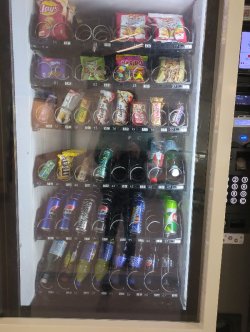 The beverage and confectionery dispensers, known as vending machines or VM in jargon, are these self-service machines that deliver coffee, sodas, candies, and snacks at any time, for payment. You encounter them at the office, in train stations, hospitals, and company lobbies. More than just a coin box, a vending machine is a technical device subject to strict sanitary regulations, supplied with goods that must be monitored and maintained rigorously. In this guide, we cover everything: types and operation, industry vocabulary, hygiene and safety standards, main players and operators, criteria for choosing a maintenance provider, and how an application like KARTES streamlines the tracking of interventions on a machine park.
A figure to set the scene. The French vending market brings together about 1,200 professionals, for an annual turnover exceeding 1.6 billion euros. And the usage is massive: nearly 92% of the French use a vending machine at least once a week. Behind each beverage and confectionery vending machine lie a restocking logistics, hygiene obligations, and a machine that must be kept in perfect working condition. A broken machine means a lost sale and a disappointed customer.
Introduction to beverage and confectionery dispensers: everything you need to know
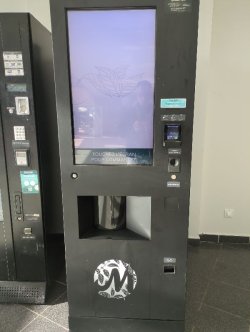 Let's start with the basics. In industry terminology, we refer to automatic distribution, sometimes called vending, an English term widely adopted. An automatic vending machine, whether it offers hot beverages, cold drinks, snacks, or candy, performs the same function: selling a product on a self-service basis, without human intervention at the time of purchase. It's convenience turned into a service.
What is a beverage and confectionery dispenser?
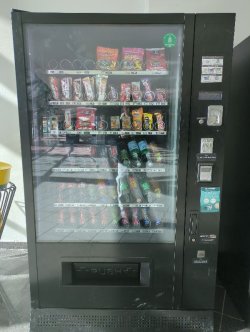 A beverage and confectionery dispenser is an automatic machine that stores products and dispenses them to the consumer after payment. Hot coffee prepared on demand, fresh can, chocolate bar, biscuit pack: the machine accepts payment, selects, and dispenses, all without a cashier. In short, it is a miniature sales point that is open permanently.
Stop for a moment in front of one of these machines. You will see a screen or a selection keyboard, a payment system (coin acceptor, contactless card reader), a display window or metal coils that hold the products, and sometimes a quiet, humming cooling unit. Everything is designed to store, collect payments, and dispense products at any time. The apparent simplicity hides a precise mechanism and a well-oiled logistics chain.
What are the different types of vending machines?
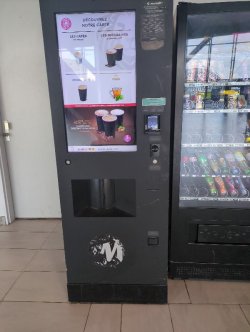 Where it diversifies, and that's instructive. Depending on the products offered and their preservation methods, several families of dispensers can be distinguished. Each has its own technical and regulatory constraints, and the choice depends on the location and the users' needs.
| Type of dispenser | Products | Technical Specificity |
|---|---|---|
| Hot Beverages | Coffee, tea, chocolate, soup | Water heater, coffee mill, or soluble |
| Fresh Drinks | Sodas, waters, juices in cans or bottles | Cold group, refrigerated storage |
| Confectionery and snacks | Snacks, cookies, bars, chips | Distribution spires, packaged products |
| Mixed dispenser | Combined beverages and snacks | Multiple compartments, sometimes refrigerated |
| Fresh Products | Sandwiches, salads, pastries | Strict cold chain, below 4 degrees |
The hot beverage dispenser holds a special place, often referred to as OCS in the trade, for office coffee service. It prepares coffee on demand, from ground beans or soluble coffee. The candy dispenser, on the other hand, operates via springs: these metal springs that rotate to push the product toward the chute. As for the combination dispenser, it combines beverages and snacks in a single unit, a popular solution for small spaces.
How does an automatic dispenser work?
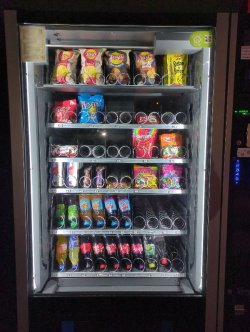 The principle seems clear, but the mechanics are complex. The user selects a product, pays, and the machine dispenses it. Behind this action, several systems activate: the coin acceptor that collects coins and gives change, the contactless payment reader, the selection mechanism (spiral or elevator), and depending on the case, the cold group or the hot beverage preparation system.
For a coffee dispenser, the sequence is precise: the water heats up, the coffee is dosed and brewed, the cup drops, and the beverage flows. For a confectionery dispenser, the spiral turns one notch and releases the product, which falls into the collection tray. Modern machines add telemetry: they communicate remotely their status, their stock levels, and their malfunctions. This connectivity changes everything for managing a fleet; we will come back to this.
Where can we find beverage and candy dispensers?
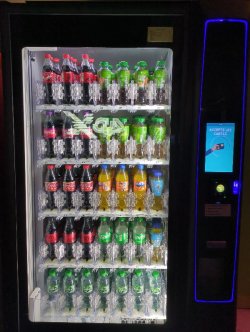 Everywhere, or almost everywhere. The first place for installation remains the company: coffee machines and snack dispensers set the rhythm of employees' breaks and encourage exchanges. They can also be found in public places: train stations, hospitals, shopping centers, government offices, gyms, and training institutions. In short, everywhere where people wait, work, or pass by.
Success can be explained with one word: convenience. Nearly 8 out of 10 French people prefer to buy from a vending machine rather than wait in line at a store, a trend driven by the rise of snacking. Vending machines meet an immediate need, anytime, without time constraints. This constant availability is its strength, but also its vulnerability: a broken machine disappoints precisely when the user needs it most.
The technical vocabulary of vending machines
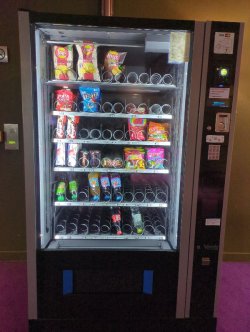 A small survival glossary, to decode a contract or a maintenance report. This jargon keeps coming up constantly in the vending industry.
- DA : vending machine.
- OCS : office coffee service, coffee distribution in the workplace.
- Spire : spiral spring that holds and releases confectionery products.
- Change maker : device that collects coins and dispenses change.
- Telemetry : remote reporting of status, inventory, and fault data.
- Planogram : product layout plan in the machine.
- Cold chain : refrigeration system for fresh products.
- DLC : best before date.
- Replenishment : restocking of products by an operator.
- Cashless : payment without cash, by card or application.
How do you install a vending machine?
The installation of a dispenser follows a precise method, more structured than one might imagine. Far from being simply "placing a machine and connecting it," it involves regulatory compliance and service quality. Here are the main steps.
- Location selection : a place that is accessible, clear, well-lit, with a suitable electrical outlet.
- Connection : the device is connected, and for beverages, it is sometimes connected to water.
- Configuration : products, prices, and payment methods are configured.
- First Supply : the machine is filled while respecting the dates and the cold chain.
- Regulatory Display : the coordinates of the responsible person and the mandatory information are affixed.
- Statements : sanitary and customs procedures are carried out according to the products.
- Commissioning and testing : payment, distribution, temperature and connectivity are checked.
One point that seasoned operators never overlook: accessibility. A self-service machine in a public place must be usable by everyone, including people in wheelchairs, which requires appropriately sized control heights and unobstructed access. On site, unfortunately, we often see poorly placed dispensers, controls that are too high, or cluttered access areas that exclude some users. These installation details are just as important as the machine itself.
Regulations and Standards for Beverage and Confectionery Vending Machines
Set aside the regulatory framework, and it is denser than one might think. Behind an unassuming coffee machine lies a stack of rules: food hygiene, cold chain, administrative declarations, electrical safety, accessibility, targeted prohibitions. Understanding this framework is key to avoiding unpleasant surprises during a health inspection. Let's unravel the thread, from health to regulatory compliance.
What hygiene rules for a vending machine?
It all starts with hygiene, the core of the subject. Automatic distribution is governed by the article 24 of the decree of May 9, 1995, relating to the hygiene of food products directly given to the consumer. The principle: dispensers must be designed, installed, cleaned, and used in a way that prevents any contamination of the products, including by insects and other pests.
The text specifies several concrete obligations. Components in contact with food must be easy to clean and disinfect, made of smooth, washable materials, and kept constantly clean. Food items must be renewed in a timely manner to remain safe. And when the machine serves beverages in cups, it must include a hygienic cup dispensing device and a system for collecting waste. Hygiene is not an option; it is the foundation of the profession.
What does the health regulation say about confections?
Candy and snack dispensers must comply with a specific rule. According to article 131-3 of the typical departmental sanitary regulation, these devices may only dispense products that are included in individual packaging. Bulk distribution of candy is not an option: each product must be protected until it reaches the consumer's hand. A logical requirement, designed for sanitary safety.
Article 131-4 completes the material-side equipment. The internal layout of the device must allow for easy and thorough cleaning. Parts in contact with liquids, for beverage dispensers, must be made of materials authorized for food contact. Only approved products may be used for cleaning and disinfection. These rules, sometimes overlooked, shape the very design of the machines.
What temperature for products from a distributor?
The cold chain is a major area of concern. In accordance with the law of May 9, 1995, any distributor offering perishable food products must keep the goods at a temperature below 4 degrees. This rule aims to limit the growth of microorganisms and the production of toxins, which are essential to consumer safety.
| Product type | Conservation | Watchpoint |
|---|---|---|
| Perishable fresh products | Less than 4 degrees | Strict adherence to the cold chain |
| Fresh Beverages Packaged | Adapted refrigeration | Often between 0 and 2 degrees |
| Packaged Confections | Ambient temperature | Individual packaging required |
| Hot Beverages | On-demand preparation | Water Quality and Maintenance |
Beyond temperature, date management is crucial. Products must be replaced as soon as they reach their best before date. A serious operator keeps a close eye on their best before dates, removes expired products, and documents his checks. On site, a failed cold group that goes undetected, and an entire row of products becomes unsuitable for consumption. Temperature monitoring is therefore not a detail, it is a sanitary obligation.
What display is mandatory on an automatic dispenser?
A distributor cannot remain anonymous. Regulations require that the name, address, and phone number of the responsible person be clearly displayed from the outside of the device. This requirement is intended to allow health inspectors to quickly contact the manager if needed. A machine without this display is in violation.
In addition, the display of prices must remain clear and legible. The consumer must know the price before purchasing, without ambiguity. These display obligations, which may seem simple at first glance, are often neglected on older or poorly maintained equipment. Indeed, a detached responsible label or an unreadable price is enough to cause the machine to fail during an inspection. Maintenance also pays attention to these regulatory details.
What administrative declarations are needed to install a vending machine?
Installing a food dispenser requires specific procedures, depending on the products. For perishable food products, a prior declaration must be submitted to the veterinary services, now the DDPP (departmental directorate for population protection), using the Cerfa n° 50-4064 form, within one month of installation. This procedure stems from the decree n° 71-636 of July 21, 1971.
For beverages, the process differs. Packaged and mixed fresh beverage dispensers must be declared to customs authorities using form B17. Note: this customs declaration does not apply to hot beverage dispensers. If the machine is installed on public property, a permit from the local municipality is required, under the terms of public domain occupation. Each type of product and each location has its own formalities.
Where are vending machines prohibited?
Some restrictions are strict and deserve to be known. Since the law of August 9, 2004, all paying dispensers of carbonated drinks, candy, and food products are prohibited in school establishments. This public health measure aimed to combat unhealthy food among young people. A soda or snack dispenser in a middle school courtyard is therefore illegal.
Other restrictions apply everywhere. The sale of alcohol via vending machines is prohibited, a drink being considered alcoholic above 1.2 degrees. The sale of tobacco through vending machines is also forbidden. These red lines strictly define what a vending machine can offer. Ignoring them exposes one to sanctions, and a serious operator integrates them from the design of his offering.
What safety standards for dispensers?
The device's safety complies with several standards. The CE marking is mandatory: it certifies that the machine meets European safety and health requirements. In addition, the NF E34-101 standard, relating to the installation and use of automatic beverage dispensing equipment, is often required in public procurement specifications.
Electrical safety is subject to regular checks, as these machines are permanently connected to the network. Anti-intrusion devices and access control systems also protect the content and the recipe, a significant concern for a device that handles money. Although not mandatory, ISO 9001 and ISO 14001 standards are recommended: they ensure material quality and an environmental approach, particularly regarding energy consumption. The Qualicert certification is also a guarantee of seriousness.
Should dispensers be accessible to people with disabilities?
Yes, and it is a requirement for machines located in public areas. A vending machine placed in a space accessible to the public must be accessible to people with reduced mobility. This requires clear access, an appropriately sized control height for a wheelchair user, and sufficient lighting. The goal: that everyone can use the machine independently.
This requirement aligns with an underlying trend in the industry: attention to specific needs. Beyond motor disabilities, the management of allergens is becoming an increasing concern. A range of products free from gluten, lactose, or peanuts is developing, meeting a real demand since gluten-free diets affect about 3.5% of adults and 8% of children. The distributor of tomorrow aims to be accessible and inclusive, in every sense of the word.
Key Actors and Suppliers of Beverage and Confectionery Vending Machines: The Top 10
Who manufactures, operates, and maintains beverage and confectionery dispensers in France? The sector involves several families of stakeholders: machine manufacturers, operators and managers of parks, roasters and coffee suppliers, payment specialists, and the professional federation. Here is an overview of recognized stakeholders, without a fixed hierarchy, as the right interlocutor depends on the need and context.
Who are the main vending machine manufacturers?
Machine manufacturing is a market of specialists, often European. These manufacturers design hot and cold beverage dispensers, snack and confectionery dispensers, along with their payment and distribution mechanisms.
- Evoca Group, with its brand Necta, one of the leading European manufacturers of automatic vending machines.
- Crane Merchandising Systems, internationally recognized manufacturer of vending machines.
- Azkoyen, Spanish group manufacturing payment machines and systems.
- Jofemar, another Spanish manufacturer present on the vending machine market.
- Bianchi Vending, Italian manufacturer of beverage and snack dispensers.
Who are the operators and managers of parks?
Operators, or managers, operate the vending machine parks: they install, restock, collect payments, and maintain them. It is often them that a company or community contacts when wishing to equip its premises.
- Selecta, one of the leading European operators in automated distribution, highly present in France.
- Daltys, French operator of automated beverage and snack distribution for businesses and public institutions.
- Lyovel, French actor in the field of automated vending and workplace coffee breaks.
Who provides the coffee and payment solutions?
Two links complete the chain: the roasters who supply the coffee machines, and the payment specialists who equip the vending machines with contactless readers.
- Coffee roasters and brands such as Lavazza, Café Richard or Nespresso Professionnel, who supply the OCS and the coffee break.
- Payment and telemetry specialists like Nayax, who equip machines with cashless and remote monitoring solutions.
Which federation oversees the sector?
The profession has its professional federation. The NAVSA, the national syndical chamber of automatic sales and services, brings together professionals in the automatic distribution sector. It provides its members with sector regulations, plays a role in representation and monitoring, and structures good practices. For an operator, joining offers valuable access to regulatory developments and a professional network.
This overview highlights the diversity of the sector: from the machine manufacturer to the roaster, through the operator who manages the fleet and the payment specialist. For a vending machine manager, this chain of stakeholders also means a chain of maintenance to coordinate. And it is precisely in the coordination of interventions that the performance of a vending machine fleet is determined.
How to choose a maintenance provider for beverage and confectionery dispensers?
Selecting the right maintenance provider means combining technical expertise with service reliability. An enterprise, a community or a park manager does not choose a vending machine maintainer at random: it affects the availability of the machines, hygiene, and user satisfaction. Step-by-step method.
Which technical criteria should be checked first?
First requirement: technical expertise on machines. A vending machine involves mechanics, electronics, a cooling unit, a payment system, sometimes a water circuit. The service provider must master these components, be able to diagnose a coin acceptor failure as well as a cooling unit defect. Ask to see a sample service report: its accuracy speaks volumes about the company's seriousness.
- Multidisciplinary skills : mechanics, electronics, refrigeration, payment, hydraulics.
- Hygiene Control : cleaning, disinfection, compliance with sanitary standards.
- Responsiveness : intervention time on a faulty machine.
- Replacement Parts : availability and compatibility with the fleet.
- Replenishment Management : tracking of inventory and expiration dates.
- Traceability : geolocated reports, photos, machine history.
Why is responsiveness critical?
A broken machine is lost money every hour. An out-of-service dispenser generates no revenue, disappoints users, and can, if it is a cold failure, compromise products. The responsiveness of the maintainer is therefore a primary criterion. A guaranteed, contractual response time makes all the difference between a profitable fleet and a fleet that stagnates.
The link between breakdown, resolution, and customer satisfaction is direct. A jammed coin acceptor, and the user leaves frustrated, sometimes permanently. A cold group failure, and it's an entire stock that has to be thrown away, plus the health risk. On the field, efficient operators measure their machine availability rate and commit to it. This availability logic, we will see, largely depends on the quality of intervention follow-up.
What questions to ask before signing?
A few concrete questions, to bring up in the selection meeting. They quickly separate the serious candidates from the opportunists.
- What is your guaranteed response time for a broken machine?
- How do you manage hygiene, cleaning, and tracking of deadlines?
- Are your intervention reports geolocated, timestamped, and photographed?
- How do you monitor temperatures and the cold chain?
- Do you have telemetry to anticipate breakdowns and stockouts?
- Can I view the complete history of each machine in the fleet?
What warning signals should cause retreat?
Skepticism toward a provider vague about their technical skills, unable to produce a standard report, or offering abnormally low pricing (often synonymous with poorly executed interventions and outdated products that are not removed). Another red flag: the absence of digital traceability. A company that intervenes on an ad-hoc basis, without exploitable data or an overall view of the equipment, leaves you blind to the actual health of your machines and to the respect of sanitary regulations.
The best-organized managers now impose a standard for geolocated digital reporting. Each machine visited is recorded, photographed, and plotted on a map, along with its technical condition, temperatures, and date tracking. This level of requirement changes the game, and it's exactly here that an intervention management application comes into play.
Comment KARTES improve the maintenance of beverage and confectionery dispensers?
We've talked about machines, standards, and service providers. What remains is the question that occupies managers on a daily basis: how to manage a network of dispensers, sometimes dozens or even hundreds of machines spread across many sites, without getting lost in scattered reports and spreadsheets? This is precisely the field of KARTES, a mobile application for managing and tracking field interventions, perfectly suited for the maintenance of vending machines.
What is KARTES concretely?
KARTES is a field service management solution. The principle: each dispenser becomes a geolocated object on a map, equipped with its identifier, its characteristics (model, type, products, installation site) and its entire history. When an intervention occurs (repair, restocking, cleaning, temperature check, removal of expired products), it is recorded on a smartphone, timestamped, photographed, and linked to the concerned machine. The memory of the fleet builds itself automatically.
Where a manager juggled yesterday between a site plan, an Excel file, and a reporting email inbox, KARTES centralizes on an interactive map. This map becomes the live dashboard of the dispenser fleet. And this data is worth its weight in gold to manage availability, ensure hygiene, and allocate budgets. Let's look at the contribution for each stakeholder.
From the perspective of the facility manager and the community: availability and hygiene
For a fleet manager, an operator, or a community hosting equipment, the benefit is summed up in three words: availability, hygiene, controlled responsibility. On a single map, the status of the fleet is visible: which machines are operational, which are out of service, and which are waiting for restocking. The availability rate, this key indicator of profitability, becomes measurable rather than estimated by guesswork.
The hygiene dimension is central here. We are dealing with food products subject to cold chain requirements and expiration dates. Rigorous tracking of temperature controls, cleaning procedures, and the removal of expired products serves as proof of sanitary seriousness. In the event of a DDPP inspection, the manager who can demonstrate that they have monitored their equipment is in a much stronger position. Traceability becomes an assurance, both literally and figuratively.
Finally, budgetary arbitration. By aggregating data, the manager identifies machines that frequently break down, recognizes aging models, and plans replacements based on facts. Rather than endlessly repairing a capricious dispenser, a decision is made to replace it at the right time. Feedback shows that well-maintained data transforms a passive management into an informed steering.
From the maintainer's perspective: less paperwork, more fieldwork
For the technician maintaining the machines, everyday life changes radically. Before: noting the breakdown in a notebook, taking a photo with a personal phone, re-entering the data at the office, and recalling the correct site and machine from memory. A tough journey, prone to forgetfulness and duplicates.
With KARTES, the technician opens the application on site, selects the machine on the map, describes the intervention, takes photos directly in the app, and validates. Geolocation and timestamping are automatic. Double data entry disappears, and the report is ready. Every minute saved on administrative tasks becomes another machine visited during the tour. And the viewable history prevents rediscovering a problem already addressed the previous week.
- On-site Entry : nature of the breakdown and repair recorded directly.
- Embedded Photos : machine status, products, temperatures, attached to the object.
- Automatic geolocation : no more unfindable machines on a multi-site park.
- Machine History : the technician sees the history and checks before intervening.
- Reporting ready : reports generated for the manager, availability indicators populated.
From the user's and neighbor's perspective: a service that works
And the consumer? They are the ultimate beneficiary. A broken machine means a coffee that won't be made, a missed snack, a part consumed without compensation. An effective intervention management system shortens the time to restore service. Some managers even integrate user reports into the workflow, turning every consumer into a field sensor.
For the resident or occupant of the premises, the issue is also that of the quality of life. A clean, well-maintained machine enhances the welcoming space, whether it is a company lobby or a waiting room. On the contrary, a dirty vending machine, out of order, or displaying expired products degrades the image of the place and raises concerns about hygiene. A well-managed park, where anomalies are quickly detected and corrected, benefits everyone, from the busy employee to the passing visitor. Careful maintenance is visible and felt.
In what KARTES does it reduce maintenance costs?
Cost reduction results from the addition of concrete gains. Let's recap the levers, because this is often the first question a decision-maker asks.
| Lever | Effect on Costs |
|---|---|
| Elimination of double entry | Reduced administrative time, technicians focused back on the field |
| Machine Geolocation | Optimized routes for multi-site parks |
| History by Identifier | Detection of problematic machines, repair/replace decision making |
| Hygiene and temperature tracking | Less products discarded, sanitary proof in case of inspection |
| Reduction of downtime | Preserved recipe, user satisfaction |
| Data-Driven Prioritization | Targeted investments on aging machines |
A telling example. Imagine a dispenser whose cooling system gradually weakens without any alarm, until the temperature exceeds the sanitary threshold during a night. Without monitoring, it's discovered too late: lost stock, sanitary risk, machine stopped. With temperature control traced at each pass, the drift is detected early, and intervention occurs before breakdown. KARTES makes visible what is deteriorating in silence. Turning scattered interventions into usable data, that is the real gain.
Let's be honest: no software can repair a coin acceptor or recharge a machine in place of the technician. KARTES does not replace professional expertise or health and safety obligations. The application is an organizational enhancer, not a magic wand. But when used properly, this enhancer changes the scale of what a team can manage, shifting maintenance from reactive and endured to proactive and controlled.
Breakdowns, lifespan, and maintenance of vending machines
A dispenser seems unshakable, firmly planted in its corner, year after year, delivering coffee and snacks. Yet, it wears out, becomes misaligned, and breaks down, sometimes at the worst possible moment. Knowing common failures helps anticipate rather than endure. An overview of the ailments that threaten these devices.
What is the lifespan of a vending machine?
A well-maintained dispenser typically lasts eight to twelve years, sometimes even longer. The body remains intact through the years, but the mechanical and electronic components wear out: coin acceptor, cooling unit, beverage preparation system. The limiting factor is not the casing, but the repeated use of the mechanisms and the actual maintenance. A machine that is well cared for ages much better than one that is neglected.
What are the most frequent breakdowns?
The record of failures, observed in the field, looks like this. Each one tells a story of wear, lack of maintenance, or improper use.
- Coin jam : coins jammed, change not dispensed, payment failure.
- Card reader out of service : contactless payment impossible, lost sales.
- Failing cold group : rising temperature, health risk to fresh products.
- Heating or coffee issue : water not hot enough, coffee that no longer flows.
- Distribution jam : product jammed in the loop, selection blocked.
- Broken screen or keyboard : selection impossible, machine unusable.
- Descaling : limescale deposits disrupting the water circuit of hot beverages.
The cold chain deserves close attention, as its failure affects food safety. An undetected breakdown can cause temperatures to rise above the regulatory threshold, making fresh products unsuitable for consumption. This is a double penalty: lost stock and a health risk. Hence the importance of temperature monitoring at each stage, ideally with a traceable record. It is better to detect a deviation early than to discard a shipment and risk an incident.
How to maintain a hot beverage dispenser?
Hot beverage dispensers require specific maintenance, as water and coffee leave residues. Regular cleaning of the channels and water reservoirs prevents the buildup of deposits and bacteria. Water filters must be checked and replaced to maintain the quality of the beverages. And periodic descaling removes the scale that eventually clogs the circuit.
Temperature control is also added to ensure that beverages are served at the correct temperature, and quick repairs in case of breakdowns to avoid any service interruption. This maintenance, methodical in nature, affects both hygiene and taste. A coffee tasting of limestone, and the user will reject the machine. Serious operators plan and document these operations rather than waiting for complaints or breakdowns.
Should a faulty distributor be repaired or replaced?
The real manager's question. A coin acceptor, a card reader, a filter: these can be replaced quickly and at reasonable cost. But when a machine accumulates breakdowns or its cooling system regularly fails, repairs become a bottomless pit. The right reflex: track interventions, and switch to replacement as soon as the cumulative cost of repairs and lost revenue exceeds common sense.
In practice, the managers who do best apply a simple rule: a machine that is repaired several times for the same cause triggers a thorough diagnostic. Often, the real calculation includes the lost revenue during the breakdowns, not just the cost of parts. A vending machine that is often out of service is costly in terms of lost sales, even if each repair seems modest.
How to perform an audit of a vending machine park?
Before optimizing maintenance or replacing equipment, it is first necessary to know what you own. Many managers are unaware of the exact condition of their assets, especially after several installation waves across different sites. The audit addresses this blind spot. Here is a method applicable from small parks to multi-site networks.
Where to start the machine inventory?
The starting point is the geolocated inventory. We visit the equipped sites, locate each machine, and record its model, type, identifier, age, and condition. In the paper era, this work was lost in disparate folders. Today, it is directly entered on a digital map, with each dispenser becoming a localized and durable object. Without a reliable inventory, no management is possible.
For a small site, the inventory can be completed in a few days. For a multi-site network, the process is carried out by sectors, prioritizing locations with high traffic. The key point: a homogeneous rating grid, so that the "average" status means the same thing to all technicians. This solid foundation conditions the entire maintenance strategy that will follow.
What criteria to evaluate for each machine?
An effective audit grid combines several dimensions, quickly checked on site. The goal is not perfection, but a reliable and reproducible snapshot of reality.
- Identification : identifier, model, type, manufacturer, year, site.
- Technical Status : coin acceptor, payment, cold group, beverage system.
- Hygiene : cleanliness, condition of compartments, material compliance.
- Regulatory Compliance : display of responsible party, prices, statements.
- Commercial Performance : attendance, revenue, breakdown rate.
- Geotagged photo : a picture is worth a thousand words, especially to track progress.
How to leverage audit data?
Once the data is collected, the real work begins: transforming it into an action plan. We cross-reference the condition of the equipment with their profitability, age, and budget. We distinguish between urgent cases (dangerous or non-compliant machines) and planned replacements, spread over several fiscal years. The modernization strategy of the fleet is directly fed by this audit.
The value of a digital tool becomes evident here. The audit map is not a static image: it lives, updates with each intervention, and keeps a history. A year later, it is clear exactly which machines are problematic, which ones are performing well, and where to focus efforts. The audit stops being a forgotten report and becomes a permanent dashboard, a prerequisite for truly effective management.
Common mistakes to avoid with vending machines
Field experience leaves a rich collection of recurring errors. Knowing them is already avoiding them. Here are the most common ones, from installation to daily management.
What operational errors are the most costly?
Headline: neglecting deadline tracking, leading to expired products on the shelf, a health risk, and loss of trust. Next comes the lack of responsiveness to breakdowns, which allows a machine to stop and accumulate lost sales. Then there is the forgetting of temperature checks, exposing to cold chain breakage. These errors, seemingly routine, undermine profitability and safety.
What management errors burden a fleet?
On the management side, the main error is the lack of structured follow-up: machines are installed, then managed on an ad-hoc basis, without an overall view. Another flaw is managing maintenance in a purely corrective mode, without any preventive measures, allowing scaling and wear to develop. Finally, neglecting traceability, which deprives you of any evidence in case of a health inspection. Reliable data and regular monitoring are, once again, the antidote.
What errors harm the user experience?
A dirty machine, an outdated product, a coin acceptor that swallows coins, coffee tasting like limestone: all these small failures discourage users and ruin the service's image. Worse, a vending machine displaying products with expired dates legitimately raises concerns about hygiene. Taking care of cleanliness, freshness, and proper functioning is taking care of the trust relationship with consumers. Automatic distribution is also won through these everyday details.
Innovations and Trends in Vending
Does automatic distribution still innovate? Much more than one might imagine. Between contactless payment, telemetry, and connected machines, the sector is modernizing rapidly, driven by user expectations and the quest for efficiency. A look at the developments shaping the dispenser of tomorrow.
What does contactless payment bring to distributors?
Cashless has transformed the way we pay. No more coin troubles: you pay for your coffee with a single gesture, using a card or smartphone, sometimes through a dedicated app. This fluidity increases sales, as the absence of cash is no longer a barrier. Machines now accept contactless bank cards, dematerialized meal vouchers, and company badges. Payment becomes invisible, and that's great for conversion.
Contactless payment also has management benefits. Dematerialized transactions simplify accounting, reduce cash collection, and limit theft. For the operator, this means less handling of cash and more detailed sales tracking. The trend is clear: cash is declining, contactless payment is advancing, and dispensers are following the movement. An evolution that aligns with that of all local commerce.
What is telemetry in automated distribution?
Here is the real revolution at its core. Telemetry allows the machine to communicate its status remotely: stock levels, breakdowns, temperatures, sales. There is no longer a need to wait for the round to discover that a vending machine is empty or broken: the information is transmitted in real time. The operator knows what to restock and where to intervene, without unnecessary travel.
The gains are considerable. Stockouts that lead to lost sales are avoided, breakdowns are anticipated, and replenishment routes are optimized. Telemetry transforms reactive management into predictive management. Combined with an intervention tracking tool like KARTES, which structures the work of technicians on the field, it takes maintenance to another dimension. The connected machine and the agent equipped with a smartphone form a remarkably effective duo.
Toward healthier and more eco-friendly dispensers?
The healthy vending trend is gaining momentum. In response to demand, vending machines are offering more healthy products: fruits, balanced snacks, gluten-free, lactose-free, or peanut-free options. The selection adapts to health concerns and allergies, moving away from the all-sweet offerings of the past. This nutritional upgrade meets societal expectations, and sometimes even demanding specifications.
Ecology is also progressing. Plastic cup-free dispensers, encouraging people to bring their own cups, collection of used capsules, low-consumption machines: the sector is becoming greener. Recommended ISO 14001 standards support this environmental approach. A modern dispenser aims to be energy-efficient and waste-conscious. The coffee break no longer has to mean waste, and that's good news for everyone.
What role for data in asset management?
Data is the thread that connects all these evolutions. Digitizing the fleet through geolocation and intervention tracking transforms management. Each machine becomes a mapped point, with a history, status, sales, and breakdowns. You manage an entire fleet from a map, prioritize based on data, and prove your sanitary compliance.
It is precisely the playing field for a solution like KARTES, which bridges the gap between the field technician, his smartphone, and the manager's dashboard. The automatic dispenser, seemingly basic equipment, thus enters fully into the era of data. And this intelligence is not only used to optimize: it also serves to secure, both in terms of health and financially.
Automatic distribution in business and public places
Not all dispensers are the same depending on their location. Enterprise, community, public place: each context has its own challenges and constraints. Understanding the specifics is key, since good service depends on proper framing.
Why install a dispenser in the workplace?
The company remains the primary location for installing vending machines, and this is no coincidence. Coffee machines and snack vending machines set the rhythm of breaks, encourage exchanges between colleagues, and contribute to workplace well-being. A friendly coffee corner is a place for relaxation and social interaction, appreciated by employees. The investment is often considered profitable in terms of the atmosphere it creates.
Installation in the workplace follows certain rules. If the company is a tenant, the landlord's approval is required. The machine must comply with accessibility standards, particularly for people with limited mobility. And in the case of food products, a health declaration to the DDPP is mandatory. Large companies sometimes have multiple machines: coffee, snacks, full meals, to meet a variety of needs. The vending machine becomes a full-fledged internal service.
What particularities for public places and communities?
In public places, train stations, hospitals, government offices, and sports facilities, the stakes change in scale. The foot traffic is high, varied, and sometimes continuous. Accessibility becomes imperative, since all publics cross paths. And installation on public property requires authorization from the city hall. The dispenser provides a real convenience service at any time for passing users.
For a community or a public facility manager, maintenance takes on a particular dimension. The image of the place is at stake: a broken or dirty machine in a hospital or town hall lobby gives a poor impression. Availability and cleanliness become service quality issues. This is why rigorous tracking of the equipment is important, capable of ensuring that machines are always operational and compliant. Even a modest dispenser contributes to the perceived quality of the location.
History and Growth of Automated Distribution
To understand today's vending machines, a detour through their history sheds light on many aspects. Automatic distribution has a long trajectory, marked by successive innovations and widespread adoption. A brief journey through time, instructive for those who want to grasp today's challenges.
Where do the vending machines come from?
The idea of selling without a salesperson is ancient. The first mechanical vending machines appeared more than a century ago, dispensing postcards, chocolate bars, or tickets. The principle was rudimentary: a coin, a lever, a product. Over the decades, the mechanics became more sophisticated, cold storage was introduced, followed by electronics and on-demand coffee. The vending machine has evolved from a novelty item to a daily service.
The real growth has accompanied the development of employment and transit locations. Offices, factories, and train stations have seen the proliferation of coffee and snack machines, meeting the need for quick breaks. Automatic vending has thus become established in the landscape, discreet yet omnipresent. Today, it is part of the scenery to the point that it goes unnoticed, until a machine breaks down.
Why is automated distribution so successful?
Success hinges on a single word: convenience. A vending machine offers immediate service, anytime, without the constraints of hours or waiting. This constant availability perfectly matches the rise of snacking and accelerated lifestyles. Nearly 8 out of 10 French people prefer to buy from a vending machine rather than wait in line, a figure that speaks volumes about the demand for practicality.
The sector has also become more professional. Moving from a craft-based activity, it has evolved into a structured industry, with its manufacturers, operators, federation, and standards. This maturity is reflected in a higher demand for quality and hygiene. Today's dispenser is no longer yesterday's soda machine: it is a connected, reliable, and well-maintained device, serving a carefully crafted consumer experience.
What future for vending machines?
The future is written around three words: connectivity, health, sustainability. Connectivity, through telemetry and cashless solutions, optimizes management and usage. Health, with healthy vending, meets nutritional expectations. Sustainability, finally, greens the sector, from no-cup solutions to low consumption. Three dynamics that turn the humble vending machine into a discreet but real innovation ground. Tomorrow's machine will be intelligent, healthy, and sustainable.
Daily Hygiene: Good Maintenance Practices
Hygiene is not just a regulatory obligation: it is the everyday reality of automatic distribution. A clean machine reassures, retains customers, and protects. Here are the good maintenance practices that make the difference between a healthy park and a risky one.
How to ensure the hygiene of a dispenser?
Hygiene starts with the regular cleaning of parts that come into contact with products. Compartments, traps, and recovery basins must remain spotless, cleaned with authorized products. For beverages, conduits and reservoirs require special attention in order to prevent the buildup of residues and bacteria. A cleaning schedule, properly followed and documented, is the foundation of impeccable hygiene.
Deadline tracking completes the system. Each product approaching its expiration date must be removed, without exception. A serious operator checks his stock on every visit, rotates the references, and documents the removals. On site, this is often where compliance is determined: a clean machine filled with expired products remains non-compliant. Rigor regarding dates is as important as cleaning.
How to prevent odor and contamination problems?
Smells are the first warning sign of a hygiene issue. They often reveal a forgotten residue, a clogged duct, or a poorly emptied tray. The solution: a systematic and frequent cleaning that leaves no corner unnoticed. A machine that smells bad rightly concerns the user about what they are about to consume.
Preventing cross-contamination involves separating products, respecting food-contact materials, and maintaining constant cleanliness. Feedback shows that a clear hygiene protocol, applied during every intervention, drastically reduces risks. Tracking these operations in a monitoring tool enables you to demonstrate rigor and identify underperforming machines. Hygiene is managed, it is not improvised.
What are the risks in case of poor hygiene?
The risks are numerous and serious. From a health perspective, a poorly maintained machine can contaminate products and make a consumer sick. From a regulatory standpoint, a DDPP inspection revealing shortcomings can lead to sanctions. And from a commercial perspective, a questionable hygiene reputation can permanently drive away customers. In short, neglecting hygiene is playing with your financial health as much as with that of consumers. Sanitary rigor is an investment, not a constraint.
Glossary of Beverage and Confectionery Vendors
To close this guide, here is a glossary of the cross-referenced terms throughout the article. Handy to have on hand when facing a maintenance contract or a specification sheet.
- DA : vending machine.
- Automatic distribution : self-service sales via machine, also called vending.
- OCS : office coffee service, coffee distribution in the workplace.
- Spire : spiral spring that holds and releases confectionery products.
- Change maker : device that collects coins and dispenses change.
- Cashless : payment without cash, by card or application.
- Telemetry : remote reporting of status, inventory, and fault data.
- Planogram : product layout plan in the machine.
- Cold chain : refrigeration system for fresh products.
- DLC : best before date.
- Replenishment : restocking of products by an operator.
- DDPP : departmental direction for population protection.
- NAVSA : National Automatic Sales and Service Workers' Union.
- Healthy vending : distribution of healthy and balanced products.
- CE marking : certificate of conformity with European standards.
How to optimize the profitability of a vending machine park?
A vending machine park is only profitable if it is well planned and properly managed. Location, product selection, machine availability: each factor affects the revenue. Decoding the levers that transform an average park into a high-performing one. Because a machine is steered, not just installed.
How to choose the location of a dispenser properly?
Location often makes all the difference. A machine placed in a high-traffic area, visible and accessible, generates significantly more sales than a vending machine relegated to a dark corner. Proximity to a flow of people—employees, patients, travelers—is the first factor of success. A good location is already half of the profitability.
Accessibility and lighting also matter. A machine that is hard to reach, with controls that are too high or poorly lit, deters users and excludes some of them. On site, identical dispensers display recipes ranging from single to triple depending on their location. Therefore, the choice of location deserves serious consideration, not a hasty decision made for lack of a better option.
How to optimize the product offering?
The choice of products, or planogram, influences sales. An offering tailored to the local audience hits the mark: coffee and pastries in an office, balanced snacks in a gym, comforting products in a hospital. Knowing your customers means selling better. A relevant product mix avoids both stockouts on best-sellers and unsold items on unpopular references.
- Tailor to the audience : design the offering according to the profile of the users of the location.
- Track sales : identify best-sellers and references that are not performing well.
- Minimize stockouts : restock key products before shortages occur.
- Renew the offer : test new products, track health trends.
- Managing dates : avoid unsold items that end up in the trash.
Why is availability rate key?
The availability rate is the key indicator of profitability. A broken or empty machine sells nothing, and every hour of unavailability represents lost revenue. Therefore, maximizing availability means maximizing revenue. This requires quick repairs and timely restocking, ideally guided by telemetry.
Measuring this rate changes management. Instead of suffering breakdowns, you pilot them: you know which machines are failing, you act on the causes, you commit to objectives. A tracking tool for interventions like KARTES feeds this indicator precisely, by consolidating the history of each machine. Availability stops being an impression and becomes a manageable data point, and therefore improvable.
How to reduce waste and the footprint of distributors?
Automatic distribution has long been associated with waste: products thrown away, plastic cups, energy-hungry machines. Things are changing, under the pressure of societal expectations and costs. Reducing waste is now both an ecological gesture and a way to save money. An overview of concrete options.
How to reduce food waste?
Food waste mainly comes from unsold products that reach their expiration date. The solution: careful tracking of dates and sales to adjust quantities as closely as possible to actual needs. A reference that doesn't turn over is removed, and overly ambitious quantities are reduced. Telemetry and intervention tracking help here to align supply with actual consumption.
Some operators go even further by organizing the donation of products close to their expiration date instead of destroying them. This approach, both solidarity-based and ecological, gives value to goods that would otherwise end up in the trash. On the ground, waste reduction meets profitability: fewer products thrown away mean fewer dry losses. Ecology and economy here go hand in hand.
How to reduce the environmental impact of a vending machine?
Several levers exist, and serious players implement them. Low-consumption machines reduce energy costs and carbon footprint. Vending machines without plastic cups, or encouraging customers to bring their own cups, limit waste. Collecting used capsules and sorting packaging complete the approach. A modern vending machine aims to be efficient, from installation to disposal.
ISO 14001 standards, recommended, accompany this environmental transition. Beyond the image, these efforts meet real expectations from users and clients, who are increasingly demanding regarding sustainable development. An eco-responsible vending machine park becomes an argument, sometimes a condition for tenders. The clean coffee break is no longer a luxury, it is a fundamental trend set to become widespread.
What is the benefit of good tracking for ecology?
A rigorous tracking of the fleet directly serves the ecological cause. By aligning supply with actual consumption, we throw away less. By properly maintaining the machines, we extend their lifespan and avoid premature replacements, thus avoiding manufacturing. By optimizing routes through geolocation, we reduce the distance traveled and emissions. Data, once again, serves several objectives at the same time: profitability, compliance, and sustainability converge in a well-managed approach.
Security of dispensers: theft, vandalism, and reliability
A vending machine collects money and stores desired products. It therefore attracts, alas, desires. Coin theft, break-ins, vandalism: the security of the machine is a real issue, especially in public places. A few good practices limit the risks and protect both the revenue and the equipment.
How to protect a dispenser against break-in?
Security starts with design. The machines incorporate anti-tampering devices and access control systems that secure the cash drawer and its contents. A sturdy, well-locked dispenser deters attempts. Switching to contactless payment also reduces the temptation for theft, since the machine holds fewer cash notes to steal.
Location plays a deterrent role. A machine placed in a visible, frequently visited, and well-lit area suffers less damage than an isolated device in a dark corner. On-site surveillance, when available, reinforces the deterrent effect. In the field, operators observe that a well-placed and well-lit dispenser is significantly less likely to be vandalized. Prevention is better than repair.
How to react to vandalism?
Responsiveness is the best response to vandalism. Leaving damage unattended invites further incidents, as per the well-known broken window effect. Repairing quickly, cleaning graffiti promptly, and replacing damaged parts without delay discourage repeat offenses. This requires effective reporting and a structured follow-up process capable of locating and prioritizing each incident. A well-managed site, where damage is addressed without delay, remains in much better condition over time. Data, once again, supports responsiveness and preserves heritage.
10 Frequently Asked Questions About Beverage and Confectionery Vending Machines
What regulations apply to vending machines?
Automatic distribution is governed by the decree of May 9, 1995, on food hygiene and the typical departmental sanitary regulation. In addition, there is the CE marking, the NF E34-101 standard for beverages, and sanitary or customs declarations depending on the products offered.
Is a permit required to install a vending machine?
It depends on the location. In a company, the landlord's agreement is sufficient if you are a tenant. For food products, a declaration to the DDPP is mandatory via Cerfa 50-4064. On public roads, permission from the town hall is required.
Are vending machines prohibited in schools?
Yes. Since the law of August 9, 2004, all paid dispensers of carbonated drinks, candy, and food products are prohibited in schools. This public health measure aims to combat unhealthy food consumption among young people.
At what temperature should products from a vending machine be stored?
Perishable fresh products must be stored at less than 4 degrees, in accordance with the law of May 9, 1995. Fresh packaged beverages are often kept between 0 and 2 degrees. Strict compliance with the cold chain is a sanitary requirement.
Should the confections be packaged in a vending machine?
Yes, necessarily. According to the standard departmental health regulation, candy and snack dispensers may only dispense products that are individually packaged. The sale of loose confections via automatic dispensers is prohibited.
What information must appear on an automated dispenser?
The name, address, and phone number of the responsible person must be displayed in a legible manner from outside the device. This display allows health inspection officers to contact the manager. Prices must also remain clearly legible.
Can alcohol be sold in a vending machine?
No. The sale of alcohol via vending machine is prohibited, a drink being considered alcoholic above 1.2 degrees. The sale of tobacco via vending machine is also prohibited. These prohibitions apply everywhere on French territory.
How to maintain a hot beverage dispenser?
Maintenance involves regular cleaning of water channels and reservoirs, checking and replacing filters, descaling to remove limescale, and temperature control. Quick repairs in case of breakdown prevent any service interruption.
What is telemetry for a vending machine?
Telemetry allows the machine to communicate its status remotely: stock levels, breakdowns, temperatures, sales. The operator knows what to restock and where to intervene without unnecessary movement. It transforms reactive management into predictive management and optimizes routes.
How to ensure the hygiene of a vending machine?
Hygiene relies on the regular cleaning of parts that come into contact with products, adherence to authorized materials, strict monitoring of expiration dates, and temperature control. Tracing these operations allows proof of compliance during a sanitary inspection.
Conclusion: the vending machine, a service to be maintained with rigor
We've seen throughout this guide that beverage and confectionery dispensers are far from being innocuous devices. Behind a coffee machine lies a stringent sanitary regulation (hygiene, cold chain, declarations, targeted prohibitions), sophisticated mechanics, and a logistics system for restocking that needs to be orchestrated. Rigor, both sanitary and technical, is what makes the difference between a quality service and a deteriorating fleet.
Maintenance is the nerve center of operations. It separates the profitable, clean, and available fleet from the one that multiplies breakdowns, outdated products, and dissatisfied users. Inventory, monitoring, quick troubleshooting, and tracking: these are the keys. And to orchestrate all of this without getting lost in scattered reports, an intervention tracking application like KARTES transforms the management of a vending machine park into data-driven operations, benefiting managers, maintainers, local authorities, and consumers.
Do you manage a vending machine park, are you an operator, maintainer, or responsible for a location hosting machines? Take a few minutes to assess how the condition, hygiene, and availability of your devices are currently being monitored. If the answer lies in a flooded inbox, there is certainly a better way to go about it. Share this guide with others; it could illuminate your next equipment decision.
At bottom, the success of a vending machine park is measured in details: a machine always clean, coffee always hot, products always fresh, a breakdown repaired before even a complaint is made. These small attentions, multiplied by hundreds of daily visits, build a service's reputation. Well managed, well maintained, it's simply respecting the consumer and giving them the desire to return to the machine tomorrow.
Finally, keep in mind a simple idea: in automated distribution, the difference is almost never in the machine itself, but in the way it is followed. Two managers equipped with the same devices can achieve opposite results, depending on whether they steer by data or navigate on the fly. Geolocated inventory, temperature trace control, machine-specific history, and responsiveness to breakdowns: these fundamentals, modest yet decisive, ensure the long-term performance of a fleet. The rest—manufacturers, products, technologies—are merely the raw materials for a service that is only valuable through the rigor of its daily execution.