Interventions on Bathroom fixtures
Public restrooms: the complete guide to understanding, equipping, maintaining, and modernizing public toilets in communal settings
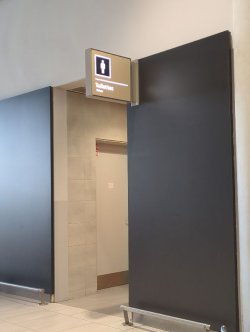 Public restrooms represent in France a park estimated at more than 11,000 units installed on public roads in 2024, not counting those integrated into ERP (stations, parks, markets, educational institutions). Behind the apparent banality of a public restroom lies a technical reality: self-cleaning, accessibility for people with reduced mobility, water management, vandalism, hygiene, sanitary standards. This guide details everything a manager, an elected official, a cleaning service or a maintenance provider must know about public restrooms and toilets, their rules, their stakeholders and their daily maintenance.
Introduction to public restrooms: an essential service often underestimated
In technical and regulatory terms, public restrooms refer to the complete set of facilities intended for personal hygiene (toilets, sinks, urinals) made available to the public, free of charge or for a fee, in open or enclosed spaces. They are also referred to as public toilets, public restrooms, sanitary blocks, or, in municipal jargon, as WCP (public toilets) and UAS (automatic service units).
These facilities can be found in a wide variety of contexts. Urban roads, parks and gardens, covered markets, bus and train stations, beaches, motorway service areas, sports facilities, schools, cemeteries, tourist monuments, campsites, and shopping centers. The diversity is such that the design, management approach, and maintenance constraints vary significantly from one site to another. Indeed, behind the word "sanitary," one can refer to a simple urinal cabin as well as a complete block with showers, urinals, sinks, and maintenance rooms.
What exactly is a public restroom?
The technical definition varies according to the texts. The Public Health Code refers to "publicly accessible sanitary facilities," the Building and Housing Code speaks of "sanitary equipment in ERP," and the NF EN 16194 standard (mobile sanitary cabins) specifies the characteristics of movable units. In practice, a public sanitary facility combines several functions: cabine or box, toilet bowl, flushing system, sink with water (hot or not), paper or soap dispenser, ventilation, and depending on the case, urinal, mirror, hand dryer.
From a typological point of view, several families are traditionally distinguished. The automatic public restrooms (UAS), fully autonomous, which clean themselves after each use. The guarded restrooms, with human presence for reception and cleaning. The classic freely accessible restrooms, simple masonry blocks open continuously. The mobile or modular cabins, site-type, events, festivals. And the eco-friendly restrooms, with dry toilets, increasingly common in natural areas and large events.
Why are public restrooms strategic for a community?
A public restroom is not just a comfort facility. On the ground, feedback from elected officials shows that it is one of the topics that consistently comes up in citizen surveys, right after street cleanliness and safety. Public toilets shape urban life, influence the commercial, tourist, and residential attractiveness of an area. A commune that does not provide accessible sanitation immediately faces associated nuisances: urination in the streets, odors, damage to building facades, and complaints from merchants.
The health and social issues are well documented. According to the WHO, access to clean and safe toilets is a fundamental human right recognized since 2010. Organizations such as the Observatory of Public Toilets regularly highlight the French shortage: on average, there is 1 public toilet for 2,500 to 3,000 residents in Paris, compared to 1 for 700 in Tokyo or 1 for 1,000 in London. This lack particularly affects women (who statistically spend more time in toilets), the elderly, children, people with disabilities, homeless individuals, and delivery drivers.
What are the main types of public sanitation installations?
Manufacturers distinguish several categories of equipment. The automatic street sanitation units (Decaux or Sagelec type), fully autonomous, self-cleaning after each use, generally free of charge since the end of the 2000s in most major French cities. The modular prefabricated sanitation units (concrete, metallic, composite), installed in parks or tourist areas. The sanitation units integrated into urban furniture, sometimes combined with kiosks, shelters or information kiosks.
In addition, there are mobile site or event cabins (NF EN 16194 standard), vespasiennes urinoirs (becoming increasingly rare but making a comeback with eco-designed models like Uritrottoir), composting or separating dry toilets, autonomous PMR sanitary facilities specifically adapted for people with reduced mobility, and shower-toilet blocks in campsites, beaches, and reception areas.
How many public restrooms are there in France?
There is no comprehensive national census, which in itself is revealing. However, several estimates converge. According to parliamentary reports and studies by AFNOR, France would have about 11,000 public toilets installed on public roads, to which are added several tens of thousands of sanitary units integrated into ERP (parks, train stations, markets, sports facilities, schools, town halls). Paris has about 750 JCDecaux sanitary kiosks, Lyon has about a hundred, and Marseille has about fifty.
For comparison, there are approximately 35,000 communes in France. A large majority of rural communes have no public restrooms open continuously. When such facilities exist, they are often located near the community hall or municipal stadium, and their opening is restricted to limited hours. This shortage is particularly evident in rural tourist areas, where summer visitor traffic quickly overwhelms the few available facilities.
What is the lifespan of a public restroom?
The useful lifespan of a public restroom varies significantly depending on the materials, usage intensity, and maintenance quality. For an automatic street-side restroom, the technical depreciation period is 12 to 15 years, with some models reaching up to 20 years with rigorous maintenance. For a conventional masonry restroom block, the structure lasts 30 to 50 years, but internal equipment (toilets, faucets, dispensers) must be replaced every 8 to 12 years.
Technical service experience reports show that it is rarely the structure that fails first, but rather wear parts and components subjected to vandalism (mirrors, dispensers, ceramic basins). Recent models favor stainless steel, composite materials, and anti-vandalism materials to minimize frequent replacements. On site, a good annual replacement parts ratio represents 5 to 8% of the initial investment value.
What materials for durable public restrooms?
The choice of materials affects the lifespan, aesthetics, and maintenance cost. Stainless steel 304 or 316 is today the reference material for basins, sinks, and vanity tops, thanks to its vandal resistance, ease of cleaning, and durability. Sanitary ceramic offers a noble appearance but remains vulnerable to impacts. SMC or HPL composites are used for partitions and doors, offering a good quality-to-price ratio.
For external structures, prefabricated concrete (prefabricated concrete) (long-lasting, good thermal inertia), thermally painted galvanized steel, or fiber-reinforced composite are preferred. Wood, although aesthetically appealing, is rarely used in public sanitation due to its incompatibility with permanent humidity. Faucets must be timed-closing or infrared detection to prevent water wastage and leaks caused by user negligence.
What are the current trends in public restrooms?
The sector has been evolving rapidly since 2015. Several structural trends can be identified. First, free access: most major French cities have moved to free public restrooms since 2006-2010, following the example set by Paris in 2006. This free access increases usage and therefore the need for maintenance, but significantly improves access to the service.
Next, eco-design: dry toilets in parks and natural areas, waterless urinals, urine recovery for agricultural use (nitrogen), water-saving toilets (3 and 6 liters instead of 9), air-pulsed hand dryers without paper. Several metropolitan areas have been testing "zero waste" sanitation systems that make use of effluents for several years.
Third trend, connectivity: presence sensors, passage counting, remote monitoring, automatic alerts in case of breakdown or vandalism. The new generation of JCDecaux or Sagelec restrooms all include real-time data transmission to a centralized control station. Finally, inclusion: since 2015, 100% of new installations must be accessible to people with reduced mobility, with "family" models (changing table, wide access) becoming more widespread.
Regulations and standards for public restrooms: a dense and demanding framework
French regulation regarding public restrooms is based on a stack of texts: Public Health Code, Construction Code, Labor Code (for ERP restrooms), accessibility regulation, AFNOR and European standards. Understanding this framework is essential, both for the project owner and for the maintenance service provider.
What are the texts that regulate public restrooms?
Several texts structure the framework. The Public Health Code (articles L. 1311-1 and following) sets the general principles of public hygiene. The Building and Housing Code details the obligations relating to ERP. The Typical Departmental Sanitary Regulation (RSDT), adopted in each department, includes specific provisions for public sanitation facilities (articles 67 to 74 generally).
Several related texts are also added: the decree no. 2006-1657 of December 21, 2006 on the accessibility of roadways (which requires accessible restrooms for people with reduced mobility), the order of December 8, 2014 setting out provisions relating to the accessibility of existing ERP, and the Labor Code (articles R. 4228-10 and following) which governs restrooms in establishments employing staff. These texts are supplemented by municipal police orders, which set opening hours, potential fees, and usage conditions.
Which AFNOR and European standards apply to public restrooms?
The normative framework is comprehensive. The NF EN 16194 specifies the requirements for non-network connected mobile sanitary cabins (construction site, event, gathering). The NF P99-611 deals with automatic self-service sanitary facilities. The NF EN 14055 covers water cisterns. The NF EN 997 defines the technical characteristics of integrated siphon WC basins.
For faucets, the NF EN 200 to 248 standards are applied depending on the types. Soap dispensers, paper dispensers, and hand dryers are subject to specific standards. The NF X50-145 standard and the NF Sanitaires mark certify the quality of cleaning services. Although not all these standards are mandatory, they are in practice unavoidable: case law systematically considers that equipment not compliant with the applicable NF/EN standard is presumed to be faulty in the event of an incident.
What does the law on the accessibility of public restrooms for people with reduced mobility say?
Since the law of February 11, 2005 on equal rights and opportunities, all new public restrooms must be accessible to people with reduced mobility. The decree of December 8, 2014 and the decree of April 20, 2017 set detailed technical specifications: minimum door width (90 cm), interior maneuvering space (a circle of 1.50 m), toilet height (45-50 cm), horizontal and side grab bars, and accessible sink in a seated position.
For existing ERP, compliance has been required since January 1, 2015 (February 11, 2005 law), with Ad'AP (programmed accessibility agendas) allowing for phased implementation. Municipalities with more than 1,000 inhabitants were also required to develop a PAVE (Accessibility Plan for Roads and Public Spaces) incorporating public restrooms. Today, any public restroom installed without PMR dimensions is in violation.
What are the hygiene-related health obligations?
The hygiene of public restrooms is regulated by the RSDT and industry best practices. The main requirements concern the cleaning frequency (at least once a day for high-traffic restrooms, two to three times for very busy sites), the regular disinfection of contact surfaces (toilet bowl, seat, handle, faucet), the restocking of consumables (paper, soap, hand dryer), and the water quality control.
Regarding water, the decree of January 11, 2007 requires potable water quality for lavatories. The possible presence of showers or hot water points subjects the installation to increased vigilance regarding the Legionella (Legionella pneumophila) risk, with periodic checks. The temperature of hot water must be kept above 50 °C to limit this risk, in accordance with the decree of February 1, 2010.
How often should public restrooms be cleaned?
The frequency depends on the level of usage and the type of sanitation facility. Practices observed in French communities are as follows:
| Type of sanitation | Attendance | Usual Cleaning Frequency |
|---|---|---|
| Automatic Sanisette for Roadway | All visits | Self-cleaning after each use + human disinfection 2 to 3 times per week |
| Public urban high-traffic restroom | >500 passages/day | 3 to 5 agent passes per day |
| Public restrooms in park or garden | 50 to 200 passages/day | 1 to 2 agent passes per day |
| Public or seasonal rural WC | Variable | 1 passage per day in season, weekly out of season |
| Beach sanitation or tourist area | Very strong in season | Up to 6-8 passes per day during peak season |
The frequency must be adapted to the actual usage patterns, which vary according to seasons, days of the week, and occasional events (markets, sports or cultural events). On the ground, many municipalities underestimate these variations and organize uniform cleaning schedules, which create problems during peak season and lead to a waste of resources outside of peak season.
What are the hygiene rules to display in public restrooms?
Several displays are mandatory or recommended. The opening hours, the contact number of the operator in case of problems, the rules of proper use, the no smoking rule (Évin Law), the information regarding the potability or not of tap water (in lavatories, some sites have only non-potable service water). For guarded restrooms, information on the last cleaning intervention is becoming increasingly common, with a signed hourly grid by the staff.
What should a public sanitation file contain?
The heritage file is central to sustainable management. It must include, for each site:
- The equipment identification sheet (model, brand, manufacturer, installation year, technical specifications).
- The layout plan and the connection plan (networks, EU/EP/AEP connections, electricity).
- Compliance certificates (NF, EN, PMR accessibility, electrical compliance)
- The maintenance contract with its specifications.
- Reports of each intervention (cleaning, repair, vandalism, technical inspection).
- The incident register (vandalism, damage, user complaints).
- Water analyses and legionella controls if applicable.
- Purchase orders and invoices relating to consumables and spare parts.
On site, this file is often too fragmented between paper files and shared Excel files. In the event of a complaint or a health incident, the lack of rigorous traceability is a major aggravating factor. It is precisely this issue that is pushing more and more local authorities to move towards a centralized digital management.
What risks does a manager face in case of a health failure?
The manager's liability may be engaged on several grounds. On the civil level, Article 1242 of the Civil Code provides for liability arising from things under one's care: a defective sanitary facility causing damage (such as a fall on a slippery floor, injury from broken equipment) engages the manager's liability. On the administrative level, in the presence of a failure to maintain public works properly, the liability of the local authority is systematically held.
From a criminal law perspective, proven hygiene deficiencies (prolonged presence of feces, untreated wastewater, biological contamination) may constitute violations of the Public Health Code. Several mayors have been implicated after repeated complaints that were not followed up on. Document traceability is often what distinguishes a defensible case from a case that is already lost, in the event of a legal dispute.
Key Actors and Service Providers in Public Health: Top 10 in the Sector
The French public sanitation market is driven by several major specialized players, including industrial manufacturers, cleaning service providers, and engineering firms. Here is an overview of the main stakeholders, along with their specificities. This list aims to inform the choice without any commercial hierarchy.
1. JCDecaux: the historical leader of Parisian urinals
JCDecaux, the French leader in urban furniture founded in 1964, is the pioneer of automatic street sanitation. The famous "Parisian sanisette," introduced in 1980, today equips more than 750 locations in Paris and numerous other French and foreign cities. The group offers a complete model: design, installation, operation, maintenance, and integration into urban furniture contracts funded by advertising. Its strength: a mature industrial expertise and a global presence.
2. Sagelec: an innovative French challenger
Sagelec, based in the Paris region, is a French manufacturer specializing in public automatic restrooms. The company has developed a complete range, from single PMR cabins to multi-cabin units, emphasizing universal accessibility and landscape integration. Sagelec supplies numerous French local authorities and is among the most innovative players in connected restrooms and remote monitoring.
3. MPS / Public Services Furniture: an integrated player
MPS, based in southern France, offers automatic and semi-automatic restrooms as a complement to other urban furniture solutions. The company focuses on contemporary design, architectural integration, and modularity. Its range includes public restrooms, beach sanitation blocks, and market restrooms. MPS works with municipalities of all sizes and offers multi-year management contracts.
4. Mc Wilm / Wilm: the specialist in mobile cabins
Wilm is one of the leading European providers of mobile sanitation units, present notably on construction sites, festivals, and events. The range includes single cabins, shower blocks, and mobile accessible sanitation units. The group offers both sale and short or long-term rental, along with regular pumping and cleaning services. It is the preferred contact for both occasional and mobile sanitation needs.
5. Sebach: the Italian specialist in event sanitation
Sebach, an Italian group based in France, specializes in the rental and maintenance of mobile sanitary cabins for construction and events. Its fleet of tens of thousands of units is constantly in motion across European construction sites. Sebach offers turnkey packages: delivery, installation, regular emptying, cleaning, and collection at the end of the project. It is a major player in the "mobile cabins" segment.
6. Edilservice: a French manufacturer of prefabricated blocks
Edilservice, based in the Var, designs and manufactures prefabricated sanitary blocks made of concrete or composite. The company equips numerous beaches, campsites, parks, and tourist areas with robust, wheelchair-accessible solutions adapted to corrosive marine climates. Edilservice stands out for its ability to deliver complete blocks ready for connection, significantly reducing the duration of installation projects.
7. Uritrottoir: the French startup of eco-friendly urinals
Uritrottoir, a young Nantes-based company, launched in 2018 an open-design public urinal that collects urine to transform it into agricultural compost. The concept, which has sparked debate (due to its visibility and limited inclusiveness), has nevertheless attracted several cities (Paris, Nantes, Geneva). It is an illustration of the new eco-designed approaches emerging in the sector, as a complement (and not a replacement) for traditional sanitation facilities.
8. Rossignol: the reference French sanitary plumbing
Rossignol, based in the Jura, is a French manufacturer specializing in plumbing fixtures and sanitary equipment for public institutions and public buildings. Its range includes timed faucets (Tempomatic), soap dispensers, toilet paper, hand dryers, and PMR accessories. Rossignol supplies the majority of interior sanitary equipment for French public restrooms, either under private label or directly. An essential reference for technical services.
9. Onet, Atalian, Derichebourg: the major cleaning service providers
Beyond manufacturers, the cleaning of public restrooms is often entrusted to large cleaning groups. Onet (founded in 1860), Atalian, Derichebourg, Samsic, ISS Facility Services together employ tens of thousands of agents in France and operate on numerous public markets. Their strength: national coverage, operational capacity, respect for collective agreements. Their area of vigilance: staff turnover and the quality of quality control.
10. Local SMEs and Adapted Companies
Beyond the major groups, the French business fabric includes many SMEs and specialized companies (former ESATs) focused on cleaning public restrooms. For local markets, these organizations often offer superior responsiveness and better field knowledge. Several local authorities choose to promote economic integration by entrusting such contracts to structures of the social and solidarity economy (ESS), combining public service objectives with positive social impact.
Are there any other key players to be aware of in this market?
The panorama does not stop at these ten names. One can also mention Toilitech (sanitary facilities on highways), Eurotoilets (mobile cabins), Comat & Valco (ERP equipment), Allia, Geberit, Roca (sanitary ceramics), Delabie (professional plumbing), Dyson (hand dryers), Lavanger (dispensers and consumables), as well as numerous local installers and technical engineering offices. The market remains fragmented, which represents both an opportunity (competition) and a challenge (heterogeneous quality).
How to choose a maintenance provider for public restrooms?
Choosing a maintenance provider for public restrooms is a structural decision. It affects public hygiene, user satisfaction, the image of the community, and an annual budget that is often significant. Here are the essential criteria and pitfalls to avoid.
What criteria to select a good public restroom cleaning service provider?
Several factors come into play. Operational capacity is the top priority: available staff, tour organization, redundancy in case of absence, ability to scale up during the tourist season. Staff training is central: product knowledge, professional handling, use of PPE, awareness of biological risks (fight against viral transmission, management of contaminated waste).
The quality of the equipment and products used must be verified: eco-labeled products, broad-spectrum disinfectants (EN 14476 standard against viruses), high-pressure cleaners. Traceability is a key criterion: sign-in sheets, photos after intervention, management applications. Responsiveness in case of incident (serious vandalism, health emergency) must be contractual, ideally under 2 to 4 hours for a critical situation.
Should a specialized or generalist service provider be used?
The question comes up often. The major general cleaning groups (Onet, Atalian, Samsic, ISS) offer nationwide coverage, significant resources, and financial capacity that provide reassurance. Specialized "public sanitation" providers often bring more refined technical expertise (understanding of automation, control of water consumption, optimization of consumables) and superior responsiveness for technical interventions.
On site, a mixed approach can be relevant. Daily cleaning can be entrusted to a large group or a local specialized SME. Technical interventions (automation repairs, toilet breakdown assistance, part replacement) can be assigned to the manufacturer or a dedicated technical service provider. This separation between cleaning and technical tasks avoids competence conflicts and clarifies responsibilities.
What questions to ask before signing a contract?
Before any commitment, here is a list of concrete questions:
- What is your internal training on biological risks and public sanitation hygiene?
- How many sites equivalent to ours are you currently operating?
- What products do you use, and are they eco-labeled or certified for virucidal efficacy?
- What is your backup arrangement in case of an employee's absence?
- What is your guaranteed response time in case of an emergency (vandalism, breakdown)?
- How do you ensure traceability of the passes (paper, photos, application)?
- Can you provide client references for similar municipalities?
- What is your risk prevention policy for employees (TMS, aggressions)?
- What is your commitment regarding integration or CSR?
- What is your professional liability insurance coverage?
How to formalize an effective contract?
A solid contract must clearly define the scope. Inventory of covered sites. Precise frequency of each type of intervention (routine visit, in-depth intervention, disinfection). List of consumables provided and reference brand table. Replenishment procedures. Intervention deadlines in case of emergency. Quality commitments and performance indicators (user complaint rate, breakdown rate, cleanliness observed by independent audit).
The contract must also include specific clauses for exceptional situations: load increase during the tourist season, management of exceptional events, adverse weather, serious vandalism, epidemics (the Covid-19 crisis has shown the need to have reinforced protocols that can be activated quickly). Feedback indicates that these exceptional situations are often the most problematic from a contractual standpoint.
What is the annual maintenance cost of a public restroom?
The cost varies significantly depending on the service level and usage. As a rough estimate, the annual cost of maintaining an automatic sanisette in a densely populated urban area can amount to several thousand euros, including manual cleaning in addition to self-cleaning, consumables, technical maintenance, water, and energy. A conventional public restroom in an urban setting also costs several thousand euros annually.
For a municipal park with 10 public restrooms, the annual total maintenance budget commonly ranges between 80,000 and 250,000 euros depending on the service level. In addition, there is the major maintenance budget (replacement of interior equipment, restoration after serious vandalism), which must be provisioned at 5 to 10% of the initial investment value. No surprise, it is a budget item that quickly becomes significant.
What mistakes to avoid when choosing a service provider?
Several recurring errors are reported by technical services. The first: accepting the lowest bid without analyzing the economic consistency of the offer. An abnormally low price often hides an understaffing, which will mechanically result in poorly executed work and complaints. The public procurement code now allows for the rejection of abnormally low offers: do not hesitate to activate this procedure.
Second error: neglecting working conditions for staff. Public sanitation is a difficult profession (postures, biological exposure, aggressions), with high turnover. Providers who invest in training, equipment, and compensation are those who maintain stable and motivated teams. On the contrary, heavily discounted markets often result in significant turnover and degraded quality. Third trap: underestimating the quality of reporting. Without digital traceability of visits, it is very difficult to objectively assess service quality and therefore to defend it.
Should the cleaning of public restrooms be internalized or outsourced?
The "make or buy" question arises regularly. Internalization (municipal agency) allows for maximum responsiveness, better integration with technical services, and direct quality control. However, it requires managing personnel in difficult positions (exposure, irregular hours, weekends). Outsourcing frees the community from HR management constraints but creates dependency and requires rigorous oversight.
The hybrid model is widespread. Large cities (Paris, Lyon, Marseille) outsource the majority of cleaning while keeping municipal teams for supervision and sensitive sites. Medium-sized cities alternate depending on the sites. Small municipalities often handle cleaning internally through multi-skilled technical staff. No model is inherently superior; it is the organization and management that make the difference.
Comment KARTES does it improve the maintenance of public restrooms?
KARTES is a mobile and web application for managing field interventions, specifically designed for local authorities. Initially developed for anti-graffiti monitoring and urban interventions, the platform perfectly applies to the maintenance of public restrooms, where issues of traceability, responsiveness, and citizen communication are particularly crucial. Here's how this tool concretely transforms the daily routine of each involved party.
What is the application's philosophy? KARTES ?
KARTES part of a simple observation: the management of public restrooms is today often fragmented between paper checklists, Excel spreadsheets, photos lost on personal phones, citizen complaint phone calls, and consumables purchase orders that circulate by email. This fragmentation creates blind spots (impossible to prove that the 2 pm round was actually carried out) and inefficiencies (two reports for the same issue, non-prioritized intervention). The promise of KARTES, it's about centralizing, geolocating, and tracking all actions on a single simple tool.
The approach is pragmatic: no heavy IT deployment, no lengthy training, no prohibitive per-user license. The agent opens his phone, validates his passage in a few seconds, and takes a photo if something is wrong. The manager sees in real time what is being done on the ground, who did it, where, and with what results. Usage feedback shows that this type of tool saves agents an average of 30 to 40% of administrative time and gives managers visibility they previously did not have.
Comment KARTES does it improve the traceability of movements in restrooms?
Traceability is a critical point in terms of public sanitation. With KARTES, each agent's visit to a site is timestamped, geolocated, and photographed. The application records the date, exact time, GPS coordinates, the agent involved, the type of action (routine visit, in-depth intervention, disinfection, repair), textual observations, and before/after photos if necessary.
In the event of a user complaint (dirty sanitary facility at 3 PM on that day) or a sanitary incident, the manager can generate the complete history of visits to the site with dated photographic evidence in just a few clicks. This capability completely changes the situation. Either it confirms that the scheduled visit did take place (and the complaint is dismissed), or it reveals a lapse and allows action to be taken against the service provider or agent. In both cases, objective data replaces "it seems that" and "I was told that".
Comment KARTES does it make the maintenance agent's job easier?
The maintenance agent is often overlooked in the design of tools. KARTES was designed with him in mind: very simple interface, few fields to fill out, functionality even without an internet connection (data synchronize upon returning to a covered area). In practice, during a site visit, the agent opens his phone, selects the site (or lets GPS suggest it automatically), validates his visit by checking the type of intervention, optionally adds a photo (if there is a problem) or a voice comment, and that's it. The operation takes less than a minute.
For an 8-toilet tour per day, administrative time is thus reduced from 30 to 45 minutes (handwritten note, return to the site, spreadsheet entry, transmission) to zero administrative time after the tour. For a team of 5 agents, this represents several hours per day that can be reinvested in higher-value tasks. And data quality improves drastically, which changes everything for management.
How does the application help the community in its overall management?
From the community's perspective, the benefits are measured at several levels. First, in terms of visibility: the service cleanliness or road maintenance manager can see in real time the condition of public restrooms. Have all the scheduled visits taken place? How many ongoing reports are there? Which sites have the highest number of incidents? This dashboard replaces manually updated Excel sheets, which are often several days behind.
Next, in budgetary management: centralization allows for precise calculation of maintenance costs per site, per incident typology, per supplier. Feedback shows that this analysis often highlights costly sites: such as a sanitation booth vandalized every month, such as a restroom that uses twice as much paper as average. Decisions become factual. Should surveillance be strengthened? Should the site be relocated? Should investment be made in a more durable model?
Finally, in terms of communication: automated reports can be presented to committees, shared with elected officials, and sent to neighborhood committees. The data becomes a shared asset, not a tacit knowledge limited to one or two agents. It is also a strong argument to support subsidy requests or justify budget decisions in municipal council.
What is the impact on the surrounding area or users?
Public restrooms generate many citizen complaints: dirty, closed, out of order, smelly, vandalized. KARTES enables the setup of a citizen reporting channel, where a resident encountering an issue can take a photo, report the incident, and send it in a few seconds to the cleaning service. The ticket is automatically created, geolocated, and tracked until resolution.
From the user's perspective, the benefit lies in the speed of response. A sanitation issue reported as faulty on a Saturday morning can be addressed on the same day rather than waiting until Monday noon. Local authorities that have implemented a citizen channel report a significant decrease in complaint letters and an improvement in the perception of public service quality. Transparency regarding processing times also helps to ease the relationship: a user who is informed that their report is being handled is more willing to wait a few hours.
What contribution for the service provider or maintainer?
For an external service provider, KARTES change the rules. Instead of sending paper punch cards or PDFs that get lost, the service provider enters his attendance directly into the application. The benefits are numerous: data standardization, administrative time savings, irrefutable proof of the service performed (thus fewer disputes), faster payment (a timestamped entry visible in the system is enough to validate the invoice).
For the community, it is also a way to audit the service provider's performance in real time: how many visits per week, at what times, with what observations. Discrepancies between what was promised (for example, three daily visits) and what is actually delivered become immediately apparent. On the contrary, good service providers find in this tool a means to highlight their work and demonstrate their reliability, which can influence the renewal of the contract.
Comment KARTES does it help reduce operating costs?
Cost reduction comes from several concrete levers. First, avoiding duplicates: without a centralized tool, two reports can concern the same issue and trigger two interventions. With KARTES, the duplicate is automatically detected by geolocation. Secondly, prioritization: a critical defect (water outage, overflow) is immediately reported with a photo, which avoids unnecessary inspection trips.
Thirdly, route optimization: agents can group their visits by geographic area using the integrated mapping, rather than making costly back-and-forth trips in terms of fuel and time. Fourthly, prevention: fine traceability allows for the identification of sites with repeated incidents and taking action in advance (enhanced monitoring, equipment modification, local mediation). On the ground, communities equipped with such a tool report productivity gains of 20 to 35% and a reduction in emergency intervention costs of 15 to 25%.
Comment KARTES does it integrate with existing tools?
A frequent concern of communities is the stacking of digital tools. KARTES was designed to integrate into this ecosystem rather than replace it. The platform exposes geolocated data exportable to GIS (QGIS, ArcGIS), can feed a /no GMAO in interventions, and offers CSV exports or API for consolidated reporting.
The goal is to not make any KARTES not an "information island", but a specialized module that communicates with the other building blocks of the community's information system. This open integration philosophy is appreciated by IT departments and greatly facilitates deployment, which can be done without necessarily questioning the existing tools. A municipality can test KARTES on a few pilot restrooms for a few months, then gradually expand it to the entire fleet.
What are the concrete user feedbacks?
Early user feedback from adopting communities highlights three systematic benefits. The evidence in case of complaint: being able to produce the history of visits with just a few clicks is cited as the top benefit. The productivity of teams: elimination of re-entry, administrative time savings, better coordination. The quality of citizen dialogue: complaints receive a traceable response, which positively transforms the relationship with residents.
More broadly, the tool transforms the professional culture of services. Employees shift from an execution mindset to a management mindset, which is highly rewarding. Managers move from reactive management (waiting for complaints) to proactive management (planning and anticipating). Elected officials have concrete indicators to communicate on the quality of public services, which is not insignificant on such a sensitive topic as urban cleanliness.
10 Frequently Asked Questions About Public Restrooms: Everything You Want to Know
What is the average lifespan of a public restroom?
An automatic sanitary unit has a technical lifespan of 12 to 15 years, sometimes up to 20 years with rigorous maintenance. A conventional masonry block lasts 30 to 50 years for the structure, but its internal equipment (toilets, faucets, dispensers) must be replaced every 8 to 12 years. Preventive maintenance almost doubles the useful lifespan.
Who is responsible in case of a problem in a public restroom?
The responsibility lies with the installation manager, generally the municipality or its delegate. In the event of damage caused by a maintenance failure, Article 1242 of the Civil Code imposes liability for things under care. Traceability of passages and interventions is essential to demonstrate that maintenance obligations have been met.
What standards apply to public restrooms in France?
Public restrooms are governed by the Public Health Code, the Typical Departmental Sanitary Regulation, the December 8, 2014 decree on PMR accessibility, and the standards NF EN 16194 (mobile cabins), NF P99-611 (automatic restrooms), NF EN 997 (toilets bowls). These standards define the technical characteristics and maintenance requirements.
Should public restrooms be accessible to people with disabilities?
Yes, since the law of February 11, 2005, all new public restrooms must be accessible to people with reduced mobility. Door width of 90 cm, maneuvering space of 1.50 m, grab bars, adapted toilet height, accessible sink: these features are mandatory. Existing ERP had to comply with these requirements since 2015.
How often should a public restroom be cleaned?
The frequency depends on usage. An urban restroom with heavy traffic requires 3 to 5 agent visits per day. A moderately used park restroom requires 1 to 2 daily visits. A rural or seasonal restroom may only require one visit per day during the season. Automatic restrooms self-clean after each use, supplemented by 2 to 3 weekly manual disinfections.
How to report a problem in a public restroom?
An information panel displays the contact number of the operator to reach in case of a problem. More and more municipalities now offer a mobile app or online form for reporting issues, including photo and geolocation. The report normally triggers a quick response, within a few hours for a critical defect such as a breakdown or overflow.
Are public restrooms mandatory in a municipality?
No, the installation of public restrooms is a choice made by the municipality, except in specific cases (ERP, beaches, markets). The mayor, however, has the authority to enforce measures to ensure public hygiene. Tourist municipalities are strongly encouraged to equip their territory to prevent nuisances caused by wild urination, which constitutes an offense subject to penalties.
What is the difference between a sanisette and classic public toilets?
A sanisette refers to an automatic street sanitation unit, completely autonomous, which cleans itself after each use thanks to a programmed cycle. Traditional public toilets are masonry or modular blocks requiring regular cleaning by staff. The sanisette shares the initial investment cost but reduces the need for personnel.
Can dry toilets be installed in public spaces?
Yes, dry toilets are allowed in public spaces, provided that sanitary standards and waste management regulations are respected. Several municipalities are installing them in parks, natural areas, leisure centers, and during events. They have the advantage of not requiring connection to utility networks and allowing agricultural valorization of waste.
How to combat vandalism in public restrooms?
Several levers exist. The choice of anti-vandalism equipment (stainless steel, sealed basins, unbreakable mirrors), proper placement (visibility from public space, lighting), remote monitoring (deterrent cameras), quick cleaning after damage to avoid the imitation effect, and local awareness. Automatic restrooms are generally less vandalized than open blocks.
Conclusion: public restrooms, an essential service to professionalize
Public restrooms are much more than just a comfort facility. They embody both a commitment to public service, a factor in tourist appeal, a question of human dignity, and a major legal oversight point. Their management today calls for a professional approach, based on knowledge of standards, the rigor of hygiene protocols, and document traceability.
The regulatory framework, which may seem dense, is in fact structuring. The Public Health Code, the RSDT, the NF EN standards, and accessibility requirements provide a clear reference for anyone wishing to act as a responsible manager. Compliance with these rules is not only a legal protection, but above all a guarantee for users, who must be able to access clean, safe, and accessible facilities for all, without distinction.
The selection of service providers (manufacturers, installers, cleaning agents, technical maintenance personnel) plays a decisive role. The French market offers a range of serious players, from major industrial giants to locally adapted companies. The key is not so much to choose the cheapest option, but to build a balanced contractual relationship based on clear commitments, fair remuneration for staff, and a genuine requirement for quality. On the ground, the most advanced local authorities are those that have structured their policy over several years, with an investment plan and regular performance monitoring.
Digital, finally, is deeply transforming the daily management of public restrooms. Tools such as /no_break KARTES enable the cleaning services to move from a manual management to an industrial management, without losing the closeness to the field. Centralization, geolocation, timestamped photos, real-time dashboards, citizen reporting: all these features save time, provide legal security, and improve the quality of service provided to users. Today, it is a competitive advantage for local authorities who want to offer the best to their residents while optimizing their resources.
In conclusion, the public sanitation of the 21st century will be accessible, ecological, connected, and traceable. Accessible, because having clean and safe toilets is a right for all, without distinction of gender, age, or disability. Ecological, because water consumption and the valorization of effluents are becoming priorities. Connected, because sensors and data open up unprecedented possibilities for predictive control. Traceable, because legal security for managers and the dignity of users require it. Each community must take stock of this evolution and commit now to transforming its practices.